
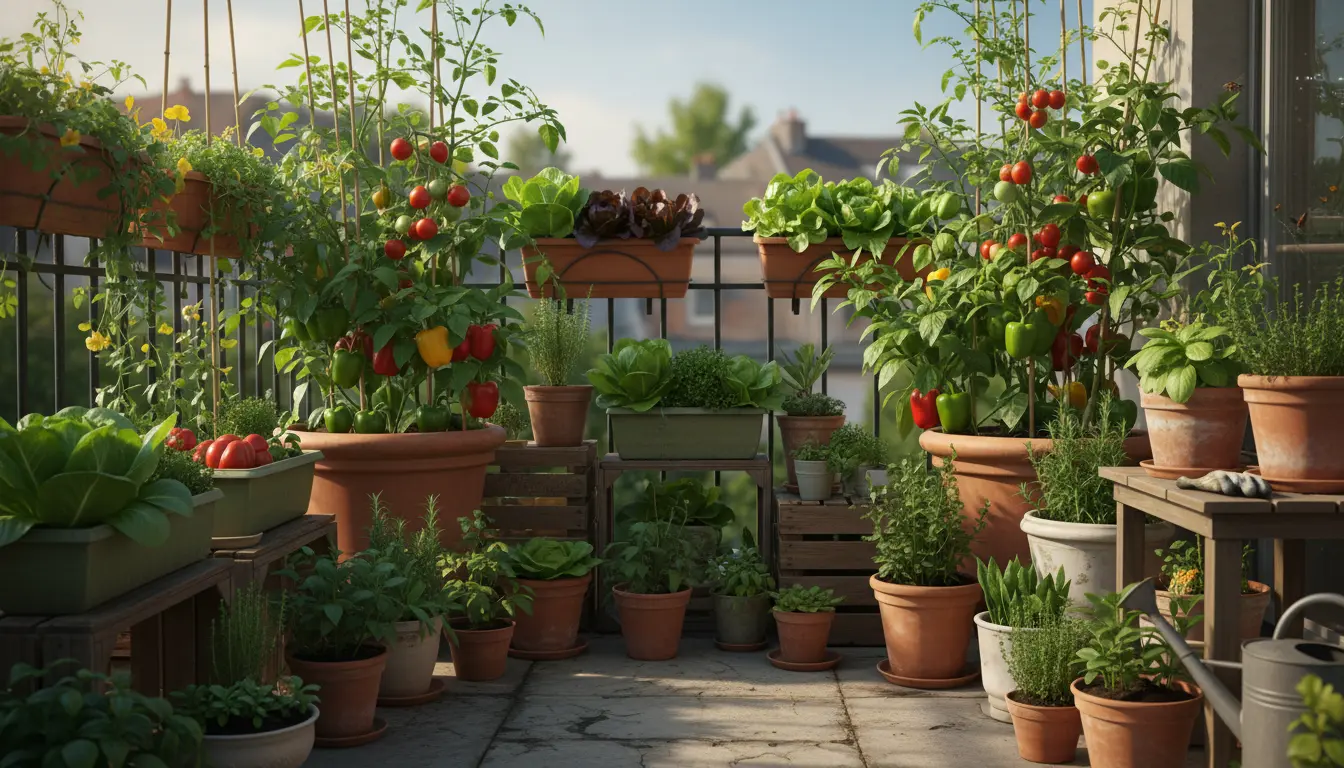
Container vegetable gardening is a simple way to grow fresh produce when space is limited. This guide gives practical steps so you can start quickly and avoid common mistakes.
Why choose container vegetable gardening
Containers let you garden on balconies, patios, rooftops, or small yards. They reduce weed pressure and make pest control easier.
You also get faster warm-up in spring because containers heat earlier than ground beds. That can lengthen your growing season in cooler climates.
Benefits of container vegetable gardening
- Easier access for people with limited mobility.
- Good for renters or temporary spaces.
- Can control soil quality and drainage precisely.
Limitations to consider
Containers dry out faster and need more frequent watering. You must also choose the right container size for each crop to avoid root crowding.
Some large crops need very big pots or are better in the ground. Plan plant choices around space and container depth.
How to start container vegetable gardening
Follow these key steps: pick containers, select soil and compost, choose suitable vegetables, place containers for light, and set a watering and feeding routine.
Selecting containers for container vegetable gardening
Use containers with drainage holes to prevent waterlogging. Materials include plastic, terracotta, wood, and fabric pots.
- Small pots (1–3 gallons): herbs, lettuce, radishes.
- Medium pots (5–10 gallons): peppers, bush tomatoes, dwarf beans.
- Large pots (15+ gallons): full-size tomatoes, potatoes, small fruiting trees.
Choosing soil and potting mix
Use a high-quality potting mix designed for containers. Avoid garden soil alone because it compacts and drains poorly.

Mix in compost for nutrients and a moisture-retaining amendment like coconut coir if your climate is hot.
Picking vegetables for containers
Start with easy, space-efficient crops. Good first choices include salad greens, herbs, cherry tomatoes, peppers, and bush beans.
For small spaces, look for words like compact, patio, or bush on seed packets and plant labels.
Light, placement, and microclimates
Most vegetables need 6–8 hours of direct sunlight. Place containers where they receive morning sun and protection from strong afternoon heat if possible.
Use wheels or saucers to move pots. Containers create microclimates so a sunny wall can warm plants, while shaded corners keep them cooler.
Watering and feeding schedule
Container plants need consistent moisture. Check soil daily by sticking a finger 1–2 inches down; water when it feels dry at that depth.
Use a balanced liquid feed every 2–3 weeks for fruiting vegetables, or slow-release pellets mixed into the potting mix at planting.
Pest and disease basics
Inspect leaves weekly for pests like aphids, slugs, or whiteflies. Remove affected leaves and use soapy water sprays for small infestations.
Rotate crops in containers across seasons when possible to reduce disease buildup. Clean and sterilize pots between major crops.
Practical tips and examples for container vegetable gardening
Follow these quick tips to improve success and reduce work.
- Use saucers to catch excess water but empty them to avoid root rot.
- Mulch the pot surface with straw or shredded bark to slow evaporation.
- Group containers with similar water needs to simplify care.
- Start seeds indoors for a head start, then transplant seedlings to containers.
Tomatoes and peppers perform well in containers if given 5–10 gallons of soil and regular feeding. Dwarf varieties fit well on balconies and can produce for months.
Simple case study: A balcony vegetable success
Casey, an apartment renter, used five 10-gallon pots on a south-facing balcony. They planted two cherry tomatoes, two pepper plants, and a pot of mixed salad greens.
With daily morning watering, weekly liquid feed, and a trellis for the tomatoes, Casey harvested continuous salad greens and a steady supply of tomatoes through summer.
Lessons: Choose correct pot size, place for sun, and feed regularly for sustained yields.
Seasonal schedule for container vegetable gardening
Plan sowing and planting by season. Start cool-season crops in early spring and warm-season crops after last frost. Use frost cloth or move pots indoors for late cold snaps.
Succession plant: replace early lettuce with fast-maturing beans or peppers when space frees up to maximize harvest from limited containers.
Quick planting checklist
- Choose containers with drainage
- Fill with quality potting mix plus compost
- Pick compact or patio vegetable varieties
- Place where plants get 6+ hours sun
- Water when top 1–2 inches are dry
- Feed regularly and inspect for pests
Container vegetable gardening makes growing food accessible and flexible. Start small, learn from each crop, and expand what works. With the right containers, soil, and routine, you can enjoy fresh vegetables even in tight spaces.