
Why a Container Vegetable Garden Works
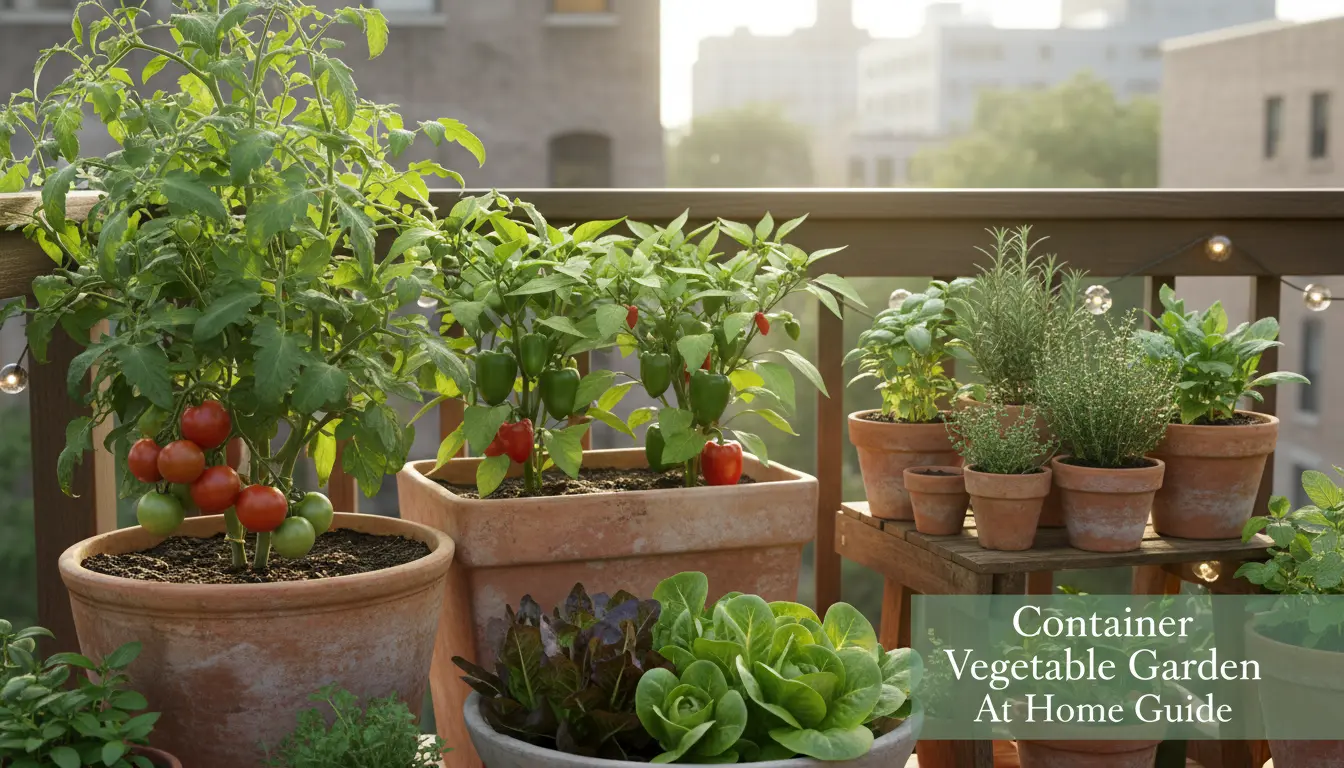
A container vegetable garden lets you grow fresh food in small spaces. It works on balconies, patios, rooftops, and small yards.
Containers control soil quality and reduce weeds. They make gardening more accessible for beginners and busy people.
Choose the Right Containers for Your Container Vegetable Garden
Pick containers with good drainage to prevent root rot. Containers can be clay, plastic, fabric grow bags, or raised troughs.
Match container size to the plant. Deep-rooted vegetables need larger pots while herbs and lettuce need smaller ones.
- Small pots (1–3 gallons): herbs, lettuce, baby greens
- Medium pots (5–10 gallons): peppers, dwarf tomatoes, bush beans
- Large pots (10+ gallons): full-size tomatoes, potatoes, eggplant
Best Soil Mix for a Container Vegetable Garden
Use a high-quality container potting mix, not garden soil. Potting mixes hold air and drain well for healthy roots.
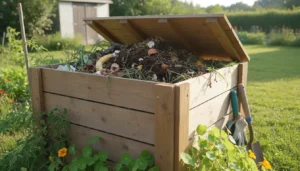
Consider mixing: one part compost, two parts peat-free potting mix, and one part perlite or coarse sand. This keeps moisture balanced and adds nutrients.
What Vegetables Grow Best in a Container Vegetable Garden
Some vegetables are especially suited for containers. Choose compact varieties and those labeled container-friendly.
- Tomatoes (determinate or patio types)
- Lettuce and salad greens
- Peppers and chilis
- Herbs: basil, parsley, cilantro
- Beans (bush varieties)
- Radishes and carrots (short varieties)
Planting Tips
Follow seed packet spacing but err slightly wider in containers to avoid crowding. Plant a few seeds and thin to the strongest seedlings.
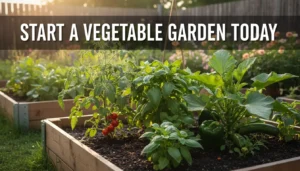
Group plants with similar water and light needs in the same container for easier care.
Watering and Fertilizing Your Container Vegetable Garden
Containers dry out faster than garden beds. Check soil moisture daily when temperatures are high.
Water deeply until excess drains from the bottom. This encourages roots to reach the full pot depth.
- Water in the morning for best absorption
- Mulch the surface to reduce evaporation
- Use a balanced liquid fertilizer every 2–4 weeks during the growing season
Dealing with Common Problems
Yellow leaves often indicate overwatering or nutrient deficiency. Adjust watering and add a balanced fertilizer.
Pests such as aphids or whiteflies can appear. Use insecticidal soap or remove pests by hand for small infestations.
Container-grown vegetables can produce as much as in-ground crops when you use the right pot size and quality potting mix. Containers often warm faster in spring, allowing an earlier harvest.
Light and Placement for a Container Vegetable Garden
Most vegetables need 6–8 hours of direct sun. Track sunlight on your balcony or patio for a few days before placing pots.
If you have partial sun, grow leafy greens and herbs. Use reflective surfaces or move containers to follow the sun when possible.
Seasonal Care and Rotation
Rotate crops each season to reduce disease risk. After harvest, replace old soil or refresh it with compost and a slow-release fertilizer.
In warm climates, consider succession planting to keep containers productive all year.
Small Real-World Case Study
Sarah lives in a third-floor apartment with a small balcony. She started a container vegetable garden with three 10-gallon pots.
In year one, she planted a determinate tomato, a bell pepper, and mixed herbs. She used a commercial potting mix with added compost and watered daily in July.
By mid-summer, the tomato produced 12 ripe fruits and the pepper yielded 6 peppers. Regular fertilizing and morning watering kept plants healthy.
Her takeaway: choose the right pot size, monitor water, and start with two or three easy plants for the first season.
Practical Checklist to Start Your Container Vegetable Garden
- Choose sunny location with 6+ hours light
- Select appropriate container sizes
- Use quality potting mix and add compost
- Pick container-friendly vegetable varieties
- Water deeply and fertilize regularly
- Inspect plants weekly for pests and diseases
Final Tips for Success with a Container Vegetable Garden
Start small and expand as you gain confidence. A few productive pots are better than many neglected ones.
Keep notes on planting dates, varieties, and yields. These records help you improve next season.
With consistent care, a container vegetable garden can supply fresh produce and a satisfying hobby even in limited space.