
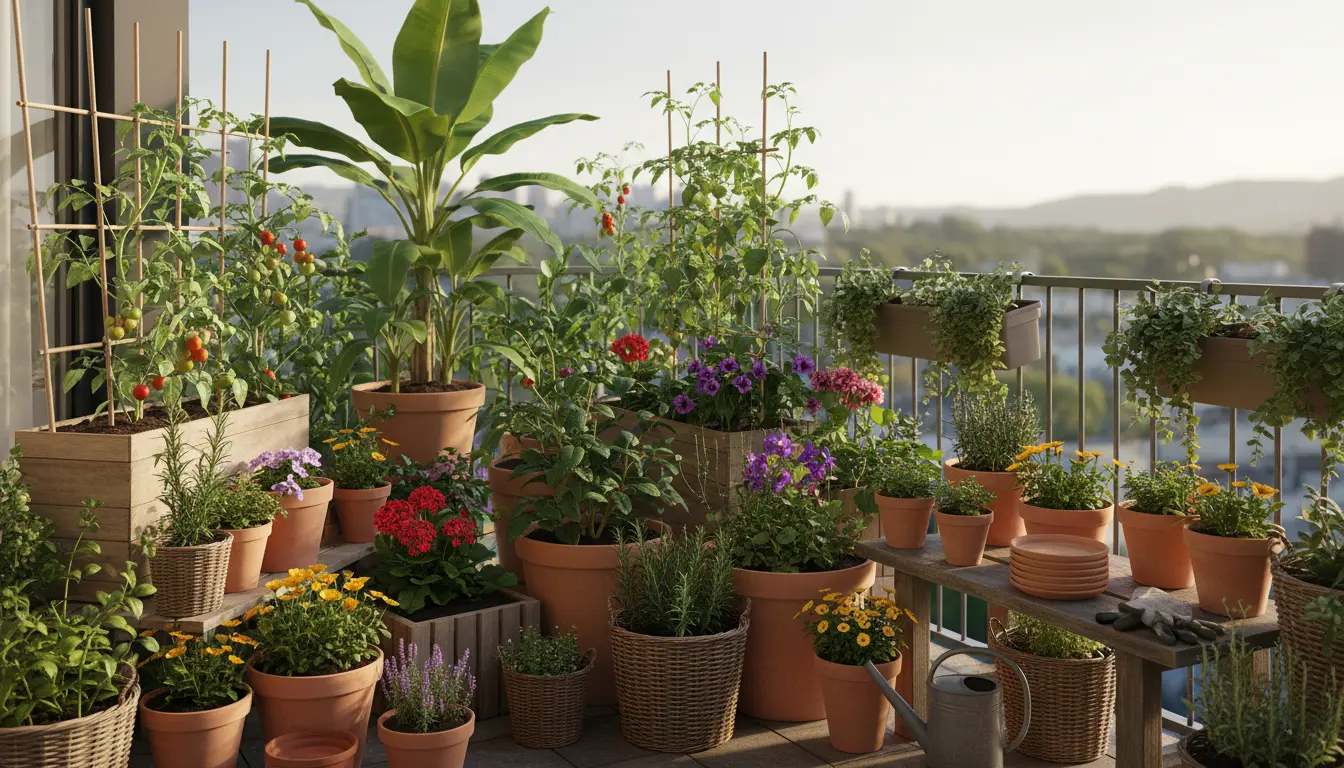
Why Choose a Container Vegetable Garden
A container vegetable garden lets you grow food in small spaces like balconies, patios, or rooftops. It reduces soil pests and gives you control over soil quality and drainage.
This approach is ideal for beginners and busy gardeners. You can scale containers to available space and focus on a few high-value crops.
Planning Your Container Vegetable Garden
Start by assessing light, space, and your goals. Most vegetables need 6–8 hours of direct sun, so measure hours of sunlight in your spot.
Decide whether you want fresh herbs, leaf greens, tomatoes, peppers, or a mix. Choose crops that match your light and the season.
Choosing Containers for a Container Vegetable Garden
Select containers with good drainage. Terra cotta, plastic, and fabric pots all work if they drain well.
- Small herbs: 6–8 inch pots
- Leafy greens: 8–12 inch pots
- Tomatoes and peppers: 12–20 inch pots or larger
- Bush beans and dwarf squash: 12–18 inch pots
Use sturdy containers that won’t tip in wind and place saucers or trays if you want to protect decking from water runoff.
Soil and Fertilizer for a Container Vegetable Garden
Use a high-quality potting mix, not garden soil. Potting mixes are lighter and hold water and air correctly for roots.
Mixes with peat moss or coir, perlite, and compost give a good balance. Add slow-release fertilizer or plan for regular liquid feed every 2–3 weeks.
Planting and Care for a Container Vegetable Garden
Plant at the right depth and spacing indicated on seed packets or plant tags. Crowding reduces airflow and increases disease risk.
Water consistently. Containers dry faster than ground beds, so check moisture daily in hot weather.
- Water technique: soak until water drains from the bottom, then allow the top inch to dry.
- Mulch: a thin layer of straw or shredded bark reduces evaporation.
- Fertilize: feed with a balanced liquid fertilizer or a soluble formula made for vegetables.
Pest and Disease Management in a Container Vegetable Garden
Inspect leaves weekly for pests like aphids, mites, or caterpillars. Pick pests by hand or use insecticidal soap when needed.
Rotate crops yearly if possible and avoid overwatering to reduce root rot and fungal issues. Good airflow and proper spacing keep foliage dry.
Seasonal Tips for a Container Vegetable Garden
Start cool-season crops early in spring and move to warm-season crops after the last frost. Use cloches or row covers to extend the growing season.
In hot climates, place containers where they get morning sun and afternoon shade. In cooler zones, position them to capture the warmest light.
Crop Choices and Companion Planting
Good container pairings include tomatoes with basil, lettuce under taller peppers, and marigolds to discourage pests. Keep companions compact to avoid shading small plants.
Containers can warm faster in the sun than open ground, allowing earlier planting in spring. However, they also cool faster at night—so monitor for late frost.
Watering Strategies for a Container Vegetable Garden
Consistent moisture is key. Consider these practical tips to keep plants healthy:
- Self-watering containers reduce daily checks and prevent drought stress.
- Use drip irrigation or soaker hoses on a timer for multiple pots.
- Place saucers beneath pots to catch excess and reuse runoff for watering other containers.
Small Case Study: Maria’s Balcony Container Vegetable Garden
Maria had a sunny 6-foot balcony and wanted fresh salad greens and tomatoes. She used three 12-inch pots for mixed lettuce, two 20-inch pots for cherry tomatoes, and several 6-inch pots for herbs.
She used a peat-free potting mix with compost and added a slow-release fertilizer at planting. Watering was done every other morning with a watering can; during heat waves she added an evening soak.
By mid-summer, Maria harvested regular lettuce cuttings and several pints of cherry tomatoes. She credits consistent watering, adequate pot size, and picking frequently to encourage new fruiting.
Common Mistakes to Avoid in a Container Vegetable Garden
Avoid these frequent errors to improve success:
- Using garden soil instead of potting mix, which compacts and suffocates roots.
- Choosing undersized containers for heavy feeders like tomatoes.
- Skipping regular feeding—containers have limited nutrients and need replenishment.
Quick Checklist Before You Plant Your Container Vegetable Garden
- Assess light and choose crops suited to that light level.
- Select containers with good drainage and adequate size.
- Buy quality potting mix and a basic fertilizer.
- Set up a simple watering plan or automated drip system.
Starting a container vegetable garden is a practical way to grow fresh food in limited space. With the right containers, soil, and a simple care routine, you can enjoy steady harvests and learn what works in your microclimate.