
Why choose a container vegetable garden
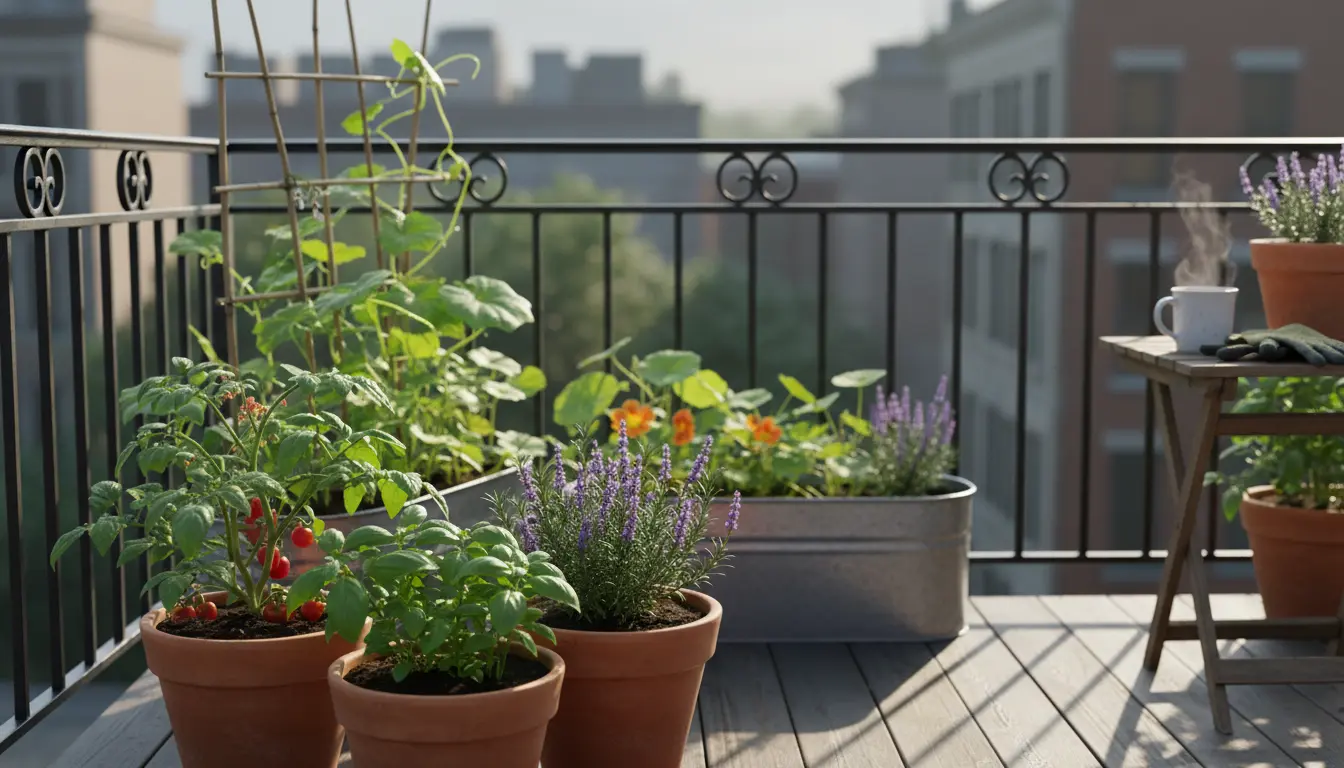
Container vegetable gardens make growing food possible in small spaces. They are ideal for balconies, patios, and small yards where in-ground beds are not an option.
Containers limit soil pests and allow better control of light, water, and soil quality. They also make planting and harvesting easier for beginners.
Planning your container vegetable garden
Start by assessing space and sun. Most vegetables need 6 or more hours of direct sunlight per day.
Decide which vegetables fit your space and skill level. Leafy greens and herbs are forgiving, while tomatoes and peppers need larger containers and more care.
Choosing crops for a container vegetable garden
Choose plants based on container size, season, and sunlight. Compact or bush varieties are better for small containers.
- Small containers (1–3 gallons): herbs, lettuce, radishes.
- Medium containers (5–10 gallons): bush tomatoes, peppers, dwarf beans.
- Large containers (15+ gallons): indeterminate tomatoes, small fruit trees, potatoes.
Essential supplies for a container vegetable garden
Collecting the right supplies reduces problems later. You do not need expensive gear to start.
Basic list:
- Containers with drainage holes (plastic, ceramic, or fabric pots)
- High-quality potting mix (not garden soil)
- Slow-release or balanced liquid fertilizer
- Labels, hand trowel, and watering can or hose with gentle spray
- Support structures for vining plants (cages, trellises)
Potting mix and soil for container vegetable garden
Use a light, well-draining potting mix designed for containers. These mixes retain moisture without becoming waterlogged.
A basic mix includes peat or coir, perlite or vermiculite, and compost. Add a slow-release organic fertilizer at planting time.
Planting and spacing in a container vegetable garden
Follow spacing recommendations on seed packets or plant tags. Overcrowding reduces airflow and increases disease risk.
Plant depth matters. Sow seeds at the depth listed on the packet and transplant seedlings at the same soil level they had in their nursery pots.
Watering and feeding tips
Containers dry out faster than ground soil and usually need daily checks in warm weather. Water until you see water drain from the bottom.
Feed container vegetables more frequently. Use a balanced liquid feed every 2–3 weeks, or follow the instructions on a slow-release fertilizer.
Pest and disease management for container vegetable garden
Containers reduce many soil-borne diseases but pests still occur. Inspect leaves weekly and remove damaged foliage promptly.
Control options include hand-picking, insecticidal soap for soft-bodied pests, and maintaining good airflow to reduce fungal issues.
Winter care and season extension
On cold nights, move containers close to a wall or indoors if possible. Use cloches or frost cloths for short-term protection.
In mild climates, containers allow year-round planting by switching to cold-tolerant crops like kale, spinach, and chard.
Using fabric pots improves root health by air pruning roots and reducing the chance of root circling common in plastic containers.
Simple maintenance checklist for your container vegetable garden
- Daily: Check soil moisture and drain any standing water.
- Weekly: Inspect for pests and remove spent flowers to encourage fruiting.
- Monthly: Top-dress with compost or apply a balanced liquid feed.
- Seasonally: Clean pots and replace potting mix every 1–2 years to prevent disease buildup.
Small case study: Maria’s balcony container vegetable garden
Maria had a 6-foot balcony and limited time. She chose three 10-gallon fabric pots and two 5-gallon pots to start.
She planted a bush tomato, two pepper plants, lettuce, and basil. She used a high-quality potting mix and a weekly liquid feed.
By mid-summer she harvested regular salad greens and several pounds of tomatoes. Her key actions were consistent watering, staking the tomato, and rotating herbs after each harvest.
Common mistakes to avoid with a container vegetable garden
- Using garden soil in containers, which compacts and drains poorly.
- Ignoring drainage: always ensure holes and raise pots slightly off the floor.
- Underestimating water needs during heat waves.
- Planting large crops in undersized containers.
Quick start plan for the first month
- Week 1: Choose containers and potting mix, select 3–5 starter plants or seeds.
- Week 2: Plant and place containers in the sunniest spot available.
- Week 3: Begin a regular watering schedule; check drainage after first water.
- Week 4: Start feeding with liquid fertilizer and watch growth; adjust placement if plants are stretching.
Final tips for a successful container vegetable garden
Start small and expand as you gain confidence. Keep a simple journal of watering, feeding, and harvests to learn what works on your site.
Choose the right container size and focus on a few productive crops. With consistent care, even a tiny container garden can supply fresh vegetables all season.