
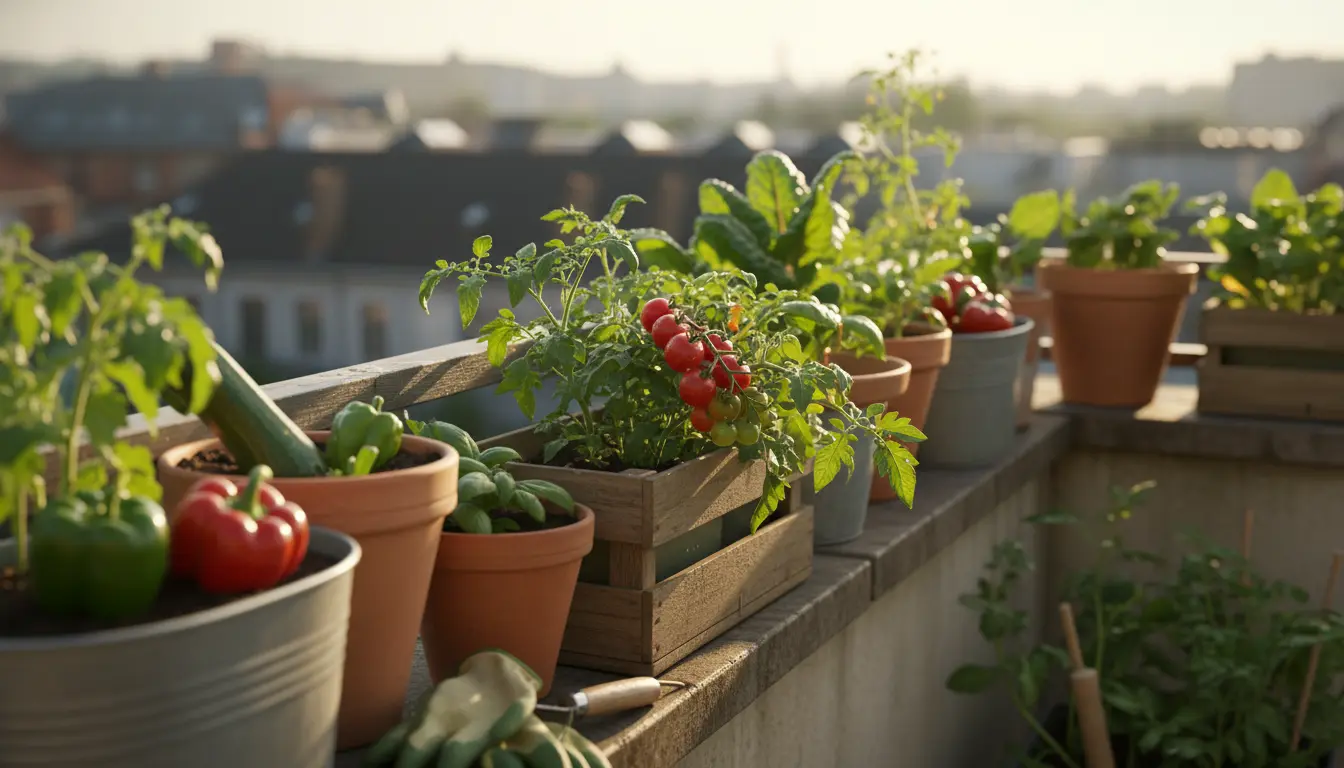
Container vegetable gardening makes it possible to grow fresh produce in small spaces like balconies, patios, or tiny yards. With the right containers, soil, and simple routines you can harvest vegetables all season long.
Why choose a container vegetable garden
Container gardens are flexible and low cost compared with in-ground beds. They limit soil-borne pests and allow you to control growing conditions more easily.
Containers also make gardening accessible for renters and apartment dwellers. You can move pots to catch the sun or protect plants from harsh weather.
Essential steps to start a container vegetable garden
Follow these practical steps to set up a container vegetable garden that produces well without excess work. Each step focuses on predictable, repeatable choices.
1. Pick the right containers
Choose containers with drainage holes to prevent root rot. Options include plastic pots, fabric grow bags, wooden planters, and repurposed buckets.

Size matters: most vegetables do well in 5–10 gallon containers. Deep-rooted crops like tomatoes benefit from larger pots (10+ gallons).
2. Use quality potting mix for container vegetable garden health
Potting mix (not garden soil) is formulated to drain well and retain moisture. Look for mixes with peat or coconut coir, perlite, and slow-release fertilizer.
Adding a handful of compost to each container improves nutrient content and microbial life.
3. Choose the right location and sunlight
Most vegetables need 6–8 hours of direct sunlight. Observe your balcony or patio through the day to find the sunniest spots.
If full sun isn’t available, select shade-tolerant crops such as leafy greens and herbs.
4. Select suitable vegetables for containers
Some vegetables are particularly container-friendly. Here are reliable choices:
- Tomatoes (determinate or patio varieties)
- Peppers (sweet and hot)
- Leafy greens (lettuce, spinach, kale)
- Herbs (basil, parsley, cilantro)
- Root vegetables (radishes, baby carrots)
- Bush beans and dwarf peas
5. Planting and spacing in a container vegetable garden
Follow seed packet or plant tag spacing but adjust slightly for containers. Overcrowding reduces airflow and increases disease risk.
Example: plant one tomato per 10-gallon pot, or 3–4 lettuce plants in a 5-gallon container spaced evenly.
6. Watering and feeding routines
Containers dry faster than garden beds, so check moisture daily in hot weather. Water until it runs from drainage holes and avoid letting soil dry out completely.
Fertilize with a balanced liquid or slow-release fertilizer according to product directions. Container crops often need more nutrients because they have limited soil volume.
7. Support, pruning, and pest control
Use stakes, cages, or trellises for vining tomatoes and beans. Prune excess foliage on tall plants to improve airflow and light penetration.
Inspect plants weekly for pests like aphids, whiteflies, and slugs. Use hand removal, insecticidal soap, or beneficial insects when needed.
Seasonal care for a thriving container vegetable garden
Adjust planting choices by season. Cool-season crops like spinach can be started in early spring or fall. Heat-loving crops like peppers and tomatoes belong in late spring through summer.
Mulch the surface of containers with straw or shredded bark to reduce evaporation and keep roots cooler during heatwaves.
Common problems and quick fixes
- Yellowing leaves: check watering and nutrient levels, adjust fertilizer.
- Pests: remove by hand or use targeted organic controls.
- Poor flowering or fruiting: ensure full sun and proper fertilization.
Small real-world example: City balcony success
Case Study: On a 6th-floor apartment balcony, Maria used four 10-gallon pots and three 5-gallon pots. She planted a determinate tomato, two pepper plants, basil, and mixed lettuce.
By placing the pots against a south-facing railing and using a quality potting mix with compost, Maria harvested fresh salad greens weekly and three rounds of cherry tomatoes. Basic weekly watering and monthly liquid fertilizer kept plants productive.
Many dwarf and patio tomato varieties were bred specifically for container gardening and can produce full-size harvests from a single 10-gallon pot.
Quick checklist to start a container vegetable garden
- Choose containers with drainage and appropriate size.
- Buy a high-quality potting mix and add compost.
- Pick vegetables suited to your sunlight and climate.
- Water regularly and feed with balanced fertilizer.
- Provide support for vining crops and monitor pests.
Starting a container vegetable garden is an accessible way to grow food at home. With straightforward choices and a weekly care routine you can enjoy fresh vegetables even with limited space.