
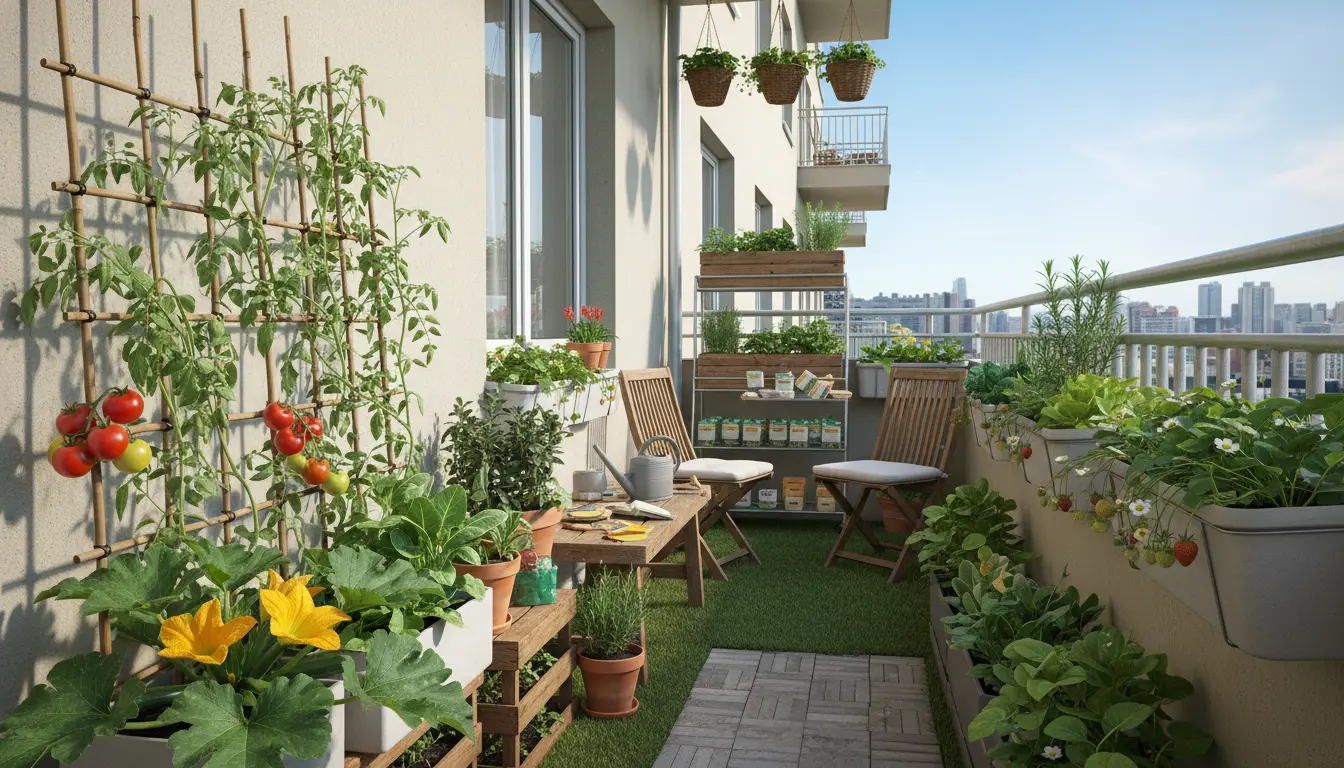
Container Vegetable Garden Basics
Container vegetable gardening puts fresh produce within reach for people with limited space. It works on balconies, patios, rooftops, and in small yards.
Before starting, pick a sunny spot and measure the available area. Most vegetables need at least 6 hours of direct sun a day, so observe light patterns for several days.
Choose Containers for a Container Vegetable Garden
Select containers with drainage holes to prevent root rot and waterlogging. Size matters: use deeper pots for root vegetables and larger pots for heavy feeders like tomatoes.
- Small pots (1–3 gallons): herbs, lettuce, radishes
- Medium pots (5–10 gallons): peppers, bush beans, dwarf varieties
- Large pots (10+ gallons): indeterminate tomatoes, eggplants, potatoes in grow bags
Lightweight materials such as plastic, fiberglass, or grow bags are easier to move and retain moisture differently than terra cotta. Consider the weight when filled with soil, especially on balconies.
Container Vegetable Garden Soil and Fertilizer
Use a quality potting mix labeled for containers rather than garden soil. Potting mix provides aeration and holds moisture while supporting root growth.

Mix in slow-release granular fertilizer at planting or use liquid feed every 1–2 weeks during the growing season. Balanced fertilizer (for example, 10-10-10) works well for most vegetables.
Soil Mix Recipe for a Container Vegetable Garden
Make your own container mix by combining these ingredients for a light, fertile media. This recipe helps retain moisture while providing good drainage.
- 50% quality potting mix
- 25% compost or aged manure
- 25% coarse perlite or coconut coir for aeration
Plant Choices for a Container Vegetable Garden
Pick varieties labeled as compact, patio, or container-friendly. These cultivars are bred to produce well in confined root space.
Good container vegetables include cherry tomatoes, leaf lettuce, spinach, bush beans, peppers, radishes, carrots (short varieties), and herbs like basil and parsley. Plan a mix of quick-maturing crops and longer-season plants to maintain continuous harvests.
Watering and Light for a Container Vegetable Garden
Containers dry out faster than ground beds and require frequent monitoring. Water deeply until water runs out the drainage holes, which encourages roots to grow downward.
Use these practical tips to manage moisture and light needs:
- Check soil moisture daily in hot weather by inserting a finger 1–2 inches into the mix.
- Water in the morning to reduce evaporation and disease risk.
- Move pots to follow sun if light is uneven; consider shade cloth in extreme heat.
Container Vegetable Garden Maintenance
Routine care keeps a container garden productive all season. Remove yellowing leaves, pinch back overgrown plants, and watch for pests and diseases.
Fertilize according to the product schedule and top-dress containers with compost every 4–6 weeks. Replace or refresh potting mix between seasons to prevent nutrient depletion and disease carryover.
Pest and Disease Notes for a Container Vegetable Garden
Containers reduce many garden pests but are still vulnerable to aphids, whiteflies, and fungal problems. Use insecticidal soap or neem oil for small infestations and ensure good airflow to limit fungal growth.
Rotate crops in containers where possible and sanitize pots before reusing to minimize disease risks. Quarantine new plants for a week to make sure they are pest-free.
Harvesting and Maximizing Yields in a Container Vegetable Garden
Harvest regularly to encourage production; many plants set more fruit when frequently picked. For leaf crops, harvest outer leaves and let the center keep growing for continuous supply.
Succession planting also improves yield: sow fast crops every few weeks and replace finished plants with new seedlings for steady harvests. Keep a simple calendar to remember planting and fertilizing dates.
Small Case Study: Balcony Tomato Success
Sarah, an apartment dweller, used two 10-gallon containers to grow indeterminate cherry tomatoes on her south-facing balcony. She chose a determinate support cage and used a soilless potting mix with compost mixed in.
By watering twice weekly and feeding with liquid fertilizer every ten days, Sarah harvested tomatoes from July through October. Her key changes were moving pots slightly each week to follow the sun and pinching side shoots to focus growth on fruit production.
Shallow containers heat up faster and dry out more quickly than deep ones. Choosing deeper pots can reduce watering frequency and improve temperature buffering for roots.
Common Mistakes to Avoid in a Container Vegetable Garden
Don’t use garden soil in pots; it compacts and drains poorly. Also avoid under-potting: roots need volume to access water and nutrients for healthy growth.
Avoid overwatering by ensuring drainage and checking moisture before watering. Overfertilizing can burn roots, so follow product directions and reduce strength if plants show leaf burn.
Quick Checklist Before You Start Your Container Vegetable Garden
- Confirm at least 6 hours of daily sun in your chosen spot
- Choose appropriately sized containers with drainage
- Use quality potting mix and amend with compost
- Select container-friendly vegetable varieties
- Plan a watering and fertilizing schedule
Container vegetable gardening is accessible and flexible. With the right containers, soil, and simple care routines, you can enjoy fresh vegetables even in small spaces.