
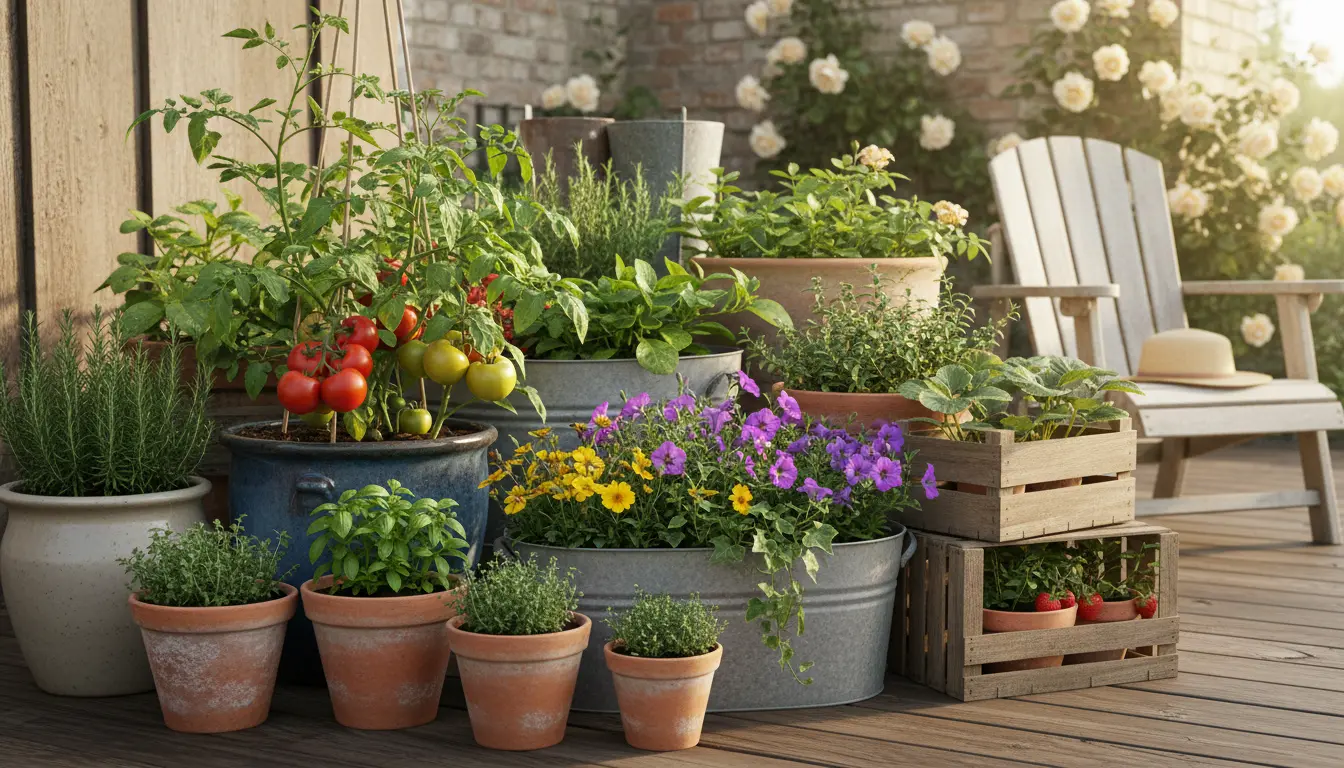
Why Choose a Container Vegetable Garden
Container vegetable gardens let you grow food when ground space is limited. They fit balconies, patios, and small yards and reduce soil-borne disease risks.
Containers are portable, easy to manage, and ideal for controlled watering and fertilizing. This guide covers the basics you need to get started and produce a reliable harvest.
Plan Your Container Vegetable Garden
Start by selecting a sunny spot. Most vegetables need 6–8 hours of direct sunlight a day.
Decide what to grow based on space and taste. Leafy greens, herbs, dwarf tomatoes, peppers, and bush beans work well in containers.
Container selection for a container vegetable garden
Choose containers with drainage holes and enough volume for roots. Typical sizes:
- Herbs and lettuces: 6–10 inch pots
- Peppers and bush beans: 12–16 inch pots
- Dwarf tomatoes and larger crops: 18–24 inch containers or grow bags
Materials like plastic, clay, ceramic, and fabric each have pros and cons. Fabric pots drain well and promote root health, while clay holds moisture longer.
Use the Right Soil Mix
Don’t use garden soil. Instead, use a high-quality potting mix designed for containers. These mixes retain moisture and provide air space for roots.
A good DIY mix: 40% peat or coco coir, 30% compost, 30% perlite or coarse sand. Add a slow-release organic fertilizer at planting.
Planting and Spacing in a Container Vegetable Garden

Follow seed packet or plant label spacing; overcrowding reduces airflow and increases disease risk. Stagger planting times to extend harvests.
Examples of planting layouts:
- One compact tomato per 20–24 inch container
- Three to four pepper plants in separate 12–16 inch pots
- Multiple lettuce or spinach plants in a 12-inch wide trough
Companion planting ideas
Mix herbs like basil and oregano with tomatoes to save space and deter pests. Avoid pairing heavy feeders, like nitrogen-hungry corn, with delicate crops in the same container.
Watering and Feeding Your Container Vegetable Garden
Containers dry out faster than garden beds. Check soil moisture daily during warm weather. Stick a finger 1–2 inches into the soil to check; if it’s dry, water.
Use even, deep watering so roots grow downward. Consider self-watering containers or drip irrigation for consistent moisture.
Fertilizing schedule
Apply a balanced liquid fertilizer every 2–4 weeks during the growing season, or follow the practice for your chosen slow-release product. Leafy crops benefit from slightly higher nitrogen, while fruiting crops need phosphorus and potassium.
Pest and Disease Management in Container Vegetable Gardens
Inspect plants weekly for pests such as aphids, whiteflies, and slugs. Early detection makes control easier.
Safe controls include handpicking, insecticidal soap, neem oil, and beneficial insects like ladybugs. Avoid overwatering to prevent root rot and fungal disease.
Seasonal Care and Rotation
Rotate crops between seasons when possible. After harvest, refresh potting mix with compost or replace some soil to restore nutrients.
In colder climates, move containers to a protected area or bring them indoors for winter. Some vegetables can overwinter with insulation if temperatures are mild.
Harvesting from a Container Vegetable Garden
Harvest frequently to encourage more production. Pick lettuces and herbs young for best flavor. Remove ripe fruits like tomatoes and peppers promptly.
Record harvest dates and yields to refine planting schedules next season.
Containers warm faster in spring than garden beds, allowing earlier planting of crops like lettuce and radishes.
Simple Case Study: Balcony Tomato Success
Rita, an apartment dweller, grew two dwarf determinate tomatoes in 20-inch fabric pots on her south-facing balcony. She used a commercial potting mix, a slow-release fertilizer, and watered daily in summer.
Outcome: By mid-summer she harvested 18 ripe tomatoes from the two plants and a continuous supply of basil and salad greens from nearby small pots. She learned that pruning suckers on one plant improved airflow and reduced spotting on leaves.
Common Mistakes to Avoid in a Container Vegetable Garden
- Using garden soil that compacts and drains poorly
- Underestimating container size for mature root systems
- Inconsistent watering that stresses plants
- Overfertilizing, which can burn roots and reduce fruiting
Final Tips for a Productive Container Vegetable Garden
Start small and expand as you learn what grows best in your microclimate. Keep a planting journal noting dates, varieties, and outcomes.
Choose disease-resistant varieties and reuse proven containers each season after sterilizing them with a mild bleach solution and rinsing well.
With careful container selection, good potting mix, reliable watering, and regular feeding, you can grow a productive vegetable garden even in tight spaces. Try one new crop each season to build experience and enjoy fresh home-grown produce.