
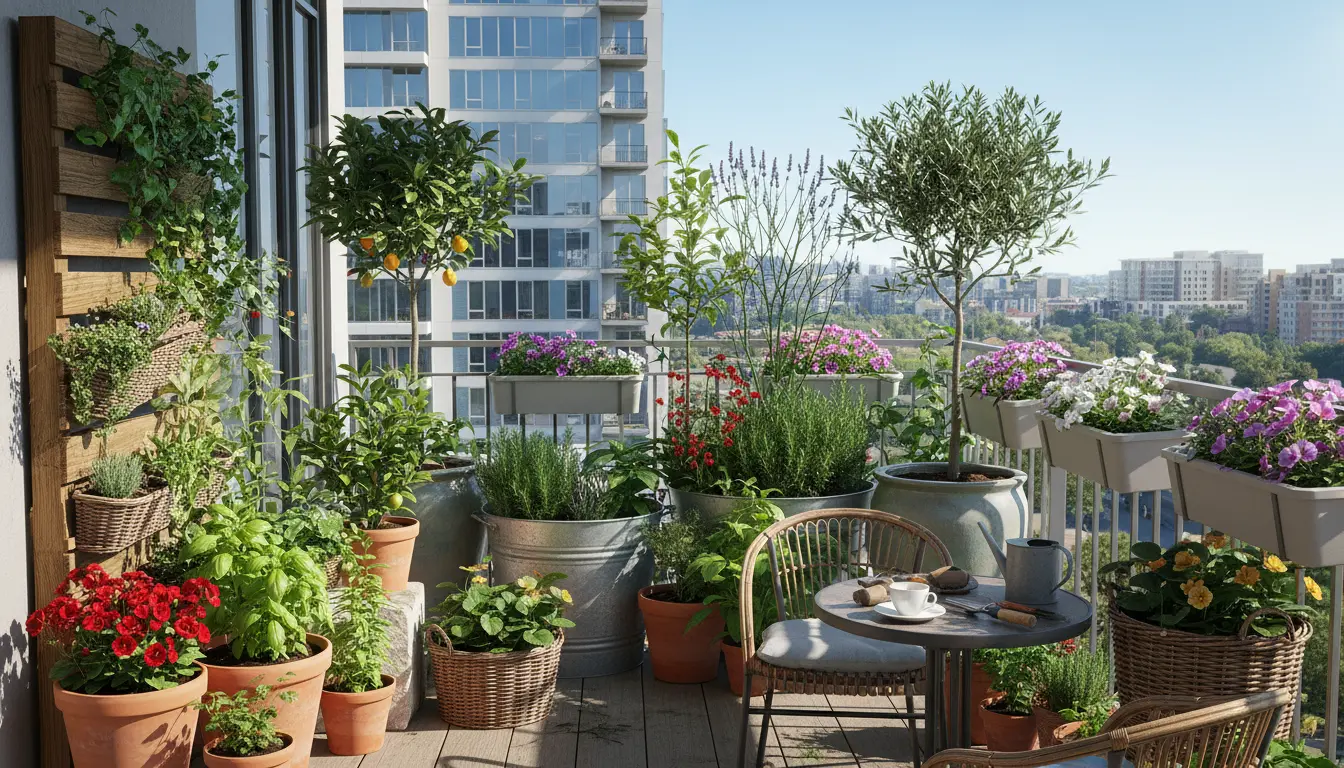
Why a Container Vegetable Garden Works
Container vegetable gardens let you grow food on balconies, patios, or small yards. They require less space and are easier to manage than in-ground beds.
This guide gives practical steps to start a container vegetable garden and maintain productive plants throughout the season. Follow the checklist and examples to avoid common mistakes.
Choosing Containers for a Container Vegetable Garden
Pick containers that match the plant size and root depth. Use at least 12-inch deep pots for most vegetables, and 18 inches or more for larger crops like tomatoes and peppers.
Materials matter: plastic, ceramic, wood, or fabric pots all work if they have drainage holes. Consider weight, insulation, and aesthetics when choosing containers for your space.
Container size guidelines
- Leafy greens: 6–8 inch pots or shallow troughs.
- Dwarf tomatoes and peppers: 12–18 inch pots.
- Determinate tomatoes and small squash: 20+ inch containers or grow bags.
Picking Soil and Potting Mix
Use a high-quality potting mix formulated for containers rather than garden soil. Potting mixes provide good drainage, aeration, and retain enough moisture for roots.
Look for mixes with compost, peat or coconut coir, and perlite. Avoid mixes that compact easily or keep waterlogged conditions.
Amendments and organic matter
- Add slow-release organic fertilizer at planting time.
- Mix in a handful of compost per container for nutrients and microbial activity.
- Replenish with liquid feed every 2–4 weeks during the growing season.
Sunlight and Placement Tips
Most vegetables need 6–8 hours of direct sunlight daily. Observe your balcony or patio for morning and afternoon sun patterns before planting.
If you have limited sun, choose shade-tolerant crops like lettuce, spinach, and herbs. Use movable containers to chase daylight through the season.
Watering and Drainage for Container Vegetable Gardens
Containers dry out faster than garden beds and need more frequent watering. Check soil moisture with your finger: water when the top inch feels dry.
Use consistent watering schedules and consider self-watering pots or drip irrigation for convenience. Ensure excess water drains freely to prevent root rot.
Simple watering routine
- Early morning is best to reduce evaporation and disease risk.
- Water slowly until excess drains from the bottom holes.
- Mulch the surface with straw or shredded leaves to retain moisture.
Plant Selection and Spacing
Choose compact and container-friendly varieties like bush tomatoes, baby carrots, salad greens, and dwarf beans. Read seed packets or plant tags for container recommendations.
Respect spacing to avoid overcrowding; plants in pots still compete for nutrients and light. Follow the spacing on seed headers and thin seedlings when necessary.
Pest Management and Disease Control
Container gardens often face fewer pests than in-ground beds but still need routine checks. Inspect leaves and stems weekly for aphids, slugs, or fungal spots.
Use physical controls like hand-picking, water sprays, or row covers. Favor organic options such as insecticidal soap, neem oil, or beneficial insects when intervention is needed.
Seasonal Care and Harvesting
Fertilize regularly, prune as needed, and harvest promptly to encourage continued production. Replace heavy-feeding crops with quick greens for multiple growing cycles.
At season end, clear spent plants, refresh potting mix, and store containers or protect them from frost. This simple maintenance prepares containers for the next season.
Plants in containers can use up to 50% more water than plants in the ground during hot weather due to increased evaporation from pot sides.
Small Case Study: Balcony Tomato Success
Maria, a city resident with a small balcony, grew three determinate tomatoes in 20-inch containers. She used a commercial potting mix, supported plants with cages, and watered daily in hot spells.
By following weekly liquid feeding and pruning suckers, Maria harvested about 18 pounds of tomatoes over the season. Her example shows that limited space can still be productive with the right care.
Practical Checklist to Start Your Container Vegetable Garden
- Measure available sunlight and space.
- Choose appropriate container sizes and ensure drainage holes.
- Buy a quality potting mix and organic fertilizer.
- Select container varieties suited to sunlight and space.
- Set a watering routine and monitor soil moisture.
- Inspect plants weekly for pests and diseases.
- Plan succession planting to maximize yields.
Final Tips for a Successful Container Vegetable Garden
Start small and expand as you learn which crops thrive in your microclimate. Keep a simple journal of planting dates, varieties, and yields to refine practices year to year.
Containers offer flexibility and accessibility. With the right containers, soil, and routine care, you can grow fresh vegetables even in the tightest spaces.