
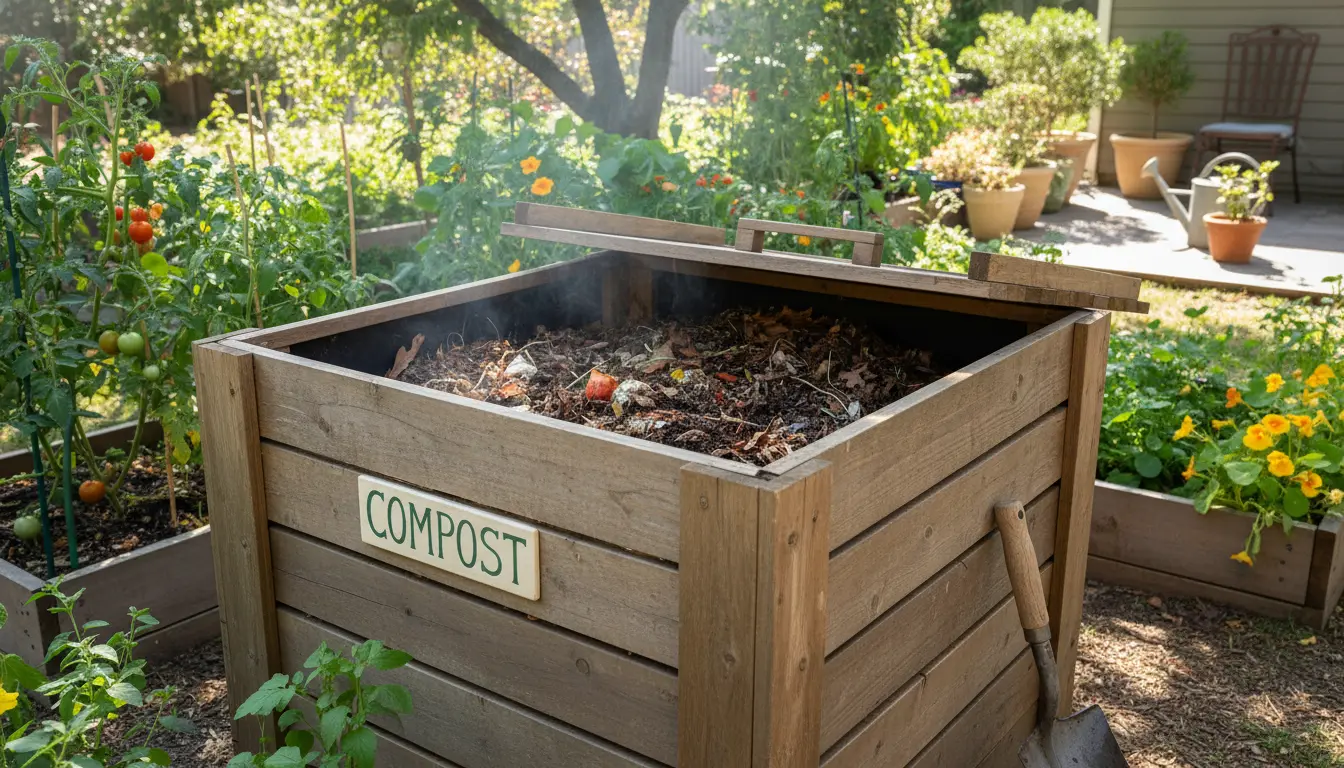
Why start composting at home
Composting at home reduces food waste, improves soil health, and lowers your carbon footprint. It converts kitchen scraps and yard waste into a valuable soil amendment you can use in pots, beds, or the lawn.
Choose the right method for composting at home
Select a method that fits your space, budget, and local regulations. Small apartments and large backyards need different approaches.
Common composting methods
- Open compost bin: Affordable and works well in gardens.
- Tumbler: Faster decomposition and easier turning.
- Bokashi: Fermentation method for apartments, handles cooked food.
- Vermicompost (worms): Produces rich compost in small spaces.
Set up a compost bin
Location matters. Place the bin where it has partial shade and good drainage. For small spaces, a balcony-safe container or bokashi bin works well.
Equipment needed is minimal: a bin, a pitchfork or turning tool, and a kitchen container for scraps. You can build a bin from pallets or buy a premade one.
What to put in your compost bin
Balance green (nitrogen-rich) and brown (carbon-rich) materials for steady decomposition. Aim for a mix rather than only one type.
Examples of green materials
- Vegetable and fruit scraps
- Coffee grounds and tea leaves
- Fresh grass clippings
Examples of brown materials
- Dry leaves, straw, and shredded paper
- Cardboard torn into small pieces
- Wood chips and sawdust (in moderation)
Simple steps to start composting at home
- Layer materials: Start with coarse brown material for airflow, then alternate greens and browns.
- Keep it moist: Aim for a damp sponge feel. Add water if dry, or browns if too wet.
- Turn regularly: Every 1–2 weeks for faster compost, or less often for low-maintenance piles.
- Monitor temperature: Hot compost reaches 55–65°C in active stages; not required for basic home composting.
- Harvest finished compost: When dark, crumbly, and earth-smelling, it’s ready to use.
Common problems and fixes when composting at home
Problems are often easy to solve once you know the cause. Use the list below as a quick troubleshooting guide.
- Bad smells: Usually from too much wet green material. Add brown material and turn the pile.
- Slow decomposition: Check moisture and particle size; chop scraps smaller and add nitrogen if needed.
- Pests: Use a closed bin, bury food scraps under brown material, or consider bokashi for indoor scraps.
- Too dry: Add water and greens; cover the pile to retain moisture.
Using finished compost
Finished compost improves soil structure, water retention, and nutrient content. Mix it into potting mixes or top-dress garden beds.
Application examples:
- Vegetable beds: Mix 2–4 inches of compost into the top 6–8 inches of soil before planting.
- Potted plants: Replace 10–20% of potting mix with compost.
- Lawn: Spread a thin layer (about 1/4 inch) over the lawn to improve turf health.
Small case study: Apartment composting success
Maria, a two-person household in a city apartment, used a bokashi bucket and a small worm bin. She diverted about 6 liters of kitchen scraps per week from landfill.
After six months she had produced roughly 10 liters of worm castings and fermented bokashi pre-compost, which she used to enrich potted herbs and a community garden plot. Her trash volume fell by 40% and plants showed better growth.
Earthworms can process about half their body weight in organic matter each day, making vermicompost one of the fastest ways to turn kitchen scraps into rich soil amendment.
Tips to make composting at home easier
- Chop or shred bulky items to speed breakdown.
- Keep a small covered counter bin to collect scraps and reduce trips outside.
- Use a finished compost thermometer if you want to manage hot compost precisely.
- Label layers in new piles to track progress and learning.
Final checklist for starting composting at home
- Pick a method (bin, tumbler, bokashi, or worms).
- Gather basic tools and a kitchen container.
- Learn green vs. brown materials and maintain balance.
- Monitor moisture and turn or aerate as needed.
- Harvest and use finished compost in your garden and pots.
Composting at home is simple once you pick a method that fits your life. Start small, observe, and adjust over time. The benefits include less waste, better plants, and healthier soil.