
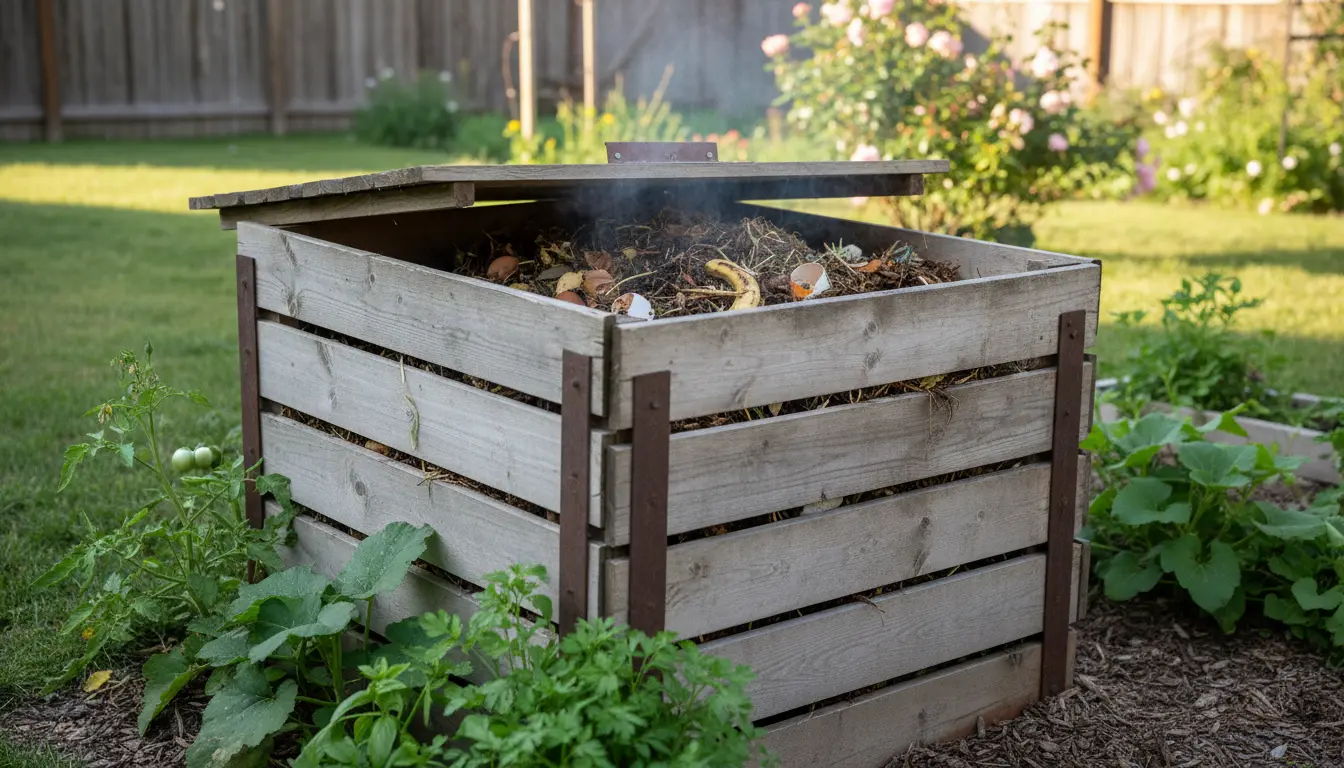
Why Composting at Home Matters
Composting at home turns kitchen scraps and yard waste into a useful soil amendment. It reduces landfill waste, lowers methane emissions, and supports healthier plants.
For beginners, home composting is practical and inexpensive. A small effort saves money on fertilizer and improves your garden’s soil structure.
How to Start Composting at Home: Step-by-Step
Starting a compost pile or bin is straightforward. Follow these steps to create a reliable system that fits your living situation.
1. Choose a Composting Method
Select a method that matches your space and time. Common options include:
- Open pile — good for yards with space and low cost.
- Compost bin — tidy, faster decomposition, fits small yards.
- Tumbler — easy turning, faster results, ideal for small spaces.
- Vermicomposting — indoor worm bins for apartments and small kitchens.
2. Pick a Location
Place your compost in a well-drained, partly shaded spot. Good airflow and moderate moisture speed decomposition.
A flat area close to the kitchen makes adding scraps easier. For vermicompost, keep the bin indoors or in a sheltered spot.
3. Gather Materials: Browns and Greens
Compost needs a balance of carbon-rich “browns” and nitrogen-rich “greens.” Aim for a rough mix of 3 parts browns to 1 part greens by volume.
- Browns: dry leaves, straw, shredded paper, cardboard.
- Greens: fruit and vegetable scraps, coffee grounds, fresh grass clippings.
Avoid meat, dairy, oily foods, and pet waste unless using a hot compost system or specialized setup.
4. Build and Maintain Your Pile
Start with a layer of coarse browns to aid airflow, then alternate greens and browns. Aim for layers 2–4 inches thick.
Keep the pile moist but not soggy—think wrung-out sponge. Turn or mix weekly for faster, more even composting.
5. Monitor and Troubleshoot
Watch for these common signs:
- Bad odors — usually from too many greens or poor aeration. Add browns and turn the pile.
- Too dry — materials won’t break down. Add water and greens.
- Slow decomposition — may need more surface area (shred materials) or regular turning.
Compost Timeframes and Use
Compost can take 1–12 months depending on method, materials, and maintenance. Hot, well-managed piles finish fastest.
Finished compost is dark, crumbly, and earthy-smelling. Use it as a soil amendment, mulch, or potting mix ingredient.
Composting Tips for Different Living Situations
Adjust your approach based on space and lifestyle. Here are simple setups for common situations.
Apartments and Small Homes
- Use an indoor worm bin or small bokashi system for food scraps.
- Collect dry materials for drop-off at local community compost hubs.
Suburban Yards
- Choose a bin or tumbler for convenience and faster results.
- Use yard trimmings and kitchen scraps together for balanced compost.
Large Properties
- Consider multiple piles or a hot compost system for bulk green waste.
- Email or join local groups for shared equipment like grinders or turners.
Composting diverts up to 30% of household waste from landfills and can reduce methane emissions significantly when organic waste is kept out of anaerobic landfill conditions.
Common Questions: Quick Answers
Here are short answers to questions new composters often ask.
- Can I compost citrus? Yes in small amounts; too much can slow microbes but usually isn’t a problem.
- Are eggshells useful? Yes—crush them to speed breakdown and add calcium.
- Do I need special tools? A pitchfork or compost aerator helps, but turning by hand or using a tumbler works fine.
Real-World Example: Small Home Compost Case Study
Case study: Sarah lives in a townhouse and started a 60-liter tumbler. She collected kitchen scraps and yard trimmings, maintaining a 3:1 browns-to-greens ratio.
After regular weekly turns and keeping the bin moist, Sarah produced usable compost in about four months. She used the compost on balcony planters and saw healthier tomato plants with better yields.
Her kitchen waste dropped by an estimated 50%, and she saved money on store-bought soil amendments.
Final Checklist to Start Composting at Home
- Choose a method that fits your space.
- Collect a mix of browns and greens.
- Keep the pile moist and aerated.
- Turn regularly and monitor odors.
- Harvest finished compost and use it to enrich soil.
Starting composting at home is an achievable step toward lower waste and healthier plants. With the right balance and simple maintenance, most households can produce useful compost within months.