
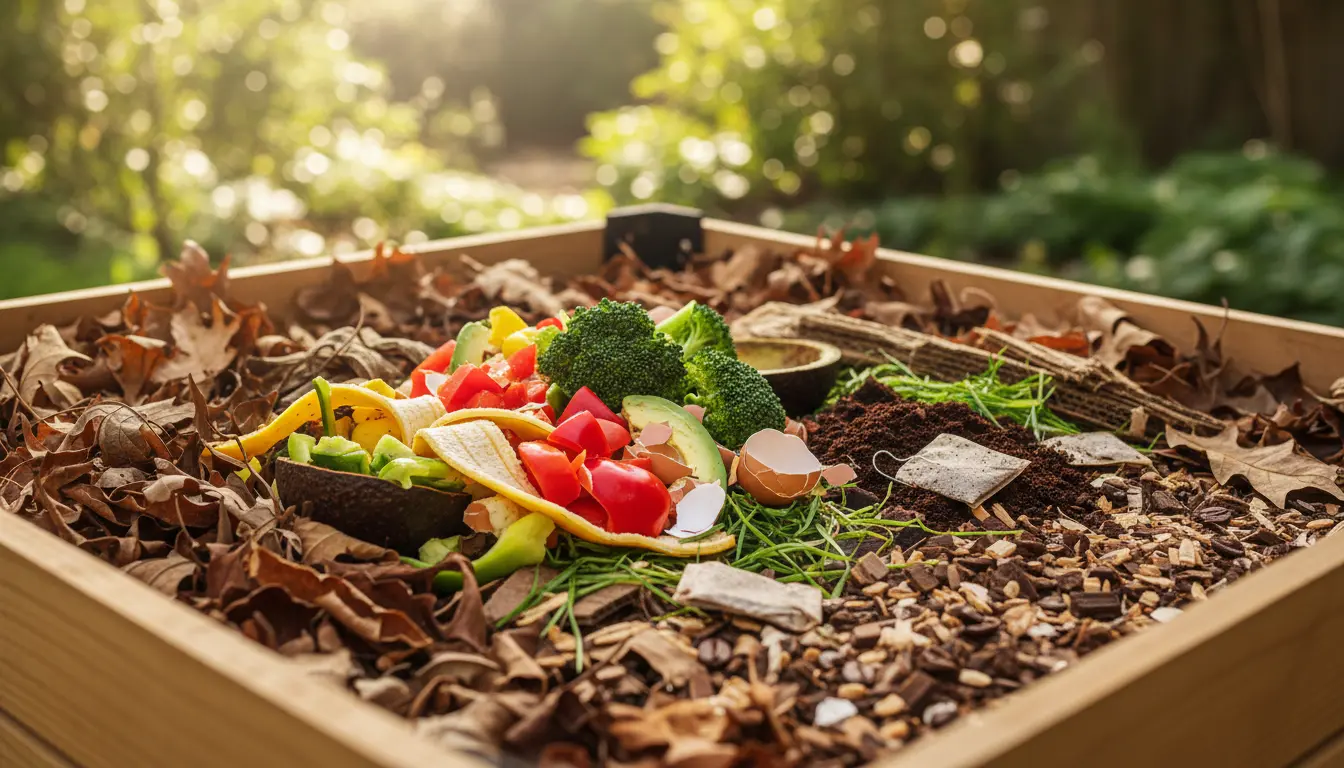
Composting at home turns kitchen scraps and yard waste into rich soil. This guide gives practical steps you can follow today, with equipment options, troubleshooting tips, and a short case study.
Why start composting at home
Composting reduces household waste, lowers methane emissions from landfills, and improves garden soil structure. It also saves money on store-bought soil amendments and reduces the need for chemical fertilizers.
What you need to begin composting at home
Starting composting at home requires minimal tools and space. Choose a method that fits your lifestyle—outdoor bin, tumbler, or indoor worm bin.
- Compost bin or tumbler (plastic or wood)
- Pitchfork or aerator tool
- Kitchen scrap container (with lid)
- Carbon sources: dry leaves, cardboard, shredded paper
- Nitrogen sources: vegetable scraps, coffee grounds, grass clippings
How to start composting at home: step by step
Follow these steps to set up a simple, balanced compost pile that decomposes efficiently.
1. Choose a location
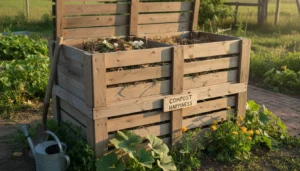
Pick a spot with good drainage and partial sun. If you use a tumbler, you can place it on a patio or in a small yard. For worm bins, keep them indoors or in a shaded garage.
2. Build the right mix
Balance carbon (browns) and nitrogen (greens). Aim for roughly 25–30 parts carbon to 1 part nitrogen by volume. A simple rule: two-thirds brown to one-third green.
- Greens: fruit and vegetable scraps, coffee grounds, fresh grass clippings
- Browns: dry leaves, straw, shredded newspaper, cardboard
3. Layer and maintain
Start with a layer of coarse materials for airflow, then add alternating layers of greens and browns. Keep the pile moist like a wrung-out sponge and turn it every 1–2 weeks to add oxygen.
4. Monitor temperature and moisture
Hot composting reaches 130–150°F (54–66°C) and kills weed seeds. If the pile cools, add more greens and turn. If too wet, add more browns and improve drainage.
Composting at home: common methods
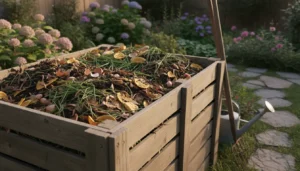
Choose the method that matches your space and effort level. Each method can produce quality compost.
- Open bin: Low cost and simple for yards. Requires turning with a pitchfork.
- Tumbler: Closed container that you turn to aerate. Faster and neater.
- Vermicomposting: Uses red worms in a bin to process kitchen waste indoors. Great for apartment dwellers.
Troubleshooting composting at home
Problems are common but solvable. Address issues quickly to keep decomposition on track.
- Bad smell: Usually too wet or too much green material. Add browns and turn the pile.
- Slow decomposition: Add moisture, more greens, and increase turning.
- Pests: Avoid meat, dairy, and oily foods. Use a closed bin or bury scraps in the pile.
How to use finished compost
Finished compost is dark, crumbly, and earthy-smelling. Use it as a soil amendment, mulch, or potting mix ingredient. Apply a 1–2 inch layer to garden beds or mix 10–30% compost into potting soil.
A home compost pile can divert up to 30% of household trash from the landfill and reduce greenhouse gas emissions from decomposing organic waste.
Small case study: Composting at home in a suburban kitchen
Maria lives in a small suburban home with a vegetable garden. She bought a 65-gallon tumbler and started adding kitchen scraps and shredded leaves.
Within three months, Maria produced enough compost to top-dress two raised beds. She reports less grocery waste and healthier tomato plants that needed less fertilizer.
- Time invested: 10–15 minutes per week
- Results: Reduced waste by 40%, improved soil water retention
- Cost: $80 for a tumbler, paid off after one growing season
Practical tips for long-term success
Keep composting a simple routine by making small habit changes. Use a sealed counter caddy for scraps and empty it into the bin daily. Keep a small supply of shredded cardboard for quick browns.
- Chop larger scraps to speed decomposition
- Rotate bins or use a second bin to keep compost flowing
- Label finished compost and use it within a year for best results
Final checklist for composting at home
Before you begin, confirm these quick items so your composting project succeeds:
- Choose a bin type that fits your space
- Collect both greens and browns
- Monitor moisture and turn regularly
- Keep out meat, dairy, and fats to avoid pests
Composting at home is an accessible step toward sustainable living. With basic tools and a little routine, you can reduce waste and enrich your soil in months, not years.