
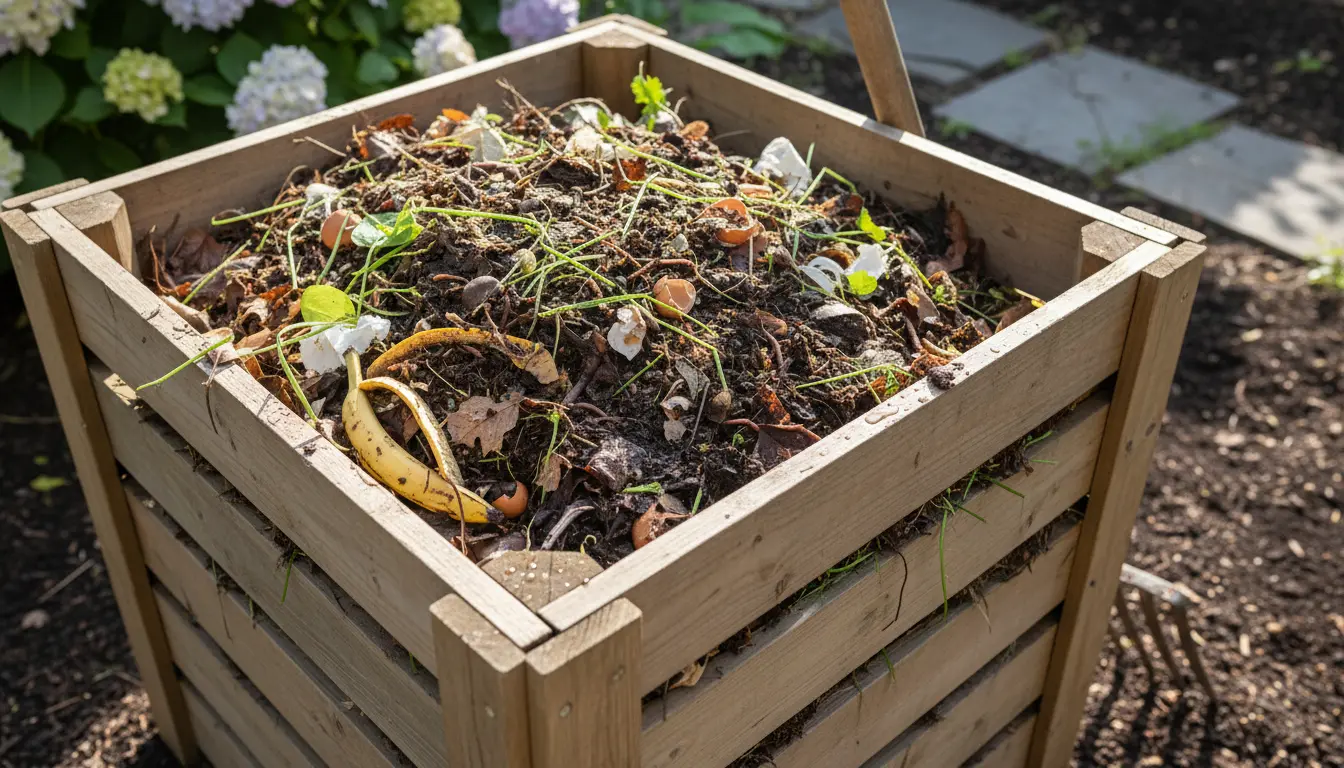
Composting at home turns kitchen scraps and yard waste into a useful soil amendment. This guide shows practical steps to set up and maintain a home compost system that fits small yards or balconies.
What is home composting and why it helps
Home composting is the natural breakdown of organic matter into humus you can use in your garden. It reduces landfill waste, lowers methane emissions, and returns nutrients to the soil.
Many towns offer curbside composting, but doing it at home saves collection costs and gives faster access to finished compost for potted plants or garden beds.
Choose a composting method for home composting
Pick a system that suits your space and lifestyle. Common options include simple bins, tumblers, and vermicomposting (worms).
- Bin composting — A closed plastic or wooden bin is low-maintenance and good for yard waste.
- Tumbler — Easy turning speeds up decomposition and reduces pests.
- Vermicomposting — Uses worms in a small container, ideal for apartments and kitchens.
Deciding factors for your method
Consider these points when choosing:
- Available space: balcony, small yard, or garage.
- Waste types: mostly kitchen scraps or lots of yard trimmings.
- Time and effort: tumblers need regular turning; vermicompost needs daily worm care.
Materials: what to add and what to avoid

Successful home composting relies on a balance of carbon-rich and nitrogen-rich materials. Aim for a mix close to 25–30 parts carbon to 1 part nitrogen by weight, commonly simplified as a mix of browns and greens.
Good items for home composting
- Greens (nitrogen): fruit and vegetable scraps, coffee grounds, fresh grass clippings.
- Browns (carbon): dried leaves, shredded newspaper, straw, cardboard (small pieces).
- Small amounts of dairy-free bread and cooked vegetables are okay if balanced and buried.
Items to avoid in home composting
- Meat, fish, bones, and fatty foods — they attract pests and slow composting.
- Dairy products and oily foods — avoid unless using high-heat industrial methods.
- Diseased plants, invasive weeds with seeds, and chemically treated wood.
Step-by-step setup for a home compost bin
Follow these simple steps to get started with a basic bin.
- Select a bin location: partial shade, level ground, and easy access.
- Layer the base: start with coarse browns like small branches to aid drainage and airflow.
- Add alternating layers: thin layers of greens then browns, and lightly moisten each layer.
- Turn or mix: every 1–2 weeks if using a bin or tumbler. For vermicompost, turn less and avoid disturbing worms.
- Monitor moisture and smell: it should smell earthy, not rotten. Add water if dry and browns if too wet.
Maintenance tips for steady home composting
- Chop or shred large items to speed decomposition.
- Keep the pile moist like a wrung-out sponge.
- If odors appear, add more browns and turn the pile to add oxygen.
- Use finished compost when material is dark, crumbly, and smells earthy—usually 2–6 months depending on method.
Troubleshooting common home composting problems
Many issues are simple to fix if you know what to look for.
- Pests: Use enclosed bins, avoid meat/dairy, and bury new scraps inside the pile.
- Bad smells: Add dry browns and turn the pile to introduce air.
- Slow decomposition: Chop materials finer, increase nitrogen with green scraps, and maintain moisture.
Small real-world case study
The Morales household in Portland converted to home composting using a 55-gallon tumbler and a small vermicompost bin for kitchen scraps. Over 12 months they reduced weekly trash volume by nearly half.
They used the finished compost in container vegetables and a small herb bed. The family reported healthier plants and lower grocery costs for herbs and salad greens.
Using finished compost in your garden
Finished compost is a versatile soil amendment. Mix it into garden beds, topdress lawns, or blend with potting mix for containers.
Benefits include improved soil structure, increased water retention, and a slow-release source of nutrients for plants.
Quick checklist for starting home composting
- Choose a method: bin, tumbler, or vermicompost.
- Gather browns and greens before you start.
- Set up the bin in a convenient location.
- Monitor moisture, aeration, and smell weekly.
- Harvest finished compost every few months to use in the garden.
Home composting is a practical way to reduce waste and improve soil health. Start small, learn from a few cycles, and adapt the system to suit your space and schedule.