
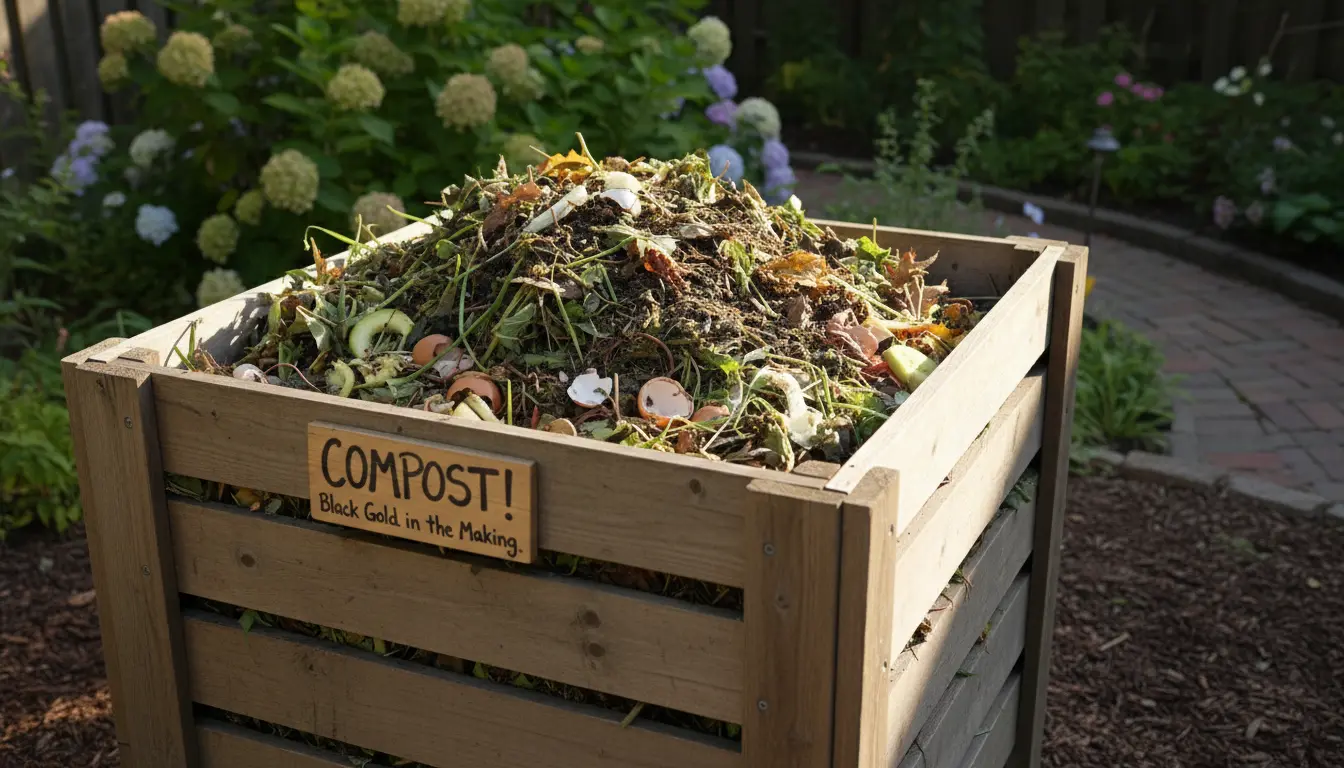
Start composting at home the practical way
Composting at home turns kitchen scraps and yard waste into useful soil, reduces trash, and supports plant health. This guide gives clear steps, method choices, and troubleshooting tips so you can begin composting quickly and confidently.
Why composting at home matters
Home composting reduces organic waste sent to landfills and lowers methane emissions from trash. It also creates nutrient-rich compost you can use in pots, garden beds, or lawns.
Understanding the basics will help you choose the right setup for your space and goals.
How to start composting at home
Follow these steps to set up a successful compost system. Each step is short and actionable.
1. Pick a composting method for home composting
Choose a method based on space, effort, and waste volume. Common options include:
- Tumbler bin: Fast, low-effort mixing; good for small yards.
- Static bin or pile: Simple and inexpensive; needs occasional turning.
- Worm composting (vermicomposting): Best for apartments and kitchens; produces nutrient-dense worm castings.
- Bokashi: Fermentation-based; handles cooked foods and works in small spaces.
2. Balance materials: Browns and greens
Successful home composting depends on a balance of carbon-rich (browns) and nitrogen-rich (greens) materials. Aim roughly for a 3:1 ratio by volume—three parts browns to one part greens.
- Greens: vegetable scraps, coffee grounds, fresh grass clippings.
- Browns: dried leaves, straw, shredded paper, cardboard.
3. Layer and aerate
Layer greens and browns to avoid odors. Turn or aerate the pile every 1–2 weeks to add oxygen and speed decomposition.
For tumblers, rotate according to manufacturer guidelines. For bins or piles, use a pitchfork or compost aerator tool.
4. Monitor moisture and temperature

Compost should be as damp as a wrung-out sponge. Too wet material smells and slows decomposition; dry material slows the process.
Active compost heats to 120–160°F (50–71°C) in large piles. Small home systems may not reach these temperatures but will still produce good compost more slowly.
Troubleshooting common home composting problems
Small issues have simple fixes. Check this quick reference to keep your compost healthy.
- Bad smell: Add more browns and increase aeration.
- Pile too dry: Add water and more greens.
- Pile too wet: Add dry browns and turn the pile.
- Slow breakdown: Chop larger items, increase mixing, and check ratios.
Keeping pests away
Avoid adding meat, dairy, oily foods, or large amounts of citrus to outdoor bins. Use a closed bin or tumbler to deter rodents and flies.
Worm bins and bokashi systems are well-suited for indoor or small-space composting and typically attract fewer pests.
Tools and supplies for home composting
You do not need fancy equipment. Basic tools speed the process and improve results.
- Compost bin or tumbler (or a worm bin for vermicompost).
- Pitchfork or aerator tool for turning.
- Kitchen compost caddy with a tight lid to collect scraps.
- Thermometer (optional) to monitor heat in large piles.
Using finished compost from home composting
Finished compost is dark, crumbly, and smells earthy. Use it to improve soil structure, water retention, and nutrient content.
Ways to use finished compost:
- Top-dress lawn or garden beds.
- Mix into potting soil for containers.
- Make compost tea by steeping compost in water for a liquid feed.
Food scraps and yard waste make up nearly 30 percent of household trash by weight. Composting at home can dramatically reduce this fraction and create valuable soil amendment.
Case study: Small balcony worm composting
Anna, an apartment resident, started vermicomposting in a 20-liter bin on her balcony. She collected coffee grounds, vegetable peels, and shredded paper as feedstock.
Within three months she harvested about 5 liters of worm castings and reduced her weekly trash by a third. Her container plants responded with stronger growth and fewer waterings needed.
Key lessons from the case study: match system size to waste volume, keep bedding moist, and feed small portions regularly.
Quick start checklist for home composting
- Choose a method: tumbler, bin, worm, or bokashi.
- Collect a steady source of greens and browns.
- Set up a bin in a convenient location with drainage and ventilation.
- Layer materials and monitor moisture, turning as needed.
- Harvest finished compost and apply to plants.
Final tips for long-term success with composting at home
Start small and expand your system once you know how much waste you generate. Keep a simple log to record turning schedules and any problems, and adjust your method over time.
Composting at home is flexible and scalable. With a little attention you can convert kitchen and yard waste into valuable compost year-round.