
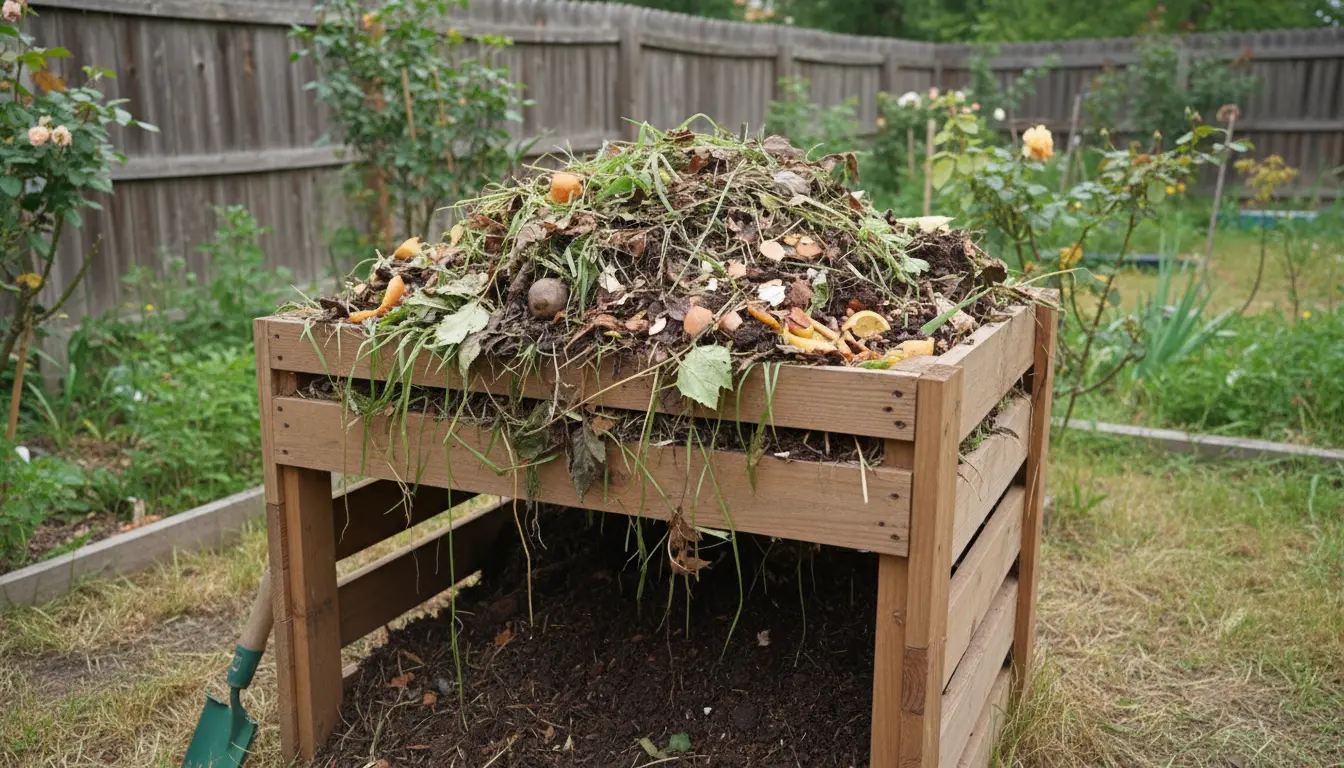
Why Start Composting at Home
Composting at home turns kitchen and yard waste into nutrient-rich soil for plants. It reduces landfill waste and saves money on fertilizers.
How to Start Composting at Home: Basic Principles
Successful composting depends on the right mix of materials, moisture, and air. Aim for a balance of carbon rich “browns” and nitrogen rich “greens” to speed decomposition.
What to Include
- Browns: dry leaves, shredded paper, cardboard, straw.
- Greens: fruit and vegetable scraps, coffee grounds, fresh grass clippings.
- Small amounts of garden trimmings and eggshells are fine.
What to Avoid
- Meat, dairy, oily foods and bones (can attract pests and smell).
- Diseased plants, persistent weeds with seeds, pet waste from carnivores.
Choosing a Method to Start Composting at Home
Pick a method that fits your space and time. Common options are a compost pile, bin, or tumbler.
Compost Bin
Bins are tidy and suitable for small yards. They reduce pests and keep the pile compact.
Compost Tumbler
Tumblers speed up composting because turning is easy. They are more expensive but neat for patios or tight spaces.
Open Pile
An open pile works for larger properties and heavy-volume gardeners. It needs more space and occasional turning with a pitchfork.
Step-by-Step: How to Start Composting at Home
Follow these steps to begin a reliable compost system that produces usable compost in months.
- Choose a location: a level, partly shaded spot near a water source is best.
- Build a base layer of coarse browns like twigs to allow air flow.
- Add alternate layers of greens and browns — a good rule is roughly 2–3 parts browns to 1 part greens.
- Keep the pile moist like a wrung-out sponge; water during dry spells.
- Turn the pile every 1–2 weeks to introduce oxygen (less often for large piles).
Key Ratios and Tips
Maintaining the right balance helps microbes work efficiently. Use these quick tips to keep the process steady.
- Carbon to nitrogen ratio: aim for roughly 25–30:1 by weight; practically, this is 2–3 parts brown to 1 part green.
- Particle size: chop or shred large pieces to speed breakdown.
- Temperature: active piles heat to 130–150°F (54–66°C) if sized and balanced correctly.
Troubleshooting Common Problems
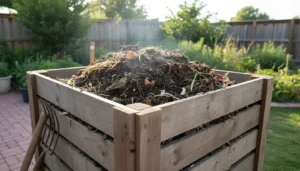
Problems often come down to moisture, aeration, or the wrong materials. Check these fixes first.
- Smelly pile: add more browns and turn to add air.
- Too dry: water lightly and cover when hot and sunny.
- Slow decomposition: chop materials finer and add a handful of finished compost or soil to introduce microbes.
Small Real-World Example
Case study: A small apartment family used a 40-gallon compost tumbler for kitchen scraps and paper. They turned it twice a week and added dry leaves from a nearby park. After 4 months they harvested dark crumbly compost and used it to feed container tomatoes, reducing store-bought soil purchases by half.
Composting can divert up to 30% of household waste from landfills and returns valuable nutrients to your garden.
How to Use Finished Compost
Finished compost is dark, crumbly and smells earthy. Use it as a soil amendment, top dressing, or in potting mixes.
- Mix 1 part compost to 3 parts soil for garden beds.
- Use a thin layer around established plants as mulch.
- Blend compost with potting soil for containers to improve water retention and nutrients.
Simple Weekly Checklist to Stay on Track
Keep composting manageable with a short weekly routine. This prevents common mistakes and maintains heat and decomposition.
- Add new scraps and cover with a thin layer of browns.
- Check moisture and add water if dry.
- Turn or tumble the pile to add oxygen.
Final Tips for Success
Start small and scale up once you know what works. Composting is forgiving — small adjustments yield big improvements over time.
- Keep records for a month: what you add and how often you turn the pile.
- Use a kitchen caddy with a tight lid to store scraps and reduce indoor odors.
- Learn from neighbors or local composting groups for local tips on materials and timing.
By following these practical, step-by-step instructions, you can reliably start composting at home and produce rich compost to nourish your garden and reduce waste.