
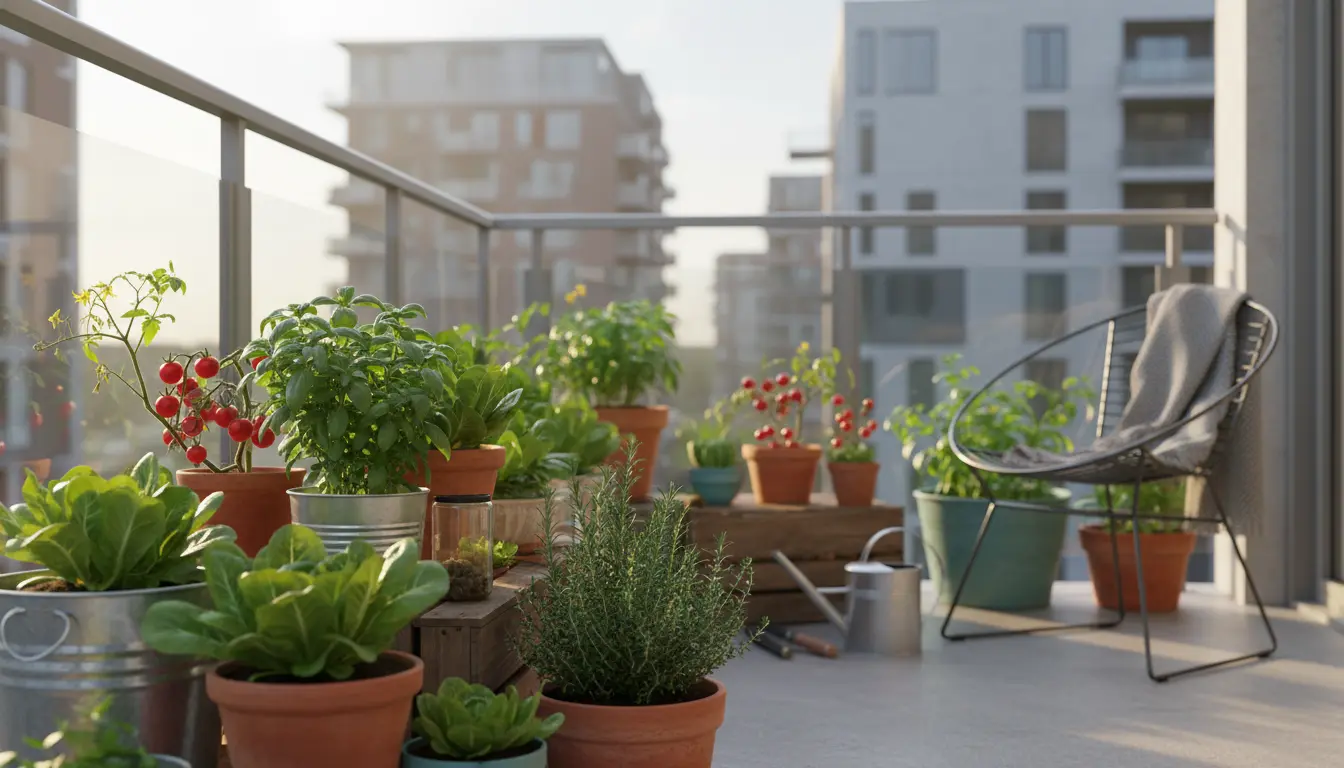
Many city dwellers want fresh vegetables but lack yard space. A balcony vegetable garden lets you grow food in containers, using limited space and minimal tools. This guide walks through the practical steps to start and maintain a productive balcony garden.
Start a Balcony Vegetable Garden: Plan Your Space
Before buying seeds or pots, assess your balcony. Note sunlight hours, available floor or railing space, weight limits, and access to water. Planning reduces mistakes and increases harvest success.
Measure the balcony and sketch a simple layout. Decide whether you will use floor containers, railing planters, vertical racks, or a mix. Consider neighbors and building rules about hanging items or drainage.
Sunlight and Microclimate for a Balcony Vegetable Garden
Most vegetables need 4–6 hours of direct sun. East- and west-facing balconies get morning or afternoon sun, while south-facing balconies get the most light. North-facing balconies work for leafy greens and herbs.
Also watch for wind, reflected heat from nearby buildings, and shade from overhangs. Small adjustments like a windscreen or reflective board can make a big difference.
Choose Containers for Your Balcony Vegetable Garden
Select containers that fit your space and the plants you want. Use sturdy pots with drainage holes and saucers to protect balcony surfaces. Lightweight materials like fabric grow bags or plastic are easier to move.
- Deep containers (8–12 inches) for roots of lettuce, herbs, and radishes.
- Large pots (12–18 inches) for tomatoes, peppers, and bush beans.
- Hanging baskets or railing planters for strawberries and trailing herbs.
Practical Container Tips
Raise pots on pot feet or bricks to help drainage. Avoid overly large pots if you need to move them. Use saucers to catch runoff and avoid staining or violating building rules.
Soil, Fertilizer, and Plant Selection
Use a good quality potting mix formulated for containers. These mixes are lighter and drain better than garden soil. Mix in slow-release fertilizer or compost when filling pots to provide steady nutrients.
Choose plants suited to container life and your light conditions. If you have full sun, pick tomatoes, peppers, eggplant, and basil. In partial shade, choose lettuce, spinach, chard, mint, and cilantro.
Seed vs Seedlings for a Balcony Vegetable Garden
Starting from seed saves money and offers more variety, especially for lettuces and herbs. Seedlings (transplants) get you a faster start for tomatoes and peppers. Consider a small grow tray indoors to start seeds early.
Watering and Maintenance for a Balcony Vegetable Garden
Container plants dry out faster than in-ground beds. Water deeply when the top inch of soil is dry. In hot weather, most containers need daily watering. Mulch the soil surface to slow evaporation.
Use a watering can or a hose with a gentle nozzle to avoid displacing soil. Self-watering containers or a simple drip irrigation kit can save time and provide consistent moisture.
Pest and Disease Management
Inspect plants regularly for pests like aphids, whiteflies, or slugs. Use physical removal, insecticidal soap, or neem oil for small infestations. Good air circulation and proper watering reduce disease risk.
Rotate crops in containers each season where possible and remove old plant debris to prevent overwintering pests and diseases.
Harvesting and Extending Your Season
Harvest frequently to encourage production. Pick lettuce outer leaves or snip herbs regularly to promote new growth. For fruiting crops, harvest tomatoes and peppers when ripe to free the plant to produce more.
Use compact varieties labeled patio, dwarf, or determinate for container success. In cooler months, use frost cloths or move containers to sheltered spots to extend the season.
Examples of Easy Balcony Vegetables
- Lettuce and mixed salad greens — fast, reliable, partial shade tolerant.
- Herbs like basil, parsley, and mint — great for windows or small pots.
- Cherry tomatoes — productive in larger containers with support.
- Radishes and carrots — small varieties fit shallow containers.
Containers warm up faster than garden soil, which can speed germination and early growth. However, they also lose moisture faster, making regular watering essential.
Real-World Case Study: Two-Bedroom Balcony to Salad Bowl
Case: Anna, a city renter with a 6-foot by 3-foot balcony, converted her space into a productive garden. She used three 12-inch pots, two railing planters, and a vertical shelf for herbs.
Over one season she harvested continuous salad greens, a steady supply of herbs, and several pints of cherry tomatoes. Her time commitment was 10–20 minutes every other day for watering and harvesting.
Key takeaways: choose compact varieties, set up a simple watering routine, and keep plants well-fed with monthly liquid feed for consistent yields.
Quick Checklist to Start a Balcony Vegetable Garden
- Measure balcony and check building rules.
- Assess sunlight and microclimate for plant choices.
- Select containers with good drainage and potting mix.
- Choose suitable plants and start seeds or buy seedlings.
- Set up watering method and schedule regular maintenance.
Starting a balcony vegetable garden is a realistic, low-cost way to grow fresh food in the city. With planning, the right containers, and simple maintenance, you can enjoy homegrown vegetables even in small spaces.