
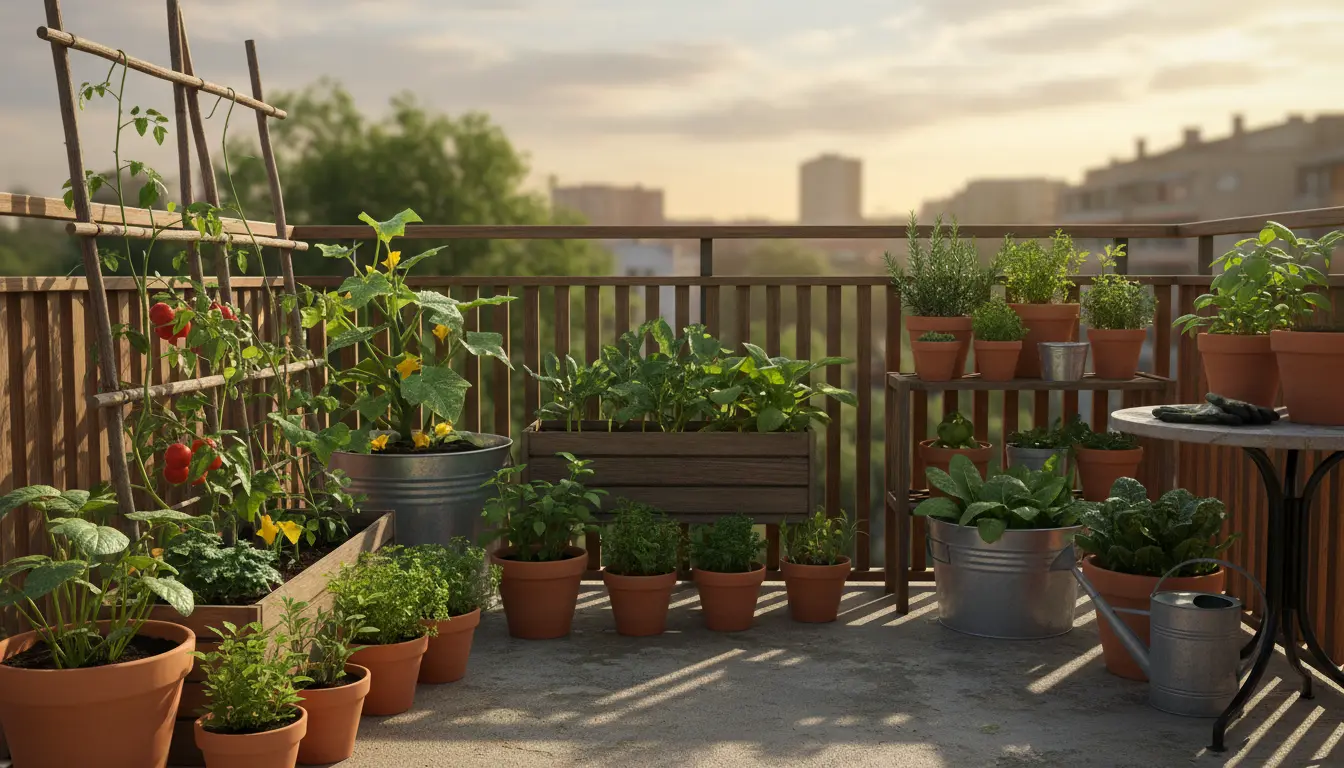
Balcony Vegetable Garden: A Practical Guide to Getting Started
Starting a balcony vegetable garden is a practical way to grow fresh food without a yard. This guide walks you through planning, setup, and simple maintenance so you get edible results quickly.
Plan Your Balcony Vegetable Garden
First, assess light, space, and weight limits. Most vegetables need 4–6 hours of direct sunlight, but some herbs and leafy greens tolerate partial shade.
Measure the balcony area and note where sunlight falls during the day. Check railings and floor load limits if provided by your building management.
Choose Vegetables for a Balcony Vegetable Garden
Select compact varieties labeled for containers or patios. Good starter choices include cherry tomatoes, lettuce, spinach, bush beans, peppers, radishes, and herbs.
- Tomatoes: choose determinate or patio varieties.
- Lettuce and spinach: quick harvest and shade tolerant.
- Peppers: compact and productive in containers.
- Herbs: basil, parsley, chives for continuous harvest.
Containers and Soil for a Balcony Vegetable Garden
Choose containers that hold 5–10 gallons for most vegetables; smaller herbs can use 1–3 gallon pots. Use lightweight pots if weight is a concern.
Use a high-quality potting mix formulated for containers, not garden soil. Look for mixes that contain peat or coir, perlite for drainage, and slow-release fertilizer.
Container Tips
- Ensure drainage holes to prevent waterlogging.
- Group containers to create microclimates and simplify watering.
- Use saucers or trays to protect balcony surfaces and catch runoff.
Watering and Fertilizing Your Balcony Vegetable Garden
Container plants dry out faster than garden beds. Check soil moisture daily during hot weather and water when the top inch feels dry.
Fertilize regularly because nutrients leach from pots. Use a balanced liquid fertilizer every 2–3 weeks or a controlled-release granular fertilizer at planting.
Simple Watering Strategies
- Water thoroughly until water drains from the bottom.
- Mulch container surfaces with straw or bark to reduce evaporation.
- Consider a self-watering container or drip system on a timer for vacations.
Placement and Support in a Balcony Vegetable Garden

Place taller plants at the back or along the railing so they don’t shade smaller ones. Use vertical space like trellises for vining crops such as cucumbers or pole beans.
Secure trellises to prevent wind damage, and choose sturdy stakes for tomatoes and peppers.
Using Vertical Space
- Install railing planters and stackable planter towers.
- Train vines to climb a trellis or netting to maximize space.
- Use hanging baskets for trailing herbs and strawberries.
Pest Control and Maintenance for a Balcony Vegetable Garden
Inspect plants weekly for pests like aphids, whiteflies, and slugs. Early detection prevents infestations from spreading across a small balcony.
Use physical controls first: handpick pests, spray with a strong water jet, or apply insecticidal soap. Avoid broad-spectrum pesticides that harm beneficial insects.
Routine Tasks
- Pinch back herbs to encourage bushy growth.
- Harvest frequently to encourage more production.
- Replace spent plants and refresh potting mix yearly.
Seasonal Calendar for a Balcony Vegetable Garden
Create a simple calendar with planting and harvest dates. For temperate zones, start seeds indoors 4–6 weeks before the last frost or buy seedlings from a nursery.
Succession planting—staggering plantings every few weeks—keeps harvests steady instead of all at once.
Small Case Study: Five Pots, Big Harvest
Sarah, a city renter with a 6×4 foot balcony, used five 10-inch pots and one 5-gallon container. She planted two determinate cherry tomato plants, two lettuce heads, a pot of basil, a pepper, and a hanging basket of strawberries.
Over one season she harvested continuous salad greens, weekly cherry tomatoes, and several peppers. Strategic placement and consistent watering produced fresh meals and reduced grocery trips.
Common Problems and Quick Fixes for a Balcony Vegetable Garden
- Yellow leaves: check watering and root drainage.
- Stunted growth: add a balanced fertilizer and check for root-bound pots.
- Pest clusters: remove by hand and use insecticidal soap if needed.
Final Checklist Before You Start Your Balcony Vegetable Garden
- Measure sunlight and balcony load limits.
- Choose compact, container-friendly vegetable varieties.
- Buy quality potting mix and suitable containers.
- Plan watering and fertilizing schedules.
- Prepare supports and trellises for vining plants.
With modest effort and the right choices, a balcony vegetable garden can supply fresh produce, save money, and connect you to the seasons. Start small, observe, and expand as you gain confidence.