
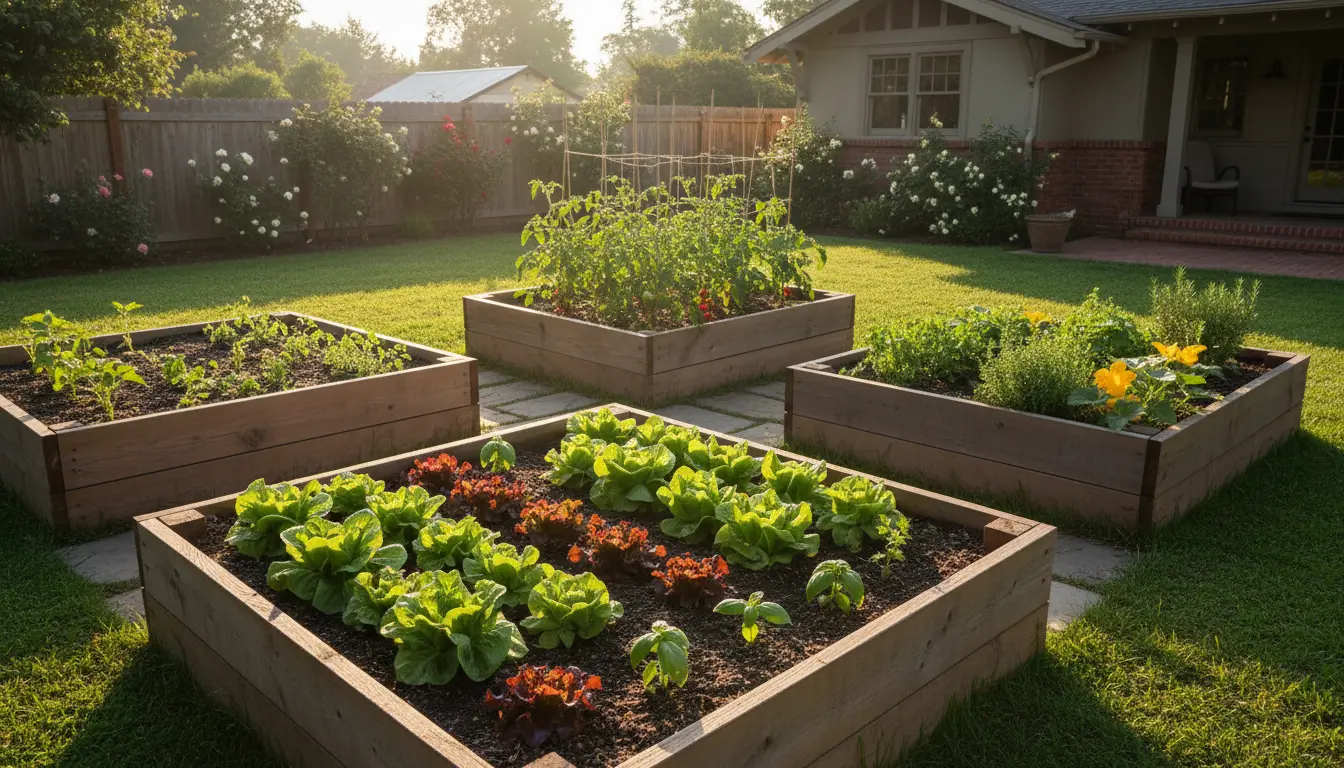
Beginner Guide to a Backyard Vegetable Garden
Starting a backyard vegetable garden is one of the most practical ways to grow fresh food and save money. This guide gives clear steps you can follow, whether you have a small yard or a few containers on a patio.
Planning Your Backyard Vegetable Garden
Good planning reduces mistakes and increases your chances of a strong harvest. Start by assessing sunlight, space, and time you can commit each week.
Choose the Right Location for a Backyard Vegetable Garden
Most vegetables need 6–8 hours of direct sunlight daily. Observe your yard for a few days and mark the sunniest spot.
Ensure the location has easy access to water and protection from strong winds. Avoid low spots that collect cold air or water.
Decide on Garden Type: In-Ground, Raised Beds, or Containers
Choose a method that matches your soil quality and physical ability. Raised beds warm faster in spring and improve drainage.
- In-ground: Best if you have deep, healthy soil.
- Raised beds: Easier to manage weeds and soil quality.
- Containers: Ideal for patios or small spaces.
Soil and Fertility for a Backyard Vegetable Garden
Soil is the foundation of a productive garden. Test your soil pH and organic matter before planting.
Preparing Soil for a Backyard Vegetable Garden
Loosen compacted soil and mix in compost to improve texture and nutrients. Aim for a crumbly loam that drains well.
Topsoil improvements can include 2–4 inches of compost mixed into the top 6–8 inches of soil.
Fertilizer and Ongoing Soil Care
Use balanced organic fertilizer at planting and side-dress with compost or slow-release fertilizer during the season. Avoid over-fertilizing leafy crops at the expense of fruits.
What to Plant First in a Backyard Vegetable Garden
Start with easy, reliable vegetables that tolerate beginner mistakes. Focus on crops with quick rewards to build experience and motivation.
- Tomatoes and peppers (warm-season, need full sun)
- Leafy greens like lettuce and spinach (cool-season, quick harvest)
- Radishes and carrots (root vegetables for loose soil)
- Herbs like basil, parsley, and rosemary (low maintenance)
Companion Planting Basics for Backyard Vegetable Garden
Pair compatible plants to reduce pests and improve growth. For example, plant basil near tomatoes to help repel some insects.
Use short and tall plant mixes to maximize space, such as interplanting lettuce under taller tomatoes.
Watering and Irrigation for a Backyard Vegetable Garden
Consistent moisture is crucial. Most vegetables need about 1–1.5 inches of water per week, including rain.
Efficient Watering Techniques
Water deeply and less often to encourage strong root systems. Use drip irrigation or soaker hoses to deliver water to the root zone efficiently.
- Water early in the morning to reduce evaporation and disease risk.
- Mulch with straw or shredded leaves to retain moisture and suppress weeds.
Pest and Disease Management in a Backyard Vegetable Garden
Preventive measures often work better than cures. Start with clean tools, healthy seedlings, and good spacing for air flow.
Common Organic Controls
Use row covers to protect young plants, hand-pick larger pests, and apply organic insecticidal soap for soft-bodied insects.
Rotate crops yearly to reduce soil-borne diseases and avoid planting the same family in the same spot each season.
Harvesting and Year-Round Care for a Backyard Vegetable Garden
Harvest vegetables at the right maturity for best flavor and to encourage more production. Many plants produce more if you pick regularly.
After harvest, clear spent plants, amend soil with compost, and plan cover crops or a winter mulch to protect soil health.
Tomato plants often produce more fruit when you remove the lowest leaves that touch the soil. This reduces disease spread and improves air flow.
Case Study: Small Urban Backyard Vegetable Garden
A renter in a city converted a 10×6 foot patch into three raised beds. They filled beds with a 50/50 mix of compost and topsoil and planted tomatoes, peppers, lettuce, and herbs.
With drip irrigation and weekly watering, they harvested salad greens within four weeks and tomatoes by week 12. The beds produced enough for a household of two to eat fresh vegetables five days a week during peak season.
Key lessons: start small, use raised beds to control soil, and water consistently. The gardener saved roughly $300 in store-bought vegetables that season.
Simple Seasonal Checklist for a Backyard Vegetable Garden
- Spring: Test soil, add compost, plant cool-season crops, start warm-season seedlings indoors.
- Summer: Mulch, water deeply, stake tomatoes, harvest regularly.
- Fall: Plant cover crops, harvest remaining crops, clear spent plants.
- Winter: Repair beds and tools, plan next year’s layout, order seeds early.
Final Tips for a Successful Backyard Vegetable Garden
Start with realistic goals and expand as you gain confidence. Keep a simple journal of planting dates, varieties, and yields to learn from each season.
Focus on soil health, consistent watering, and choose a few reliable crops to build a steady supply of fresh vegetables from your backyard garden.