
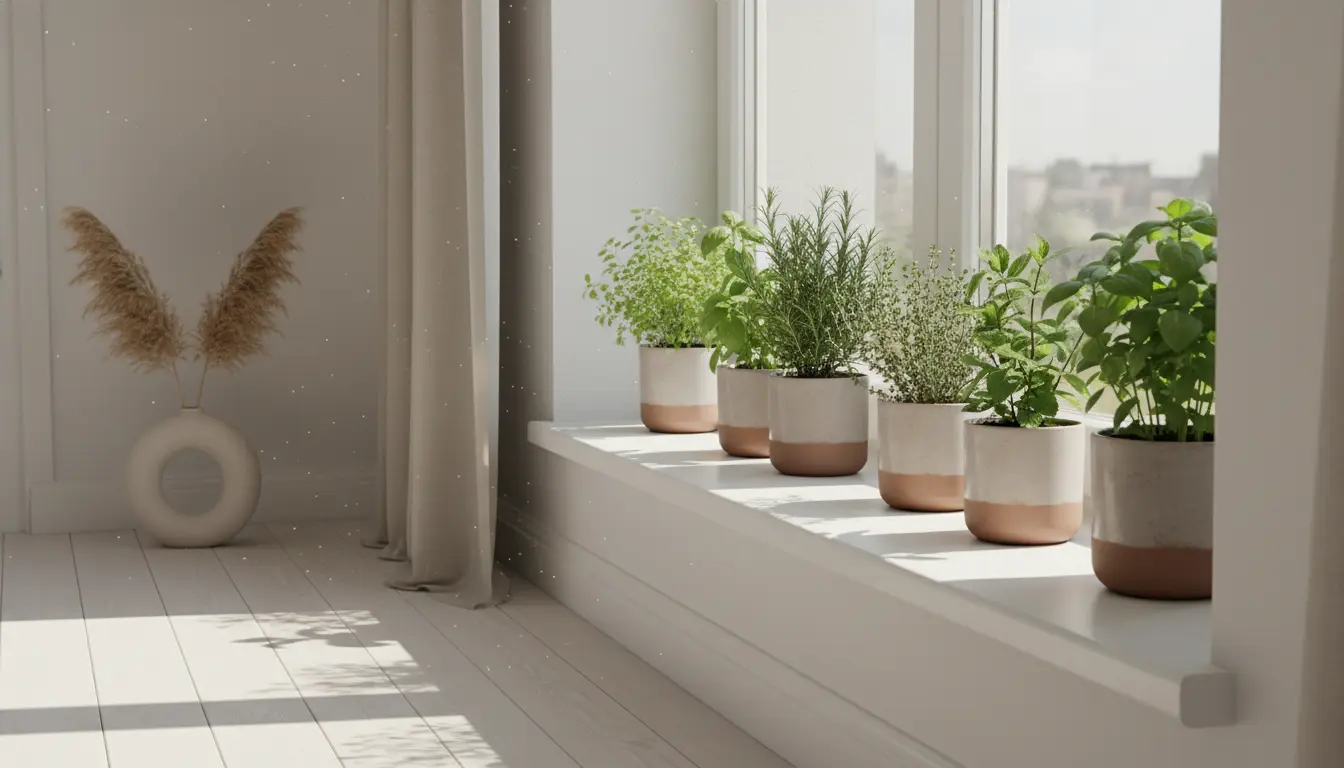
Growing herbs in a small apartment is practical and rewarding. This guide explains how to set up and maintain an apartment herb garden with simple steps, common tools, and troubleshooting tips.
Why an Apartment Herb Garden Works
An apartment herb garden gives you fresh flavors for cooking, low-maintenance greenery, and a way to practice gardening without outdoor space. Herbs adapt well to containers and tolerate the varied light conditions typical in apartments.
Many common herbs have shallow roots and grow quickly, so you can see results within weeks. They also help reduce grocery costs and add scent and color to small living spaces.
Choosing the Right Spot for Your Apartment Herb Garden
Location is the first critical decision for a successful apartment herb garden. Most herbs need good light, stable temperatures, and protection from cold drafts.
Light Needs for an Apartment Herb Garden
Place your herbs near a south- or west-facing window when possible. They need 4–6 hours of direct or bright indirect light daily.
If natural light is limited, use a simple LED grow light for 8–12 hours per day. Position lights 6–12 inches above the plants to mimic sunlight.
Temperature and Airflow
Most herbs prefer 65–75°F (18–24°C). Avoid placing pots directly on radiators or next to air-conditioning vents. Light airflow prevents fungal issues but avoid strong drafts.
Containers, Soil, and Watering for an Apartment Herb Garden
Good containers and soil are essential for healthy herbs. Small mistakes here can quickly stress plants in a confined environment.
Choosing Containers for an Apartment Herb Garden
- Use pots with drainage holes to avoid waterlogging.
- Terracotta pots dry faster and reduce overwatering risk.
- Consider a shallow tray for several small pots on a windowsill.
Soil and Fertilizer
Pick a high-quality, well-draining potting mix formulated for containers. Avoid garden soil, which compacts in pots.
Feed herbs lightly with a balanced liquid fertilizer every 4–6 weeks during the growing season. Overfeeding can reduce flavor intensity.
Watering Routine
Water when the top 1 inch of soil feels dry. Stick your finger into the soil to check; do not follow a strict schedule that ignores actual moisture.
Water until it runs out the drainage hole, then empty saucers after 10–15 minutes to prevent root rot.
Planting and Care Steps for an Apartment Herb Garden
Follow this step-by-step routine to establish and maintain your apartment herb garden.
- Plan: Choose 3–5 herbs to start, matching their light needs to your spot.
- Buy: Select healthy seedlings or start from seed if you have patience.
- Plant: Use quality potting mix and plant at the same depth as nursery pots.
- Water: Water well after planting and then follow the watering routine above.
- Prune: Pinch back tips to encourage bushy growth and prevent flowering.
- Harvest: Harvest regularly; use small snips or scissors to avoid damaging stems.
Best Herbs for an Apartment Herb Garden
Begin with easy, forgiving herbs that thrive indoors and offer high culinary value.
- Basil — warm, bright spots; harvest leaves often.
- Parsley — tolerates partial shade; slow but steady growth.
- Mint — very vigorous; use its own pot to avoid spreading.
- Chives — small clumping herb, good for windowsills.
- Thyme and Oregano — drought tolerant and compact.
Many herbs become more flavorful after gentle drought stress between waterings. Allowing the top soil to dry slightly concentrates essential oils that produce stronger aroma and taste.
Common Problems and Troubleshooting Your Apartment Herb Garden
Problems usually come from light, watering, or pests. Identifying the cause quickly keeps herbs productive.
- Yellow leaves: often overwatering or poor drainage.
- Leggy growth: usually insufficient light; move plants or add grow light.
- Pests: check underside of leaves for aphids or spider mites; rinse plants or use insecticidal soap.
- Flowering too soon: pinch flowers to redirect energy to leaf growth.
Case Study: Windowsill Basil Success
Maria, a first-time apartment gardener, started with three basil seedlings on a south-facing windowsill. She used 6-inch terracotta pots and a well-draining mix.
By watering when the top inch dried and pinching tips twice a week, she harvested fresh basil for salads and pesto within six weeks. A small LED light helped maintain growth during short winter days.
Her key changes: improved drainage, routine harvesting, and added a grow light. These small adjustments kept the plants vigorous year-round.
Quick Checklist to Start Your Apartment Herb Garden
- Choose a sunny spot or buy an LED grow light.
- Use pots with drainage and quality potting mix.
- Select beginner-friendly herbs that match your light.
- Water based on soil moisture, not a strict schedule.
- Prune and harvest regularly to promote growth.
Starting an apartment herb garden is a low-cost project with fast rewards. Begin small, observe how your space behaves, and adjust light, water, and plants until the system fits your routine. With basic care, you can enjoy fresh herbs year-round in even the smallest living areas.