
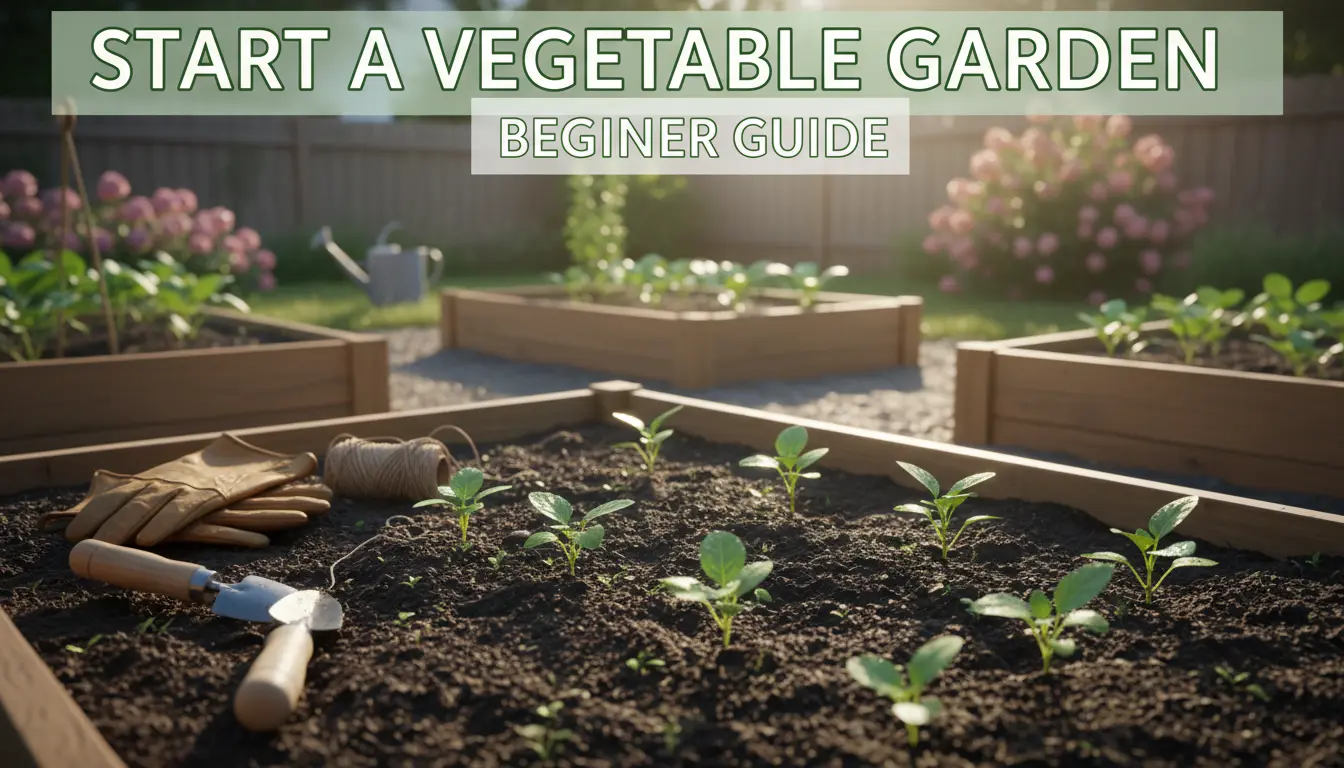
Why start a vegetable garden
Starting a vegetable garden gives you fresh produce, more control over food quality, and a satisfying hobby. It can save money and reduce grocery trips while adding healthy food to your table.
This guide explains how to start a vegetable garden with clear, actionable steps you can use whether you have a small balcony or a backyard plot.
Choose a site to start a vegetable garden
Pick a location with at least 6 hours of direct sun for most vegetables. Avoid low spots where water pools, and check for easy access to water.
If ground soil is poor, consider raised beds or large containers. Good drainage and sunlight matter more than total space.
Sun, water, and soil basics
Most vegetables prefer full sun and steady moisture. Test drainage by digging a small hole and filling with water to see how fast it drains.
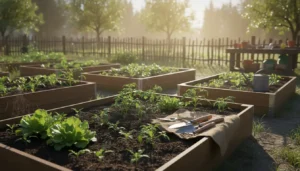
Work on soil health early: good soil makes gardening easier and more productive.
Prepare soil before planting
Healthy soil is the foundation to start a vegetable garden. Aim for loose, crumbly soil rich in organic matter.
Steps to prepare soil:
- Remove grass and weeds from the area.
- Add 2–4 inches of compost and mix into the top 6–8 inches of soil.
- Test soil pH with a kit; most vegetables prefer pH 6.0–7.0.
Soil amendments and cover crops
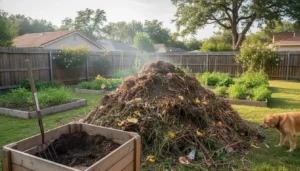
Add amendments like compost, well-rotted manure, or leaf mold to improve texture and fertility. For larger beds, plant a cover crop in the off-season to build organic matter.
Plan what to plant
Choose vegetables suited to your climate and season. Start with easy, quick-growing crops to build confidence.
Beginner-friendly choices:
- Leafy greens: lettuce, spinach, arugula
- Root crops: radishes, carrots
- Nightshades and vining crops: tomatoes, beans (support needed)
- Herbs: basil, parsley
Use succession planting
Stagger plantings every 2–3 weeks to extend harvests. For example, sow a small row of lettuce every two weeks for a steady supply.
Planting: seeds vs seedlings
Sow seeds directly for crops like carrots and beans. Use seedlings for slower-starting plants like tomatoes and peppers.
Follow seed packet instructions for depth and spacing. Crowding leads to poor air circulation and more disease.
Watering and mulching tips
Water deeply and less often to encourage strong root systems. Aim for consistent moisture, especially during flowering and fruit set.
Apply 2–3 inches of organic mulch (straw, shredded leaves) to retain moisture and suppress weeds.
Water schedule example
- New seedlings: daily light watering until established.
- Mature plants: 1–2 deep waterings per week, more in hot weather.
- Use a soaker hose or drip irrigation to minimize foliage wetting.
Maintenance and pest management
Keep beds weeded, monitor for pests, and remove diseased foliage quickly. Early action prevents small problems from becoming large ones.
Non-chemical pest strategies:
- Hand-pick larger pests like caterpillars.
- Use row covers to protect seedlings from insects.
- Encourage beneficial insects by planting flowers like calendula and dill.
Fertilizing basics
Feed with balanced organic fertilizer or compost tea as plants grow. Avoid over-fertilizing leafy greens if you want more flavor and slower, robust growth.
Harvesting and storage
Harvest regularly to encourage continued production. Pick tomatoes when they are firm and fully colored for best flavor.
Store harvests briefly in cool, dry conditions. Preserve excess with freezing, canning, or pickling.
Case Study: Small Raised Bed Success
Maria, a first-time gardener, used a 4×8 raised bed to start a vegetable garden. She filled the bed with compost and loamy topsoil, planted tomatoes, lettuce, and bush beans, and mulched well.
In her first season she harvested enough lettuce and beans for weekly meals and three dozen tomatoes. Her keys to success were site sun exposure, regular watering with a soaker hose, and weekly observation for pests.
Growing your own vegetables can reduce your grocery bill and cut food miles. A single 4×8 bed can produce over 100 pounds of food in a good season, depending on crops and care.
Quick checklist to start a vegetable garden
- Choose a sunny location with good drainage.
- Prepare soil with compost and test pH.
- Select easy crops and plan succession planting.
- Decide between seeds and seedlings.
- Mulch, water deeply, and monitor pests.
- Harvest regularly and preserve surplus.
Final tips to start a vegetable garden
Start small and expand as you learn. Keep a simple garden journal with dates for planting and harvests to improve each season.
With a little planning and routine care you can build a productive, low-stress vegetable garden that fits your space and lifestyle.