
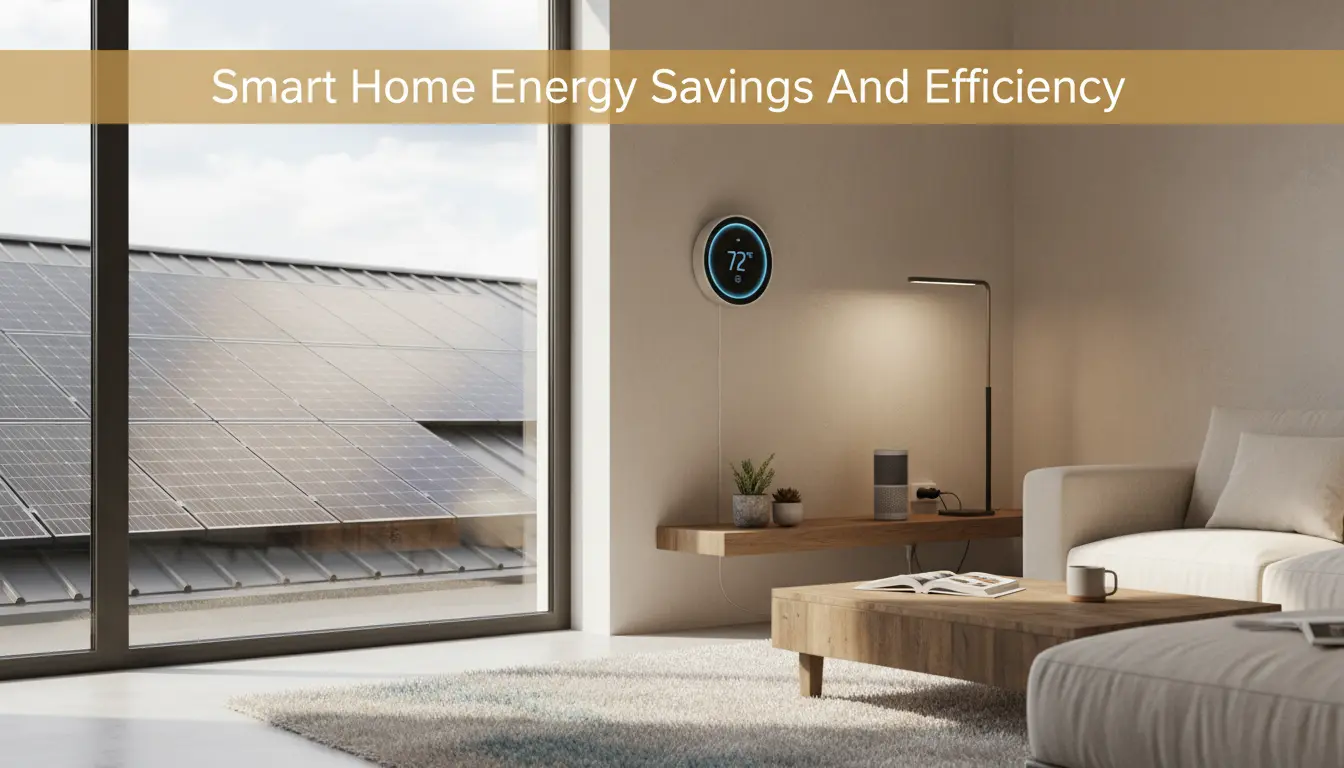
Smart Home Energy Savings: Quick Overview
Smart home energy savings combine devices, controls, and simple habits to lower electricity and heating costs. This guide explains practical, low-risk steps you can take today.
Why Smart Home Energy Savings Matter
Energy bills are a recurring expense that also affect the environment. Small changes in how you heat, cool, and light your home add up over months and years.

Smart devices let you automate those changes and measure results, making savings consistent rather than accidental.
Core Devices for Smart Home Energy Savings
Focus first on devices that give the biggest returns. These are relatively inexpensive and simple to install.
Smart Thermostats for Heating and Cooling
Smart thermostats adapt to your schedule and optimize HVAC runtime. They can lower energy use by reducing unnecessary heating or cooling when you’re away.

Look for features like geofencing, learning schedules, and remote access to control temperature from anywhere.
Smart Lighting and Controls
LED bulbs combined with smart switches or bulbs let you set schedules and motion-triggered scenes. This prevents lights being left on and reduces waste.
Dimmer capability and color temperature control also improve comfort while using less power.
Smart Plugs and Appliance Controls

Smart plugs let you turn off idle devices and track energy use. They are a low-cost way to control lamps, entertainment centers, and small appliances.
For major appliances, consider smart-ready washers/dryers and refrigerators with energy-saving modes.
Practical Steps to Start Saving
Follow a simple sequence to maximize results and avoid unnecessary spending. Start small, measure, then expand.
- Audit current energy use: Check your utility bill and home meter to find peak times and high-usage appliances.
- Install a smart thermostat in place of a manual model.
- Replace incandescent bulbs with LED and add smart controls to frequently used rooms.
- Use smart plugs for entertainment and office equipment to eliminate standby power use.
- Automate schedules: set heating, cooling, and lights to match occupancy patterns.
Tips for Scheduling and Scenes
Create routines for waking, leaving, returning, and sleeping. For example, set the thermostat to an energy-saving temperature while you are at work and to a comfortable level an hour before you return.
Use motion sensors in hallways and bathrooms to avoid leaving lights on by accident.
Smart Home Energy Savings: Monitoring and Measurement
Measuring results is key. Use device apps and energy monitors to track consumption changes week to week.
Some utilities provide hourly usage data; pair that with smart device logs to see which measures give the biggest impact.
Common Metrics to Watch
- Daily and monthly kWh consumption
- Peak demand periods
- Energy used by individual devices or circuits
Heating and cooling typically account for about 50% of home energy use, so optimizing HVAC schedules often yields the largest savings.
Cost and Payback Considerations
Initial costs vary. A smart thermostat can cost from $100 to $300, while smart plugs are under $20 each.
Calculate payback by comparing the device cost to monthly savings. Many homeowners recoup costs inside 1–3 years depending on climate and usage.
Small Real-World Case Study
Case: Suburban family reduced bills by 25% in one year using a phased approach.
- Month 1: Replaced 10 incandescent bulbs with LEDs and added smart plugs to entertainment devices.
- Month 2: Installed a smart thermostat and set schedules for workdays and weekends.
- Month 3: Added motion sensors in high-traffic corridors and connected window sensors to prevent HVAC use when windows were open.
Result: The family saw a 15% drop in annual electricity use and a 40% reduction in HVAC runtime during shoulder seasons, totaling a 25% reduction in combined energy bills. They tracked savings using the thermostat app and monthly utility statements.
Common Pitfalls and How to Avoid Them
Not all smart devices are equal. Avoid buying gadgets that duplicate functions or lack integration with your core thermostat or lighting system.
Ensure reliable Wi-Fi coverage for devices, and secure accounts with strong passwords to prevent unauthorized access.
Checklist Before You Buy
- Does the device support your home platform (Wi-Fi, Zigbee, Z-Wave)?
- Is the installation DIY or does it require a professional?
- Does it provide energy usage data or just on/off control?
Smart Home Energy Savings: Next Steps
Start with a short audit of your bills and one high-impact device, like a smart thermostat. Measure results, then expand to lighting and appliance control.
Keep changes incremental and data-driven. This approach minimizes cost and delivers predictable savings.
Summary
Smart home energy savings are achievable with targeted devices, smart scheduling, and monitoring. Prioritize HVAC control, efficient lighting, and eliminating standby power for the fastest payback.
With a few practical steps, you can reduce bills, increase comfort, and make your home more efficient without major disruption.