
Improve Remote Work Productivity with Practical Steps
Working remotely requires deliberate habits and a reliable setup. This guide gives clear, practical steps to improve remote work productivity and reduce distractions.
Remote Work Productivity: Core Principles
Productivity at home rests on predictable routines, clear boundaries, and the right environment. Apply these principles consistently to see steady gains.
- Define your work hours and breaks
- Create a dedicated workspace
- Prioritize tasks using a simple system
Set Boundaries to Protect Focus

Boundaries mean telling colleagues and family when you are available. They also include visual cues like a closed door or headphones to signal focus time.
Clear boundaries reduce interruptions and make it easier to maintain deep work sessions.
Remote Work Productivity: Daily Routine
A consistent daily routine helps your brain switch into work mode. Build a morning ritual that prepares you mentally and physically.
Sample Daily Routine
- Start with a short walk or light exercise (10–20 minutes)
- Review the day’s top three priorities
- Time-block focused work sessions (60–90 minutes) with short breaks
- Schedule meetings in two blocks to avoid constant context switching
- End the day with a brief review and plan for tomorrow
Remote Work Productivity: Workspace and Tools

Your physical and digital workspace shapes how well you can concentrate. Optimizing both reduces friction and decision fatigue.
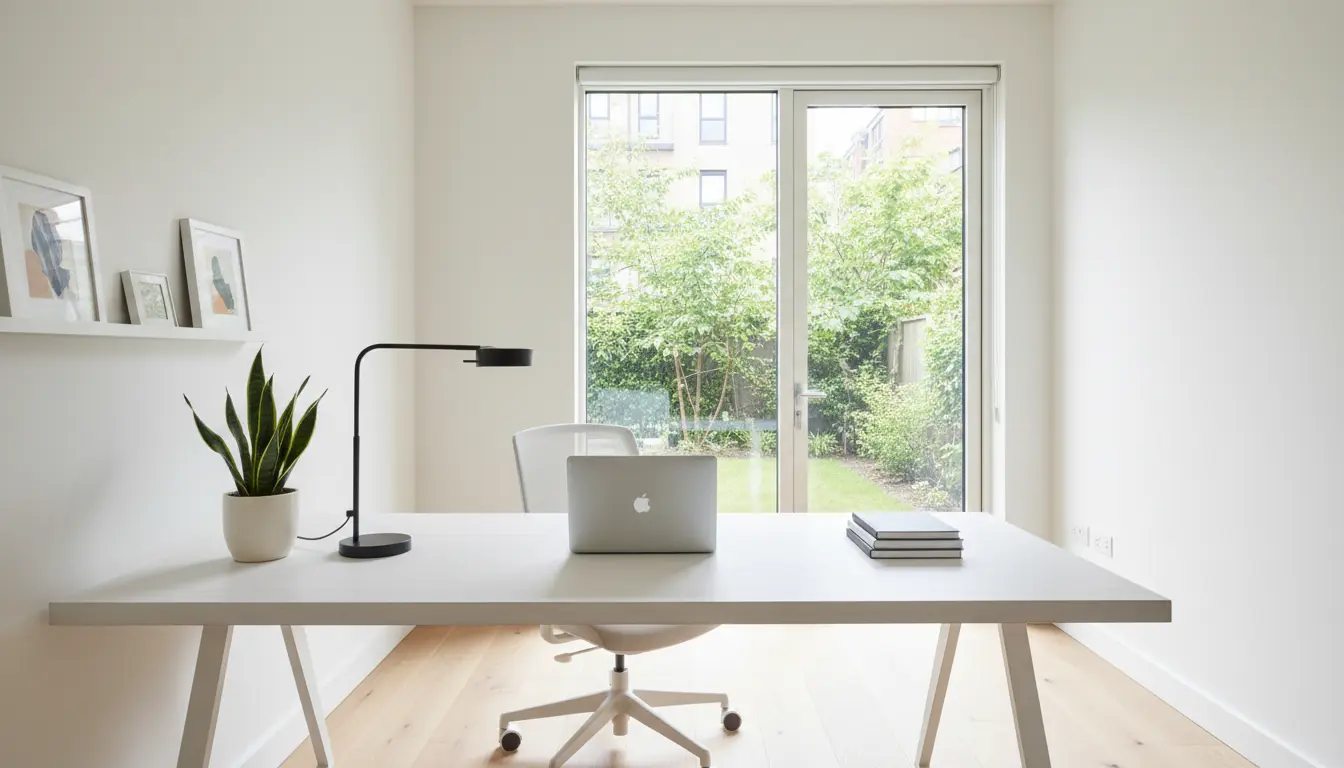
Optimize Your Physical Workspace
- Use a comfortable chair and a desk at proper height
- Position your monitor at eye level to avoid neck strain
- Keep only work-related items on your desk to lower visual clutter
- Control lighting and temperature for comfort
Essential Tools to Boost Remote Work Productivity
Choose lightweight tools that match your workflow. Too many apps create overhead and reduce focus.
- Task list or simple project board (Trello, Todoist, Notion)
- Calendar with clear time blocks (Google Calendar, Outlook)
- Focus apps for blocking distractions (Forest, Focus To-Do)
- Reliable video call and chat tools with notification controls
Remote Work Productivity: Time Management Techniques
Use time-tested techniques to manage attention, not just time. Attention management produces deeper results than multitasking.
Techniques to Try
- Pomodoro: 25 minutes focus, 5 minutes break; repeat four times then take a longer break
- Time blocking: Assign tasks to specific calendar slots
- Rule of Three: Pick three meaningful goals for the day
- Two-minute rule: Do quick tasks immediately to avoid backlog
Remote Work Productivity: Common Pitfalls and Solutions

Recognize common traps and apply simple fixes. Small changes can yield meaningful productivity improvements.
Pitfall: Endless Meetings
Schedule meeting-free blocks and insist on agendas. Cancel or shorten meetings that lack a clear purpose.
Pitfall: Home Distractions
Use noise-cancelling headphones and set clear expectations with household members. Create a simple sign or routine that marks deep work time.
Case Study: Real-World Example
Anna, a product manager at a small startup, struggled with context switching and long evenings. She implemented three changes: time blocking, a standing desk, and a daily rule of three.
Within three weeks she reported finishing core tasks earlier and reducing evening work by 40 percent. Meetings were grouped into two daily blocks, freeing uninterrupted work time for design reviews and writing.
Key takeaway: Small, consistent changes to routine and environment led to measurable productivity gains.
Remote Work Productivity: Quick Checklist
Use this checklist to audit your current setup and habits. Pick one item to improve each week.
- Do I have a defined workspace? Yes / No
- Are work hours and break times clear? Yes / No
- Do I use a task prioritization method? Yes / No
- Are meetings grouped, not scattered? Yes / No
- Do I protect at least one 90-minute focus block daily? Yes / No
Short, regular breaks after focused work improve concentration and reduce fatigue. Studies show that brief pauses help consolidate memory and sustain attention across the day.
Getting Started: A 7-Day Plan
Commit to one change per day to avoid overwhelm. Over a week you can form a stronger routine without major disruption.
- Day 1: Define work hours and communicate them
- Day 2: Set up a dedicated workspace
- Day 3: Try the rule of three for daily priorities
- Day 4: Block one 90-minute focus session
- Day 5: Group meetings into two blocks
- Day 6: Install one focus app and limit notifications
- Day 7: Review progress and adjust the plan
Conclusion: Improve Remote Work Productivity Step by Step
Remote work productivity is not a single change, but a set of small, repeatable habits. Start with boundaries, build a routine, and optimize your space and tools.
Measure results after two to four weeks and refine the approach. Consistency produces the best long-term gains.