
Why remote work productivity matters
Remote work productivity affects individual output, team delivery, and company results. Improving how you manage time and focus at home reduces stress and increases consistent performance.
This guide gives clear, practical steps you can apply immediately to improve remote work productivity without expensive tools or drastic schedule changes.
Core principles for remote work productivity

Start with a few core principles that shape daily choices. Use them as a checklist before adopting new techniques.
- Design a predictable routine that balances deep work and breaks.
- Create a dedicated workspace to reduce context switching.
- Set clear boundaries with colleagues and household members.
- Use simple tools to measure focus and outcomes, not only hours.
Daily routine for remote work productivity
A consistent daily routine anchors your day and reduces decision fatigue. Keep routines short and repeatable.
- Morning check-in (15 minutes): review top 3 tasks for the day and plan blocks.
- Deep work block (60–90 minutes): turn off notifications and focus on one task.
- Short break (10–20 minutes): move, hydrate, or step outside briefly.
- Second deep block (60 minutes): continue high-value work or complete a task.
- Wrap-up (15 minutes): record progress, plan tomorrow, and shut down work tools.
Example schedule: 9:00–9:15 plan, 9:15–10:45 deep work, 10:45–11:00 break, 11:00–12:00 deep work, 12:00 lunch.
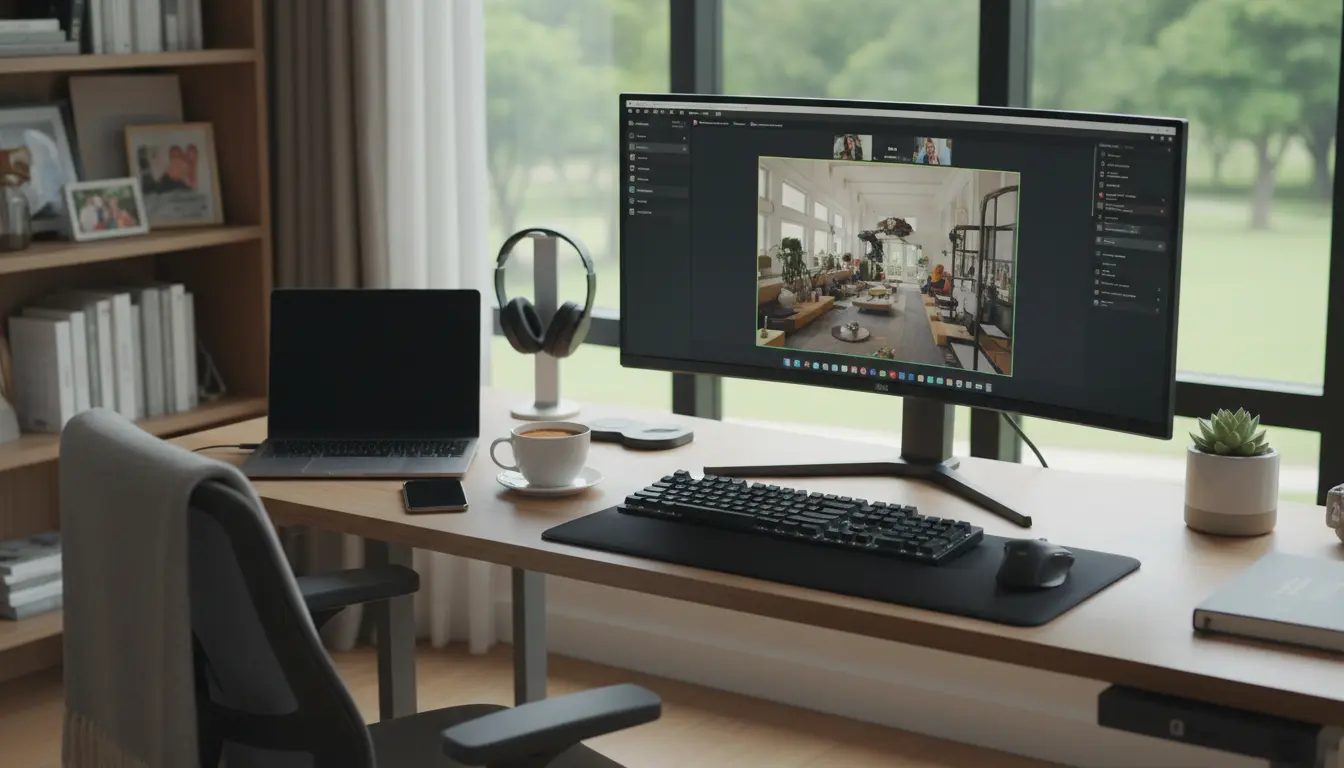
Workspace setup to improve remote work productivity

Small changes to your workspace make a big difference. Focus on ergonomics, lighting, and minimizing visual clutter.
- Desk and chair at proper height to reduce fatigue.
- Natural light or a neutral daylight lamp to reduce eye strain.
- Keep only current work items on the desk to avoid distractions.
- Use headphones for noise control and focus playlists if helpful.
Tools and techniques for focus
Tools should be lightweight and support your routine, not replace it. Pick one calendar, one task list, and one timer.
- Calendar: block time for deep work and meetings; treat blocks as commitments.
- Task list: limit daily tasks to 3–5 high-value items.
- Timer: use the Pomodoro method (25/5) or longer 60/15 cycles if you prefer deeper focus.
Short, scheduled breaks can increase focus and reduce errors. Studies show even a five-minute break after 25 minutes of work helps recharge attention.
Managing interruptions to protect remote work productivity

Interruptions are the biggest threat to sustained focus. Use simple signals and rules to manage them.
- Set clear ‘do not disturb’ hours on chat apps and your calendar.
- Use status messages to indicate deep work or availability windows.
- Negotiate meeting times that cluster interruptions rather than scattering them all day.
Communication norms
Agree with teammates on response expectations. Not every message needs an immediate reply.
- Urgent: call or marked urgent in subject line.
- Same day: non-urgent items that can wait a few hours.
- Next day: longer requests that need thoughtful responses.
Measure progress, not busyness
Shift focus from hours logged to outcomes achieved. Track simple metrics that reflect work quality and delivery.
- Completed tasks per week.
- Time spent in deep work blocks.
- Cycle time for key deliverables.
Review these weekly and adjust routines based on what helps you finish work reliably and with less stress.
Case Study: Small design team improves remote work productivity
A four-person design team struggled with fragmented time and missed deadlines. They implemented three changes over six weeks: a shared calendar for deep work blocks, a limit of three top priorities per person per day, and one synchronous review meeting per week.
Results: on-time delivery increased from 68% to 86%, and reported focus time per person rose by 45 minutes daily. The team also reported lower evening work hours and higher satisfaction.
Quick checklist to boost remote work productivity today
- Create a dedicated workspace and clear it each evening.
- Plan two deep work blocks and one wrap-up block every day.
- Limit your daily top tasks to three and schedule them on the calendar.
- Set communication rules with your team and use status indicators.
- Review outcomes weekly and adjust your routine.
Improving remote work productivity is a process of small, consistent changes. Start with a single habit this week and build from there. Small wins compound into steady performance gains.