
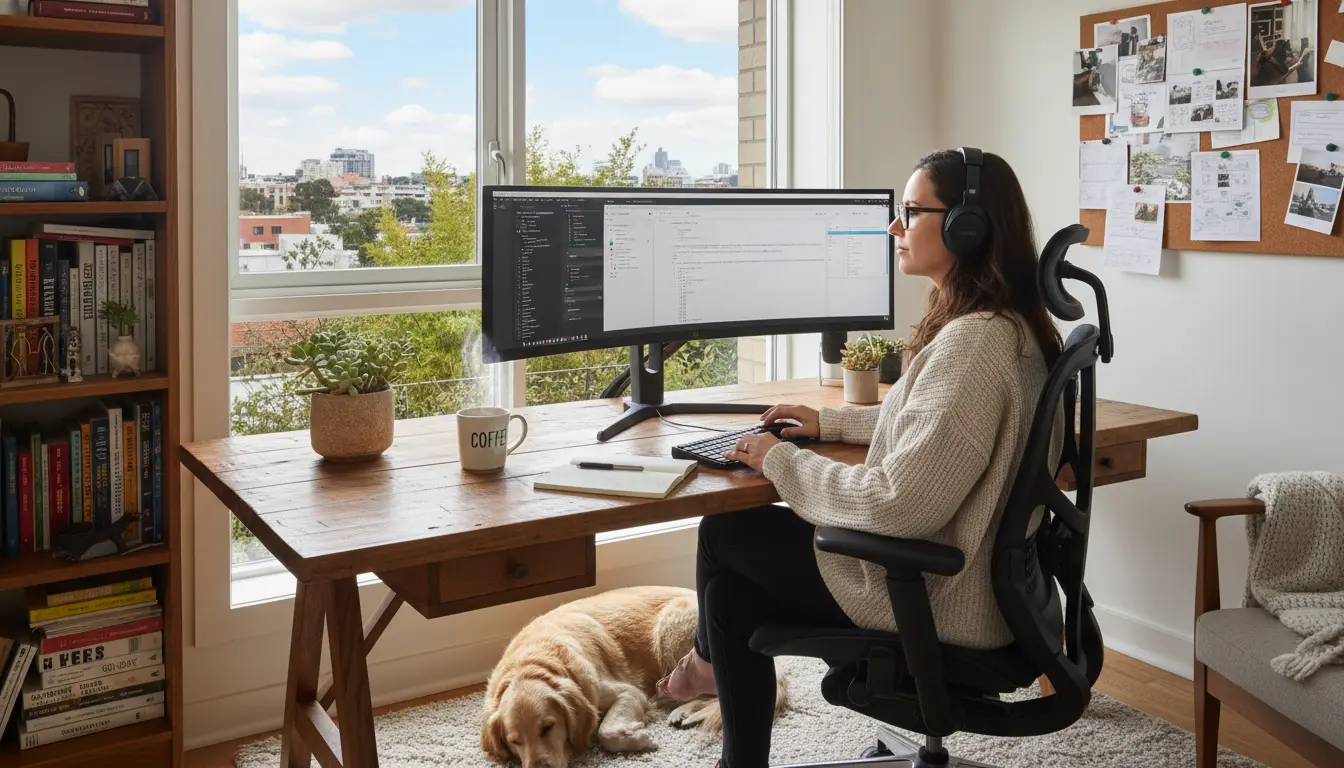
Remote Work Productivity matters for anyone who works outside a traditional office. The right mix of workspace, routine, tools, and boundaries can make the difference between a long day and a productive one.
Remote Work Productivity: Set Up a Focused Workspace
Where you work shapes how you work. A consistent, dedicated workspace reduces decision fatigue and helps you enter a productive mindset faster.

Focus first on three essentials: comfort, organization, and minimal distractions. These small investments pay off daily.
- Choose a dedicated spot for work, even if its a single corner of a room.
- Prioritize an ergonomic chair and screen height to avoid fatigue.
- Keep only work-related items on your desk to limit visual clutter.
Remote Work Productivity: Lighting, Ergonomics, and Minimal Distractions
Good lighting reduces eye strain and improves alertness. Aim for natural light where possible and a soft desk lamp for late hours.
Simple ergonomic adjustments reduce breaks and discomfort. Raise your screen to eye level and use an external keyboard if you work on a laptop.

Minimize distractions by using noise-cancelling headphones, turning off nonessential notifications, and keeping a notepad for non-work thoughts that pop up.
Remote Work Productivity: Build a Daily Routine
A routine creates structure and signals to your brain when to focus. Start with a predictable morning ritual and end with a brief wrap-up process.
- Morning ritual: hydrate, light movement, review top priorities for 10 minutes.
- Work blocks: divide the day into focused sessions (e.g., 90 minutes) with short breaks.
- End-of-day review: capture accomplishments and plan the next day to stop work clearly.
Routines reduce friction for starting deep work and make it easier to maintain energy through long days.
Remote Work Productivity: Time Blocking and Task Batching

Time blocking is assigning calendar slots to specific types of work. It prevents context switching and protects focus time from meetings and interruptions.
Task batching groups similar tasks together, such as email, social media, or calls. Batching reduces the cognitive load of switching between different mental tasks.
- Example block: 9:00–10:30 Deep Work (project A)
- Example block: 11:00–12:00 Admin and Email
- Reserve mornings for creative work and afternoons for collaborative tasks if possible.
The brain performs best with focused work intervals of 60 to 90 minutes. Short breaks between intervals improve overall output and reduce errors.
Remote Work Productivity: Use Tools and Systems
Tools do not create productivity by themselves, but the right systems make it easier to follow routines and stay organized.
Adopt a simple combination of tools for calendars, tasks, and communication to reduce scattered information.
- Calendar: block focus time and share availability to avoid scheduling conflicts.
- Task manager: use a single list or board for priorities, deadlines, and status.
- Focus helpers: apps that block distracting sites or enforce the Pomodoro method.
Keep tool selection lean. Too many apps increase setup time and reduce signal in your workflow.
Remote Work Productivity: Communication and Boundaries
Clear communication reduces meeting overload and ensures colleagues know when you are available for synchronous work.
Establish and share your work hours, preferred channels for urgent issues, and expectations for response times.
- Set fixed “no-meeting” blocks for deep work and mark them on your calendar.
- Use status or a shared calendar to show when youre focused or open for meetings.
- Propose agendas and time limits for meetings to keep them actionable.
Small Case Study: How One Freelancer Improved Output
Maria, a freelance UX designer, was averaging four billable hours per day while juggling client calls and email. She implemented three changes: a dedicated home office corner, two morning 90-minute deep work blocks, and no-meeting mornings.
Within four weeks Maria increased billable time to six hours per day and reduced project delivery time by 25%. The most impactful change was protecting uninterrupted creative hours.
Remote Work Productivity: Track and Improve
Measuring small signals helps you refine routines. Track time spent in focused work, number of interruptions, and weekly accomplishments.
Use a weekly review to adjust blocks, drop low-value tasks, and reallocate time to high-impact activities.
- Weekly metrics: focused hours, number of deep sessions, key deliverables completed.
- Monthly adjustments: shift your best work to peak energy times identified in your tracking.
- Solicit feedback from teammates or clients about response times and meeting value.
Small, consistent changes compound. Aim for modest improvements each week rather than a perfect system overnight.
Remote Work Productivity depends on reducing friction, protecting focus, and aligning tools with your natural energy. Start with one change—like a daily deep work block—and build from there. Small wins create reliable, sustainable productivity over time.