
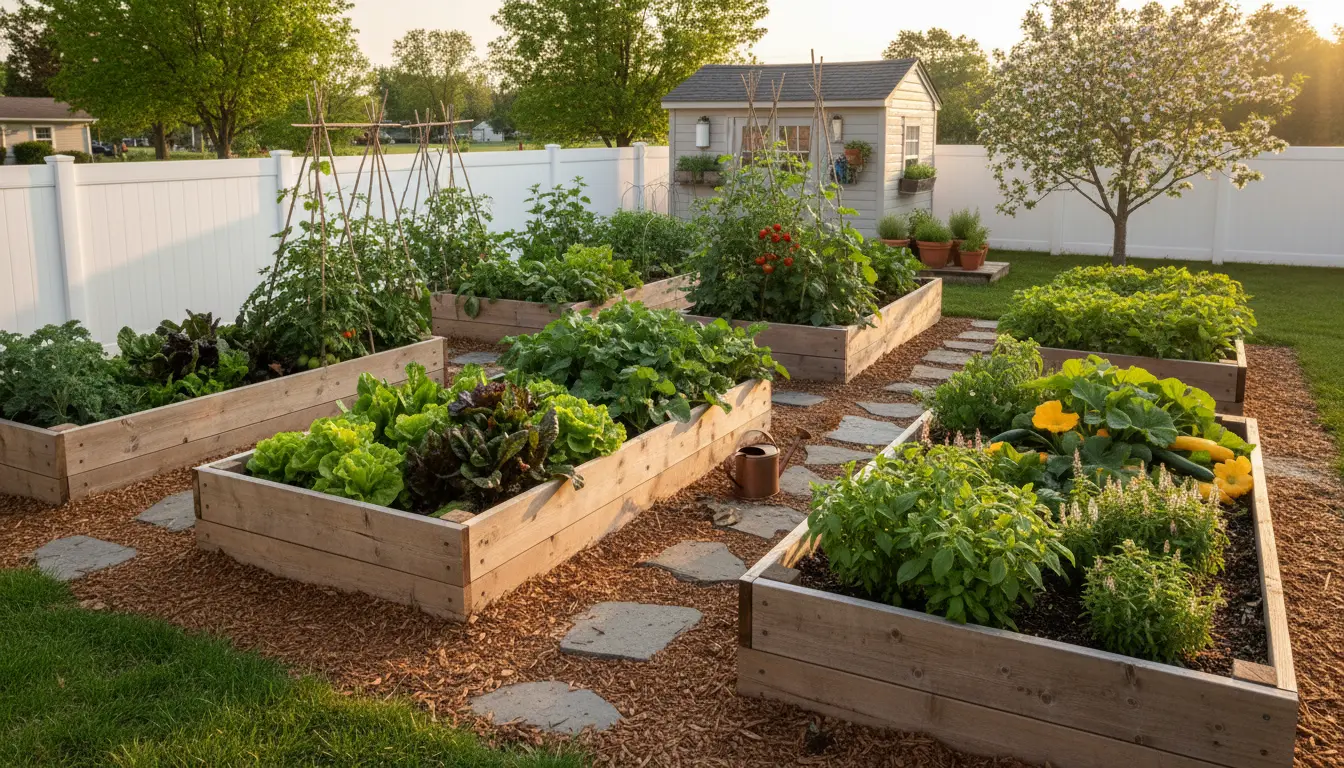
Raised bed vegetable gardens offer better drainage, easier soil control, and improved access for planting and harvesting. This guide walks through planning, building, soil preparation, planting, and ongoing maintenance to help you get productive beds quickly.
Planning Raised Bed Vegetable Gardens
Start with a simple plan to decide location, size, and bed layout. Good sunlight, access to water, and level ground are the top priorities for vegetable beds.
Keep beds narrow so you can reach the center from the sides. Common dimensions are 4 feet wide and 8 to 12 feet long. Depth should be at least 10 to 12 inches for most vegetables, deeper for root crops.
- Choose a sunny spot with 6–8 hours of direct sun.
- Place beds near a water source to simplify irrigation.
- Orient long sides north–south if possible for even sun exposure.
Building Raised Bed Vegetable Gardens
Raised beds can be made from wood, composite, stone, or metal. Use materials that resist rot and leaching. Avoid treated lumber that contains harmful chemicals.
Simple construction steps work well for DIY builds. Assemble side boards, secure corners, and level the bed before filling with soil.
Basic Materials and Tools
- Untreated cedar or composite boards
- Screws, corner brackets, and a drill
- Landscape fabric for weed control (optional)

Place a coarse layer (branches, cardboard) at the bottom if you want better drainage and to suppress weeds. This is optional for beds placed on lawn or compacted soil.
Soil for Raised Bed Vegetable Gardens
Soil is the most important factor for productive beds. A loose, fertile mix encourages root growth and retains moisture while draining excess water.
Recommended Soil Mix
Use a balanced mix of compost, topsoil, and a lightweight amendment for structure. A common recipe is:
- 40% high-quality topsoil
- 40% compost (well-rotted)
- 20% coarse sand, perlite, or aged bark for drainage
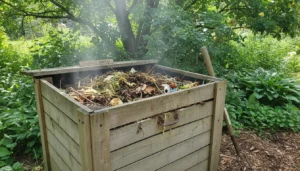
Adjust proportions based on your local soil and plant needs. Incorporate a slow-release organic fertilizer if the compost is low in nutrients.
Planting and Crop Rotation in Raised Bed Vegetable Gardens
Plan plant spacing to avoid overcrowding and to improve airflow. Use succession planting to maximize harvests through the season.
Rotate plant families each year to reduce pest and disease buildup. For example, follow leafy greens with legumes, then nightshades, then brassicas.
- Group plants by height and water needs.
- Use companion planting to deter pests and improve yields.
- Succession plant every 2–4 weeks for continuous harvests.
Watering and Irrigation Tips for Raised Bed Vegetable Gardens
Raised beds dry faster than in-ground gardens, so consistent watering is essential. Aim for even moisture without waterlogging the roots.
Irrigation Options
- Soaker hoses placed on the soil surface
- Drip irrigation with emitters near root zones
- Manual watering with a watering wand for small beds
Water deeply and less frequently to encourage strong rooting. Early morning watering reduces evaporation and disease risk.
Maintenance and Seasonal Care
Regular maintenance keeps beds productive. Tasks include weeding, adding mulch, checking soil moisture, and amending soil annually.
Mulch with straw, shredded leaves, or grass clippings to conserve moisture and suppress weeds. Top-dress beds with compost each spring to replenish nutrients.
Common Troubleshooting
- Yellow leaves: check for nutrient deficiencies or overwatering.
- Pests: use row covers, hand removal, or organic controls like neem oil.
- Poor flowering: ensure full sun and proper phosphorus levels.
Raised beds can warm up faster in spring, allowing earlier planting and potentially longer growing seasons for many vegetables.
Small Case Study: A Family Raised Bed Success
Jane, a homeowner in Portland, replaced a patchy lawn with two 4×8 raised beds. She filled them with a 40/40/20 soil mix and planted tomatoes, lettuce, beans, and carrots.
Using drip irrigation and weekly compost top-dressing, Jane saw earlier tomato fruiting and doubled her harvest of lettuce compared to in-ground beds. Crop rotation reduced flea beetle damage in year two.
Quick Planting and Care Checklist for Raised Bed Vegetable Gardens
- Choose bed location with full sun and water access.
- Build beds 10–12 inches deep and 4 feet wide for easy access.
- Fill with a balanced soil and compost mix.
- Use drip or soaker irrigation for consistent moisture.
- Rotate crops yearly and mulch to conserve moisture.
- Add compost annually and monitor for pests regularly.
Following these practical steps will give you a productive raised bed vegetable garden that is easier to manage and more rewarding to tend. Start small, observe, and adjust your soil and watering routine to match your local climate.