
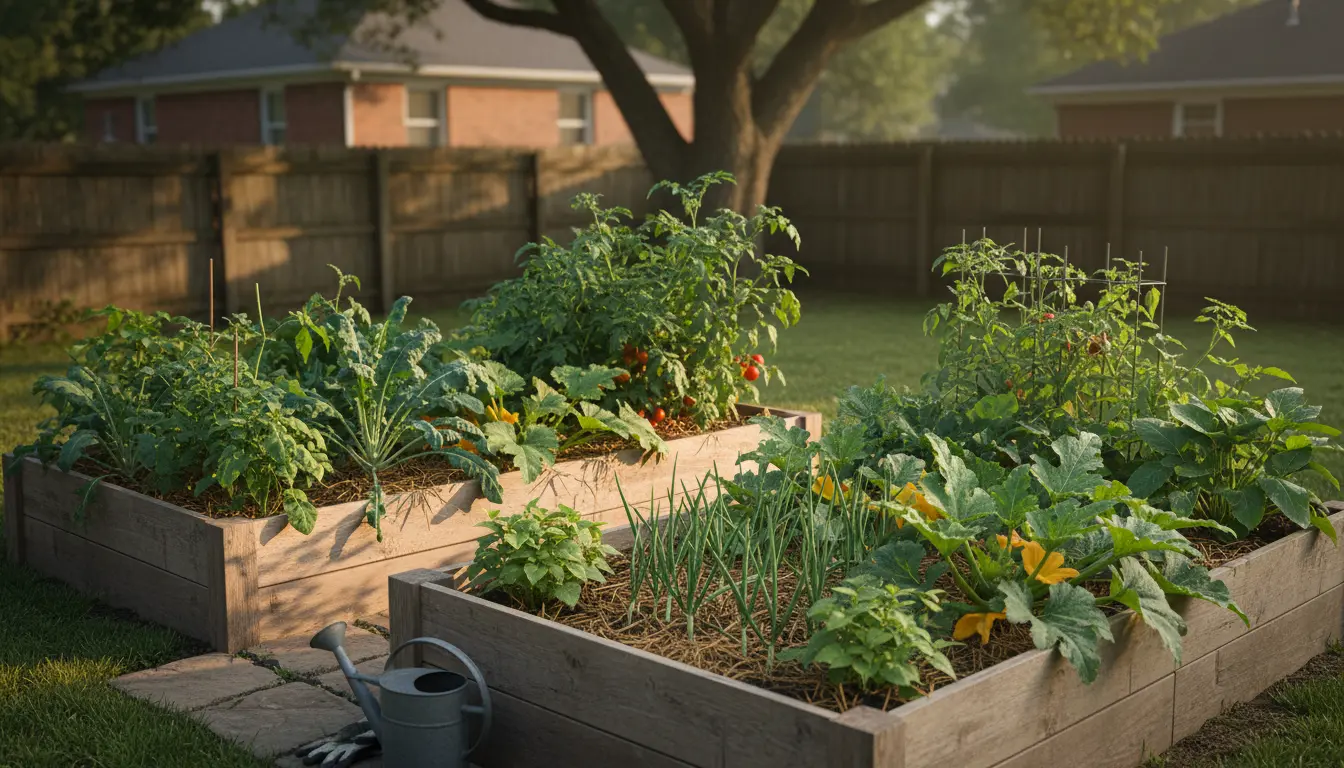
Raised Bed Vegetable Gardening: Plan and Design
Raised bed vegetable gardening simplifies planting, improves drainage, and concentrates soil nutrients for better yields. Planning your beds first saves time and prevents common mistakes.
Decide bed size, location, and material before building. Typical beds are 4 feet wide so you can reach the center from either side without stepping in the soil.
Choosing Bed Size and Location for Raised Bed Vegetable Gardening
Consider sunlight, water access, and proximity to the house when picking a spot. Most vegetables need at least six hours of direct sun daily.
- Width: 3–4 feet for easy access
- Length: any, but shorter beds are easier to manage
- Height: 6–12 inches for shallow-rooted crops, 12–18 inches for root crops
Soil Mix and Preparation
Good soil is the most important factor in raised bed vegetable gardening. A proper mix boosts fertility and water retention while keeping the bed light and friable.
Soil Mix for Raised Bed Vegetable Gardening
A reliable mix is one-third compost, one-third topsoil, and one-third aeration material like coarse sand or coconut coir. This combination balances nutrients and drainage.
- Compost: provides nutrients and beneficial microbes
- Topsoil: adds bulk and minerals
- Coir or sand: improves structure and drainage
Top up nutrient levels each season with 1–2 inches of compost and a balanced organic fertilizer if needed.
Crop Selection and Planting Strategy
Choose crops that match your climate, available sunlight, and personal preferences. Group plants by water and light needs to simplify care.
Companion Planting and Succession in Raised Bed Vegetable Gardening
Use companion planting to deter pests and maximize space. For example, plant basil near tomatoes to improve flavor and reduce pests.
- Succession planting: sow lettuce or radishes between slower-growing crops
- Intercropping: mix fast and slow growers to make constant use of space
- Vertical supports: use trellises for peas, beans, and cucumbers to save ground space
Watering and Mulching
Consistent moisture is key in raised bed vegetable gardening because beds drain faster than in-ground beds. Aim for even soil moisture rather than frequent shallow watering.
Install a drip irrigation line or soaker hose for efficient watering. Mulch with straw or shredded leaves to retain moisture and suppress weeds.
Pest and Disease Management
Healthy soil and proper spacing reduce many pest and disease problems in raised bed vegetable gardening. Monitor plants weekly for early signs of trouble.
- Handpick larger pests like slugs and caterpillars
- Use row covers to protect seedlings from flying insects
- Rotate crop families annually to limit soil-borne diseases
Maintenance and Seasonal Care
Routine tasks keep raised beds productive. Plan a weekly inspection and a seasonal refresh to maintain soil health.
- Weekly: check moisture, remove weeds, harvest ripe produce
- End of season: remove spent plants, add compost, and cover crop if desired
- Winter: protect beds with mulch or cold frames in colder climates
Raised beds warm faster in spring than in-ground rows, allowing earlier planting and often earlier harvests by several weeks.
Small Real-World Example: Case Study
Case study: A homeowner converted a 12 by 8 foot area into three 4 x 4 raised beds. They used a soil mix of compost, topsoil, and coir, and planted tomatoes, lettuce, carrots, and bush beans.
In the first season they harvested weekly lettuce, 30 pounds of tomatoes, and continuous beans through summer. They saved water by installing a drip line and reduced weeds with 2 inches of straw mulch.
Lessons learned: stagger planting times, add a trellis for tomato support, and edge beds to prevent grass invasion.
Common Mistakes to Avoid in Raised Bed Vegetable Gardening
- Using untreated construction lumber that can leach chemicals—choose safe materials like cedar, reclaimed brick, or composite boards.
- Overfilling beds with poor-quality topsoil—use a blended mix for balance.
- Planting too densely—give plants room to mature and allow airflow to reduce disease.
Quick Startup Checklist for Raised Bed Vegetable Gardening
- Choose a sunny location with easy water access
- Build beds 3–4 feet wide, 12 inches high for general use
- Mix one-third compost, one-third topsoil, one-third coir or sand
- Install drip irrigation or soaker hoses
- Mulch after planting and monitor for pests weekly
Raised bed vegetable gardening makes efficient use of space and improves growing conditions for most edible plants. With basic planning, a suitable soil mix, and simple maintenance, you can boost yields and enjoy easier gardening year after year.