
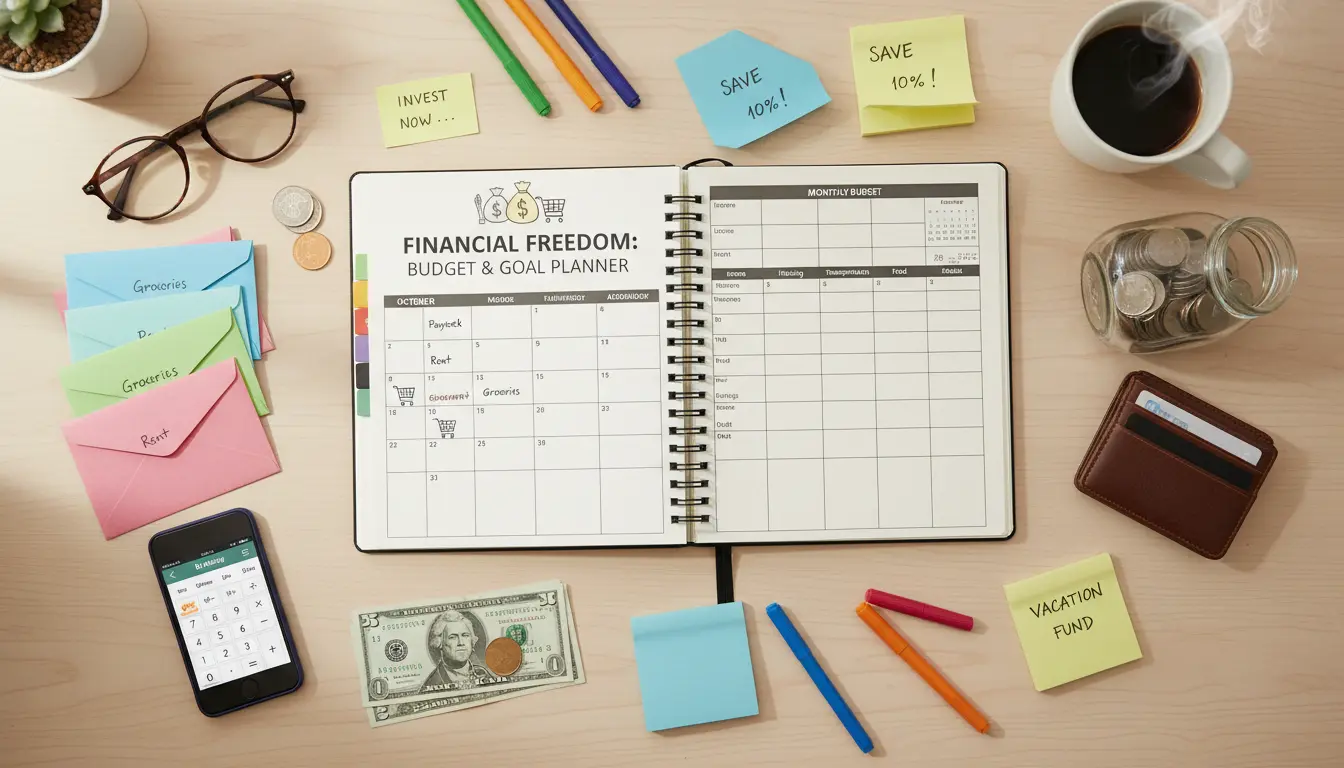
Personal budgeting is the foundation of good money management. This guide gives clear, practical steps you can follow to build a working budget and stick to it.
Why Personal Budgeting Matters
Budgeting helps you see where your money goes and aligns spending with your priorities. It reduces stress by creating a plan for bills, savings, and unexpected costs.

Without a budget, it is easy to overspend and miss opportunities to save for goals. A simple budget can improve short-term control and long-term financial health.
Common Personal Budgeting Goals
- Build an emergency fund
- Pay down debt
- Save for a major purchase or vacation
- Invest for retirement
How to Start Personal Budgeting in 4 Steps
Step 1: Track Income and Expenses
Record all income sources and regular expenses for one month. Include fixed costs like rent and variable costs like groceries and transport.
Track small purchases too; they add up. Use a simple spreadsheet or a free app to collect accurate numbers.
Step 2: Set Clear Personal Budgeting Goals

Choose short-term and long-term goals that matter to you. Examples include saving three months of expenses or paying off a credit card.
Assign priority to each goal so you know where extra money should go when it becomes available.
Step 3: Choose a Budget Method
Select a method that matches your style. Different approaches work for different people, so pick one you can maintain.
- 50/30/20 – 50% needs, 30% wants, 20% savings and debt repayment.
- Zero-Based Budget – Assign every dollar a job until income minus expenses equals zero.
- Envelope System – Cash envelopes or digital equivalents for spending categories to limit overspending.
- Pay Yourself First – Prioritize savings by automating transfers before other spending.
Step 4: Implement the Budget and Review Monthly

Put the plan into practice for one month and check results. Adjust categories and goals as you learn more about real spending patterns.
Monthly reviews help you catch problems early and keep progress toward your goals steady.
Automating savings can increase the likelihood of reaching goals by removing the need for monthly decisions. Even small automatic transfers add up over time.
Tools and Tips for Effective Personal Budgeting
Choose tools that fit your comfort level. Many people start with a spreadsheet and move to apps once they want automation.
- Use a spreadsheet template for full control and customization.
- Try apps like Mint, YNAB, or simplified bank tools for automatic tracking and categorization.
- Automate bill payments and savings transfers to avoid missed payments and decision fatigue.
- Keep receipts or use a digital wallet to verify variable spending categories.
Small Real-World Example: Sarah’s Personal Budgeting Case Study
Sarah earns $3,600 per month after taxes. She used the 50/30/20 method to organize her money. Her breakdown looked like this:
- Needs (50%): $1,800 for rent, utilities, groceries, and insurance.
- Wants (30%): $1,080 for dining out, subscriptions, and entertainment.
- Savings and Debt (20%): $720 toward an emergency fund and credit card repayment.
After three months Sarah reduced nonessential subscriptions and moved $200 more per month to debt repayment. Within a year she cleared a small credit card balance and had a three month emergency cushion. The simple budgeting method gave her clarity and measurable progress.
Common Mistakes to Avoid in Personal Budgeting
- Not tracking small purchases, which quietly erode budgets.
- Being too strict, leading to quick abandonment of the plan.
- Failing to adjust the budget after life changes like a job change or a move.
- Ignoring irregular expenses such as annual insurance premiums or car maintenance.
Practical Tips to Stay on Track
- Review budgets monthly and update as needed.
- Set reminders to check savings goals and bills.
- Reward small wins to maintain motivation.
- Build a buffer by underestimating income or overestimating expenses slightly.
Personal budgeting does not require perfect math or strict rules. It requires a clear plan, consistent tracking, and small adjustments over time. Start with one month of data, pick a method you can follow, and review regularly.
Next Steps
Try a simple 30-day budgeting experiment: track everything, pick a method, and review outcomes after one month. Use what you learn to refine a budget that supports your goals.