
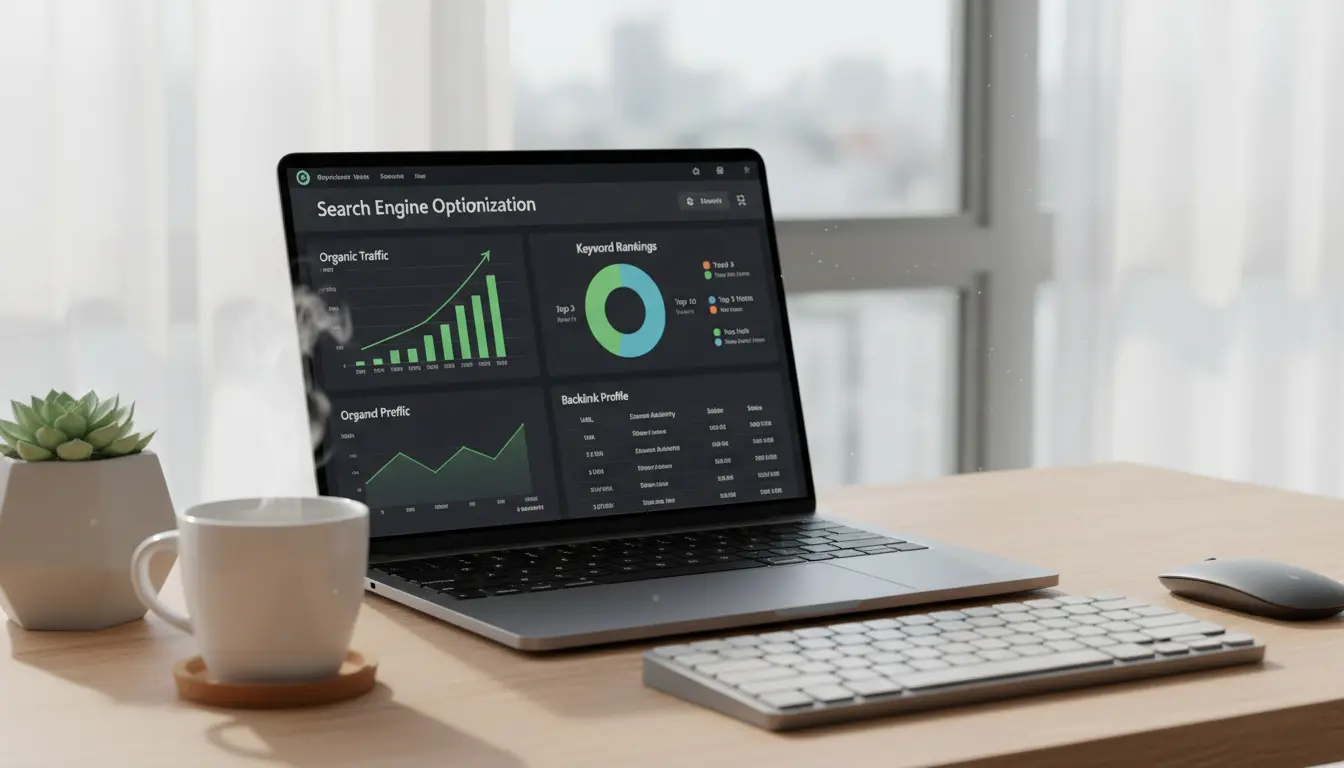
Use this practical on-page SEO checklist to make blog posts easier to find and to help them rank better. The steps below focus on clear signals for search engines and real users.
On-Page SEO Checklist: Start Here
On-page SEO means optimizing elements on a page so search engines understand it and users can read it easily. This checklist covers title tags, headings, URLs, images, speed, and monitoring.
Quick checklist items
- Target one primary keyword per page.
- Write a clear title tag and meta description.
- Use headings (H1, H2, H3) with keywords naturally.
- Optimize images and add alt text.
- Improve page speed and mobile experience.
- Use internal links and clean URLs.
- Monitor performance and update content.
Title Tags and Meta Descriptions for On-Page SEO

Title tags are the strongest on-page signal for the page topic. Keep titles under 60 characters and place the main keyword toward the front.
Meta descriptions do not directly affect rankings, but they influence click-through rate. Write 120–155 characters and include the keyword naturally.
Title and meta best practices
- Include the primary keyword once in the title.
- Make the meta description user-focused and actionable.
- Avoid keyword stuffing or repeating the same phrase.
Headings and Content Structure for On-Page SEO
Headings help both readers and search engines scan content. Use one H1, then logically nested H2 and H3 tags.

Break content into short paragraphs and use lists or examples to explain steps or tips.
How to use headings
- H1: page title (one per page).
- H2: main sections, include keyword variations when natural.
- H3: subpoints and details under H2 sections.
URLs, Internal Links, and On-Page SEO
Keep URLs short, descriptive, and include the main keyword. Use hyphens to separate words and avoid unnecessary parameters or dates.
Internal links share authority and help users find related content. Link to relevant pages using descriptive anchor text.
URL and linking checklist
- Short URL with keyword: example.com/on-page-seo-checklist
- At least 2–3 internal links to related posts.
- One or two outbound links to reputable sources.
Images and Alt Text in On-Page SEO

Images improve user engagement but can slow pages if not optimized. Compress images and use next-gen formats where possible.
Alt text should describe the image and include the keyword when it fits naturally. Keep alt text brief and useful for screen readers.
Image optimization tips
- Compress to reduce file size (use tools or plugins).
- Use descriptive filenames and include keywords.
- Write meaningful alt text for accessibility and context.
Page Speed, Mobile, and Technical On-Page SEO
Page speed and mobile friendliness are ranking factors. Aim for under 3 seconds load time and ensure layout is responsive.
Use tools like Google PageSpeed Insights and Lighthouse to find fixes and track improvements.
Technical checklist
- Enable browser caching and use a content delivery network (CDN).
- Minify CSS and JavaScript files.
- Ensure images are responsive and lazy-loaded if needed.
Monitoring and Updating On-Page SEO
SEO is ongoing. Monitor rankings, clicks, and user behavior to spot pages that need updates. Use Google Search Console and Analytics for data.
Set a schedule to refresh content every 3–12 months depending on topic competition and performance.
Key metrics to watch
- Impressions and clicks (Search Console).
- Average position for target keywords.
- Bounce rate, time on page, and conversions.
Simple On-Page SEO Example
Case study: A local food blog optimized a long-standing recipe post. They updated the title, added H2s with step-by-step headings, compressed images, and added two internal links.
Results: In three months the post saw a 38% increase in organic clicks and moved from page two to the top five for a target query. The improvements were technical and editorial, not link-based.
Final Steps for On-Page SEO
Work methodically through the checklist for each post. Prioritize pages with traffic potential or that cover money-making topics.
Document changes and measure impact. Small, consistent improvements compound over time and help build steady organic growth.
Use this checklist as a routine before publishing and during periodic content audits. Clear structure, faster pages, and helpful content are the foundation of effective on-page SEO.