
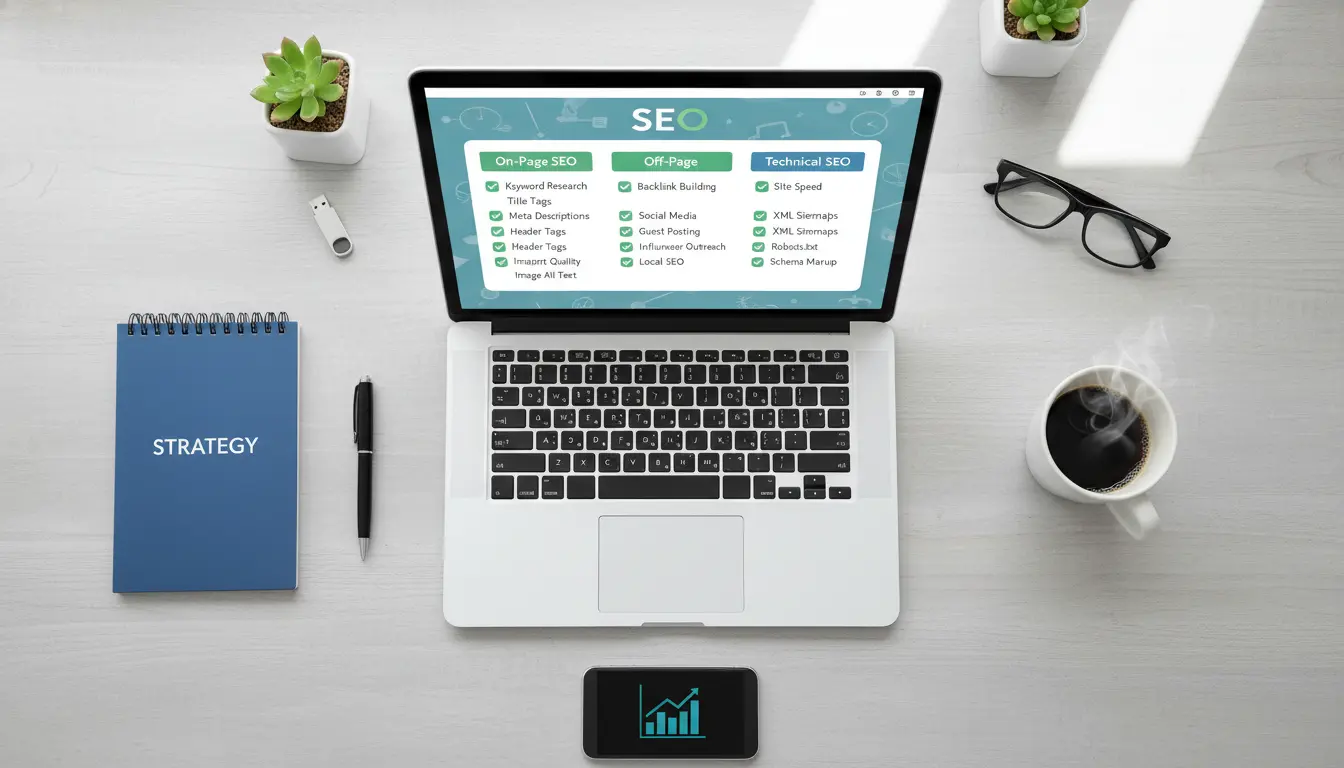
On-Page SEO Checklist: Quick Overview
On-page SEO is the set of actions you take on individual pages to improve search visibility and user experience. This checklist covers the most important elements you should audit and optimize on each page.
Use this as an actionable guide you can apply page-by-page when publishing or updating content.
1. Title Tags and Meta Descriptions for On-Page SEO
Title tag optimization

Include your primary keyword near the start of the title tag and keep the length between 50–60 characters. Make titles clear and descriptive so both users and search engines understand the page topic.
Meta description guidance
Write a concise meta description of 120–155 characters that summarizes the page and contains the main keyword. This won’t directly change rankings, but it improves click-through rates in search results.
- Use the exact keyword once naturally.
- Include a simple call to action when appropriate (e.g., Learn more, See examples).
- Avoid stuffing or duplicate meta descriptions across pages.
2. Heading Structure and Content Signals
Use H1 and supporting H2/H3 headings
Use one H1 per page that reflects the main topic and includes the primary keyword. Break content into logical sections with H2s and H3s to help readers and search engines scan the page.
Keyword placement in headings

Place secondary keywords in some H2 or H3 headings, but keep headings readable. Headings should describe the section’s content rather than just list keywords.
3. Content Quality and Keyword Use
Write content that answers user intent and provides actionable value. Aim for clarity, correct facts, and up-to-date information.
Avoid keyword stuffing; instead, use related terms and natural language to cover the topic comprehensively.
- Target one primary keyword per page.
- Use variations and long-tail phrases for context.
- Include practical examples, steps, or data where possible.
4. URL Structure and Internal Linking
SEO-friendly URLs

Keep URLs short, descriptive, and consistent. Include the primary keyword and avoid unnecessary parameters or stop words.
Internal linking best practices
Link related pages using descriptive anchor text that includes relevant keywords when appropriate. Internal links help distribute page authority and guide users to deeper content.
- Link to cornerstone pages from related articles.
- Fix broken internal links and remove redirects where possible.
5. Images, Alt Text, and Page Speed
Optimize images for both accessibility and load speed. Use descriptive file names and alt attributes that include relevant keywords in a natural way.
Compress images and use modern formats (WebP where possible) to improve loading times on mobile and desktop.
- Resize images to display size before uploading.
- Add concise alt text that describes the image and context.
- Use lazy loading for long pages with many images.
6. Mobile Usability and Technical Checks
Ensure pages are mobile-friendly: responsive design, readable fonts, and tappable buttons. Google prioritizes mobile usability when ranking pages.
Run technical checks for canonical tags, schema markup, and hreflang if your site targets multiple languages or regions.
Quick technical checklist
- Check canonical tags to avoid duplicate content issues.
- Implement structured data for articles, products, or events when relevant.
- Verify pages are indexed and crawlable in Google Search Console.
7. Measuring Results and Iterating
Track organic traffic, click-through rates, and rankings for targeted keywords. Use tools like Google Analytics and Search Console to monitor performance and identify pages that need improvement.
Run periodic content audits and prioritize updates for pages with high impressions but low clicks.
Small Real-World Example / Case Study
A local bakery updated product pages using this on-page SEO checklist. They rewrote title tags to include product names plus location, added unique meta descriptions, optimized image alt attributes, and improved internal linking to recipe pages.
Within three months, organic sessions to product pages increased by about 25%, and several pages moved from page two to page one for targeted queries. The changes focused on better headings, clearer URLs, and faster image load times.
Pages with clear, descriptive title tags and structured headings are easier for search engines to categorize and often earn higher click-through rates in search results.
On-Page SEO Checklist: Action Items
- Create or update title tags with the primary keyword (50–60 chars).
- Write unique meta descriptions (120–155 chars).
- Use one clear H1 and descriptive H2/H3 headings.
- Optimize content for user intent and include related keywords.
- Compress images and add descriptive alt text.
- Use short, keyword-friendly URLs and internal links.
- Run mobile and technical SEO checks, then monitor results.
Follow this checklist when creating or auditing pages. Simple, consistent on-page improvements compound over time and help pages compete more effectively in search results.