
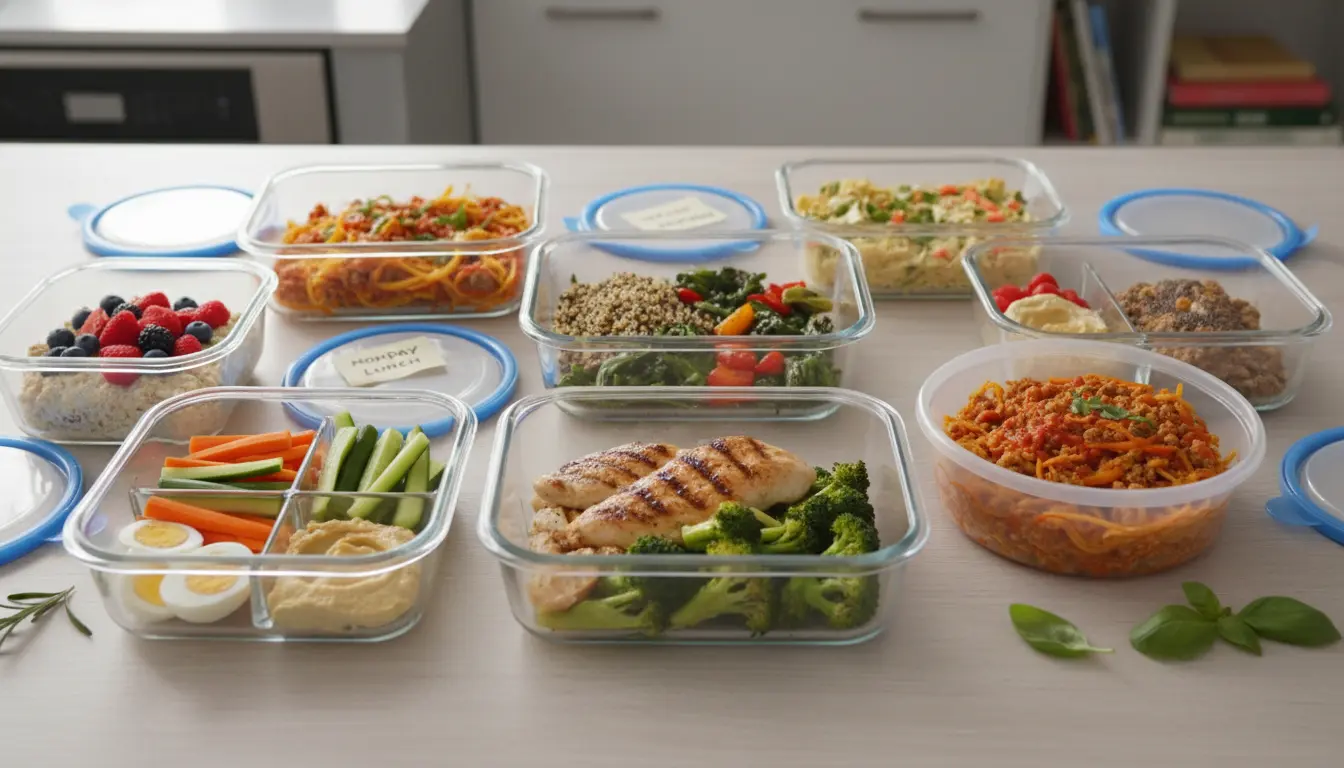
Start Smart With Meal Prepping for Beginners
Meal prepping for beginners means preparing several meals or meal components ahead of time to save time, reduce waste, and eat healthier. This guide gives simple steps, tools, and safety tips to build a reliable routine.
Why Meal Prepping Helps Beginners
Meal prepping turns daily decision-making into a single planning session. That reduces stress around what to eat and makes it easier to stick to a budget.
Beginners benefit from predictable portions, consistent grocery lists, and fewer impulse purchases at the last minute.
Essential Tools and Containers for Meal Prepping
Use a small set of reliable tools to keep the process simple and repeatable. Focus on durability and ease of cleaning.
- Quality set of airtight containers (glass or BPA-free plastic)
- Sharp chef’s knife and cutting board
- Large baking sheet and one pot or slow cooker
- Measuring cups and a digital kitchen scale
- Labels and permanent marker for dates
Container tips
Choose containers that fit your fridge and microwave. Use uniform sizes to stack neatly and speed up portioning.
Step-by-Step Meal Prepping Plan
Follow these steps weekly. Keep each step focused so the process becomes manageable and repeatable.
1. Plan Your Menu
Decide how many meals you need for the week and which meals you’ll prep. Start small: prep lunch for three to five days rather than every meal.
Pick recipes with overlapping ingredients to reduce shopping and prep time.
- Example: Roast chicken, quinoa, roasted vegetables, and salad greens
- Swap proteins or grains for variety without adding complexity
2. Make a Focused Grocery List
Organize the list by fridge, pantry, and frozen sections. This saves time in the store and prevents backtracking.
Buy a mix of fresh and shelf-stable staples. Frozen vegetables are nutritious and reduce spoilage risk.
3. Cook Efficiently
Batch similar tasks to save time: chop all vegetables first, then roast or sauté in one go. Use the oven for multiple trays if possible.
Limit active cooking time with methods like sheet-pan meals, pressure cooker recipes, or slow-cooker sets.
4. Portion and Store
Portion meals into containers that match your meal goals (calorie, macros, or family servings). Label each container with date and contents.
Store perishable items in the fridge and freeze any meals you won’t eat within four days.
Food Safety and Reheating Tips
Safe handling ensures you get the full benefit of meal prepping without health risks. Use a food thermometer and follow temperature guidelines.
- Refrigerate cooked meals within two hours of cooking.
- Store fridge meals at or below 40°F (4°C).
- Reheat leftovers to at least 165°F (74°C) before eating.
- Freeze meals for longer storage; label with freeze date and use within 2–3 months for best quality.
Simple Weekly Meal Plan Example
Here’s a concrete, beginner-friendly week to try. It balances protein, vegetables, and a grain or starch.
- Monday–Wednesday Lunch: Grilled chicken, quinoa, roasted broccoli
- Thursday–Friday Lunch: Lentil soup with carrots and kale
- Breakfast: Overnight oats or yogurt with fruit (prep jars)
- Dinner: Sheet-pan salmon with sweet potato and green beans (cook fresh or prep components)
Practical Tips to Keep It Manageable
- Start with one meal type (lunch) and expand slowly.
- Use leftovers as ingredients for other meals to reduce monotony.
- Rotate 6 to 8 favorite recipes to simplify menu planning.
- Keep one night as a flexible or fresh-cooking night to avoid burnout.
Small Real-World Case Study
Case Study: Sara, a busy teacher, began meal prepping lunches on Sundays. She prepped grilled chicken, rice, and mixed vegetables for four days.
Result in one month: Saved about $75 compared to buying lunch out, cut meal decision time to zero during school days, and spent 90 minutes on Sunday cooking instead of 20 minutes every evening.
Sara later added two breakfast jars and noticed more stable energy levels during her mornings.
Common Beginner Mistakes and How to Avoid Them
- Overcomplicating recipes — stick to simple, repeatable meals.
- Not labeling containers — write dates to track freshness.
- Forgetting variety — rotate proteins, spices, and sides.
- Ignoring storage space — plan meals to fit your fridge and freezer capacity.
Final Checklist for Meal Prepping for Beginners
- Plan meals for 3–5 days to start.
- Create a simple grocery list and shop once.
- Batch-cook proteins and grains; roast or steam vegetables.
- Portion, label, and store meals safely.
- Reheat thoroughly and enjoy consistent, stress-free meals.
Meal prepping for beginners is a learnable skill. Begin with a small, repeatable system and refine it to fit your schedule and taste. Consistency is more valuable than complexity.