
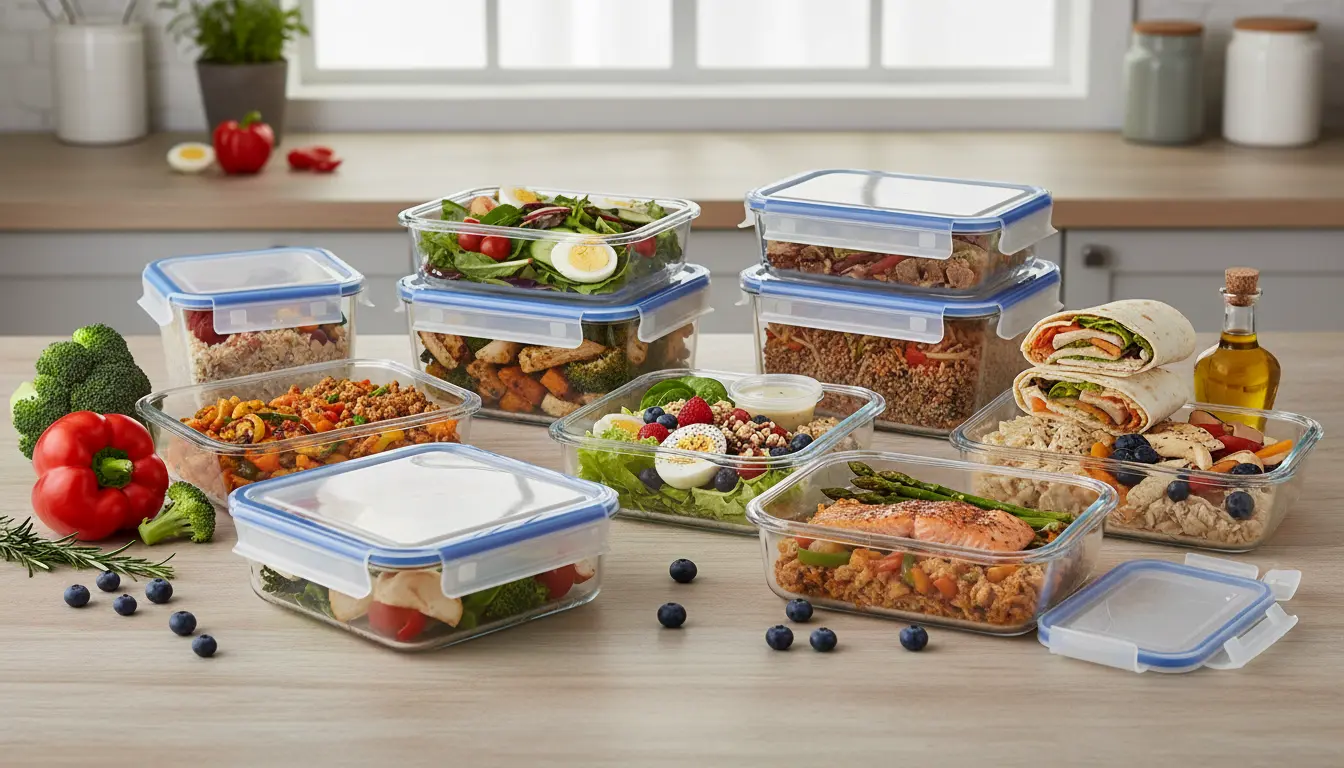
Why meal planning for busy professionals matters
Meal planning reduces daily decision fatigue and saves time during the workweek. For professionals with limited evenings, a reliable plan turns chaos into predictable routines.
It also helps control food costs and improves nutrition by reducing impulse takeout orders. The goal is to create a repeatable system you can maintain long term.
Start with a simple weekly framework
Use a one-week planning loop you repeat each week. Keep the structure small to avoid overwhelm.
- Decide cooking frequency (e.g., 2 batch-cook days + 1 fresh-cook night)
- Pick 3-4 core lunches and 3 dinners to rotate
- Plan one flexible leftover or mixed-plate day
Example weekly layout
Here’s a compact schedule that fits most busy calendars. Adjust days to match your meetings and commuting time.
- Sunday: Grocery shopping and batch cooking (grains, roast vegetables, protein)
- Monday–Wednesday: Ready-made lunches from meal prep containers
- Thursday: Quick fresh-cook dinner (20–30 minutes)
- Friday: Easy sheet-pan or one-pot meal
- Saturday: Flexible—dining out, leftovers, or social meals
Meal planning for busy professionals: step-by-step
Follow these steps once a week. Keep each step short and consistent to build habit.
- Scan your calendar for the week and mark busy nights.
- Choose 3 proteins and 3 vegetables you enjoy.
- Create a grocery list grouped by store section.
- Batch-cook staples in one 1–2 hour session.
- Portion meals into grab-and-go containers for workdays.
Shopping list basics

Group items to speed up shopping and avoid backtracking. Keep pantry staples stocked so planning takes less time.
- Proteins: chicken breast, canned beans, tofu
- Grains: rice, quinoa, whole wheat pasta
- Veggies: carrots, spinach, bell peppers
- Essentials: olive oil, basic spices, broth
Batch cooking and prep tips
Batch cooking is the core of efficient meal planning for busy professionals. Use a single cooking session to make multiple meal components.
- Cook a large grain pot (rice or quinoa) to use across meals.
- Roast a tray of mixed vegetables for salads, bowls, and sides.
- Grill or bake a batch of protein and freeze portions for later.
- Wash and chop salad greens and store them dry to keep crisp.
Time-saving tools
These tools streamline prep and reduce active cooking time.
- Slow cooker or Instant Pot for hands-off meals
- Sheet pans for large batches with minimal cleanup
- Quality food containers that stack and seal
- Sharp knives and a good cutting board to speed chopping
Healthy, balanced meals on a schedule

Aim for simple balance: one protein, one grain or starch, and at least one vegetable. Snacks should be planned to avoid vending machine choices.
Use portioning to control servings and mix colors to ensure micronutrient variety.
Easy plate examples
- Grilled chicken, quinoa, roasted broccoli, olive oil lemon drizzle
- Tofu stir-fry with brown rice and mixed peppers
- Chickpea salad with spinach, cherry tomatoes, and whole wheat pita
Preparing a single large batch of grains and one roasted vegetable can reduce weekday meal prep time by up to 60 percent for many professionals.
Overcoming common obstacles
Busy professionals face time, motivation, and variety challenges. Solve these with small habit tweaks.
- Low motivation: Keep a short recipe list you enjoy and rotate them.
- Limited time: Use frozen vegetables and canned beans to cut prep time.
- Boredom: Swap a protein or sauce each week to refresh flavors.
Case study: Quick real-world example
Sarah is a marketing manager who commutes 45 minutes each way and works late three nights a week. She adopted a meal planning routine and reports the following after four weeks.
- Time saved: 3–4 hours per week by batch cooking on Sundays
- Money saved: Reduced takeout by 70 percent
- Health benefit: More consistent lunches and fewer energy slumps
Her routine: two-hour Sunday prep, three grab-and-go lunches, one easy weeknight stir-fry, one social night off. Small changes produced predictable benefits.
Quick checklist to start this week
- Look at your calendar and block 1–2 hours for prep day.
- Choose three meals to rotate and make a grocery list.
- Batch-cook staples and portion into containers.
- Set a reminder to repeat the routine next week.
Final tips for long-term success
Keep the plan flexible and forgiving. Swap meals or order out when life demands it. The aim is consistent improvement, not perfection.
Track small wins: saved time, fewer takeout receipts, and more predictable energy. Over weeks, those wins compound into a less stressful, healthier routine.