
Why meal planning matters for busy professionals
Busy work schedules often make healthy eating feel impossible. Without a plan, you rely on takeout or snacks that cost more and offer less nutrition.
Meal planning reduces decision fatigue and saves time and money. It also makes it easier to meet nutrition or fitness goals.
Meal Planning for Busy Professionals: A simple framework

Use a weekly rhythm that fits your calendar. Pick one planning session and one cooking session each week.
Follow these four steps: plan, shop, prep, and store. Keep each step short and focused.
Step 1: Plan your week
Start with a quick calendar check. Note work nights, meetings, travel, and social events.

Choose 3 to 5 main meals for the week. Rotate proteins and use easy templates like salad, grain bowl, and stir-fry.
Step 2: Build a shopping list
Create a list grouped by store section: produce, proteins, grains, dairy, pantry. Grouping saves time in the store.
Buy versatile ingredients that work across meals, for example chicken, canned beans, rice, mixed greens, and frozen vegetables.
Step 3: Batch prep in 60–90 minutes

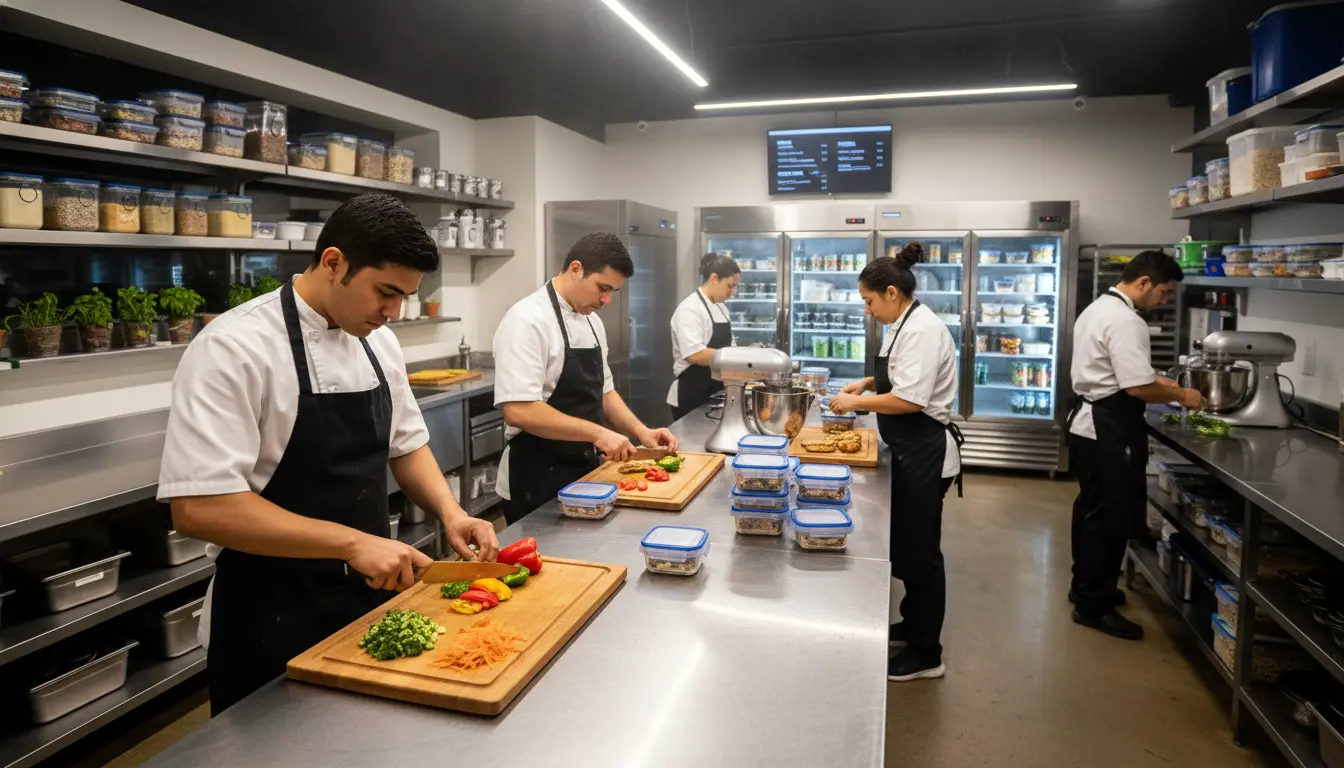
Reserve one cooking block on a low-work day. Aim for two main tasks: cook proteins and prep vegetables.
Examples of batch tasks: roast a tray of vegetables, cook a pot of grains, bake or grill several protein portions.
Step 4: Store smart
Use clear containers and label with the date and meal. Store sauces separately to keep textures fresh.
Put ready-to-eat items at eye level in the fridge so you reach for them first after work.
Weekly templates and time-saving menus
Templates reduce decision time. Pick one template and rotate ingredients to keep variety.
- Template A: Protein + Grain + Veg (e.g., grilled salmon, quinoa, roasted broccoli)
- Template B: One-pan meal (e.g., sheet-pan chicken, sweet potatoes, green beans)
- Template C: Bowl or salad (e.g., mixed greens, roasted chickpeas, grain, dressing)
- Template D: Slow cooker or instant pot (e.g., chili, curry, or stew)
Quick menu example
Monday: Stir-fry with chicken and frozen mixed vegetables. Serve over rice.
Wednesday: Grain bowl with beans, roasted sweet potato, greens, and tahini dressing.
Friday: One-pan salmon and asparagus with lemon and herbs.
Grocery list basics for busy professionals
Keep a core list of pantry and fridge staples. Replace perishable items weekly.
- Proteins: chicken breasts, canned tuna, tofu, eggs
- Grains: rice, quinoa, whole-grain pasta
- Vegetables: spinach, carrots, bell peppers, frozen mixed veg
- Pantry: olive oil, canned tomatoes, beans, spices
- Snacks: nuts, Greek yogurt, fruit
Tools and containers that save time
Invest in a few reliable tools that speed the process. You do not need every gadget.
- Sharp chef’s knife and cutting board
- One large sheet pan and one large pot
- Set of stackable clear containers with lids
- Slow cooker or electric pressure cooker (optional)
Common mistakes and how to avoid them
People often overcomplicate meal plans or buy too many perishables at once. Keep plans realistic for your schedule.
Another mistake is skipping variety. Rotate spices and sauces to change flavor without extra effort.
Case study: Real-world example
Sarah, a project manager, works 50 hours a week and had no routine for dinners. She started spending 60 minutes Sunday to plan and prep.
She chose three templates and prepped chicken, a pot of quinoa, and chopped vegetables. Her weekly grocery bill dropped 20% and she saved 4 hours of decision time.
Small consistent changes made her weekday evenings less stressful and improved her energy for work.
Meal planning checklist for busy professionals
Use this short checklist each week to stay consistent. Keep it visible on your phone or fridge.
- Check your calendar for conflicts and busy nights.
- Choose 3–5 meals and match them to simple templates.
- Create a grouped shopping list and buy versatile ingredients.
- Prep proteins and vegetables in one session.
- Store meals in clear containers and label them.
Final tips for staying consistent
Start small and adjust. Consistency beats perfection when building a new routine.
Track one metric that matters to you, such as money saved or number of home-cooked meals per week. Use that as motivation to continue.