
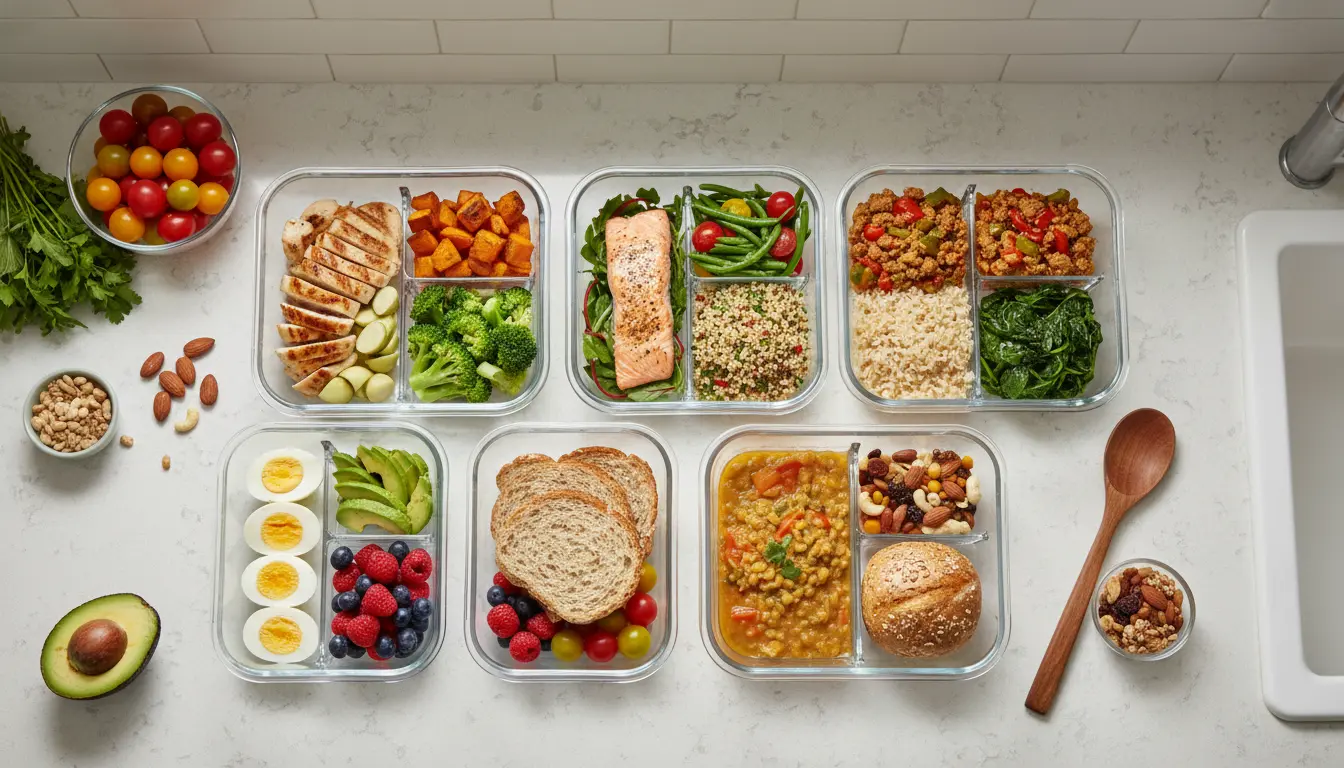
Busy work schedules make healthy eating feel impossible. This guide shows clear, practical steps for meal planning for busy professionals so you can save time, reduce stress, and eat better without complicated rules.
Why meal planning for busy professionals works
Meal planning reduces decision fatigue and limits last-minute takeout. It also helps control costs and improves nutrition by choosing meals ahead of time.

For busy professionals, the goal is a simple, repeatable system that fits existing routines. You do not need complex recipes or hours in the kitchen.
Key benefits of targeted meal planning
- Save 2–6 hours per week by batch cooking and prepping ingredients.
- Lower food costs through planned shopping and fewer impulse buys.
- Consistent nutrition by balancing protein, carbs, and vegetables.
- Less stress during workdays from ready-to-eat meals or quick assemblies.
Quick preparation steps for meal planning for busy professionals
Follow these actionable steps to build a weekly plan that fits your calendar and energy levels. Each step is practical and repeatable.
Step 1: Decide on the planning window
Choose a weekly or twice-weekly planning session. Weekly planning works well for most professionals because it aligns with standard grocery cycles.
Set a fixed time—Sunday evening or Monday morning—for 20–30 minutes of planning.
Step 2: Base meals on three templates
Create 3 simple meal templates you rotate through. Templates reduce thinking and speed up cooking.
- Protein + Grain + Veg (roast chicken, rice, broccoli)
- One-pan sheet meal (sausage, potatoes, mixed vegetables)
- Quick assembly (salad or grain bowl with pre-cooked protein)
Use two or three go-to recipes per template to limit decision fatigue while keeping variety.
Step 3: Shop for efficiency

Write a shopping list grouped by store sections: produce, proteins, pantry, frozen. This saves time in-store and online.
- Buy versatile proteins (eggs, chicken thighs, canned beans).
- Choose frozen vegetables for quick cooking and long shelf life.
- Buy bulk grains or pre-cooked options for convenience.
Simple meal prep routine for busy professionals
Limit prep to one main cooking session. Aim for 60–90 minutes on a low-energy day to set up the week.
Focus on prepping components, not full meals. Cook proteins, chop vegetables, and portion grains into containers.
Daily and weekly checklist
- Weekly: Plan menu, shop, and batch cook key ingredients.
- Daily: Assemble meals in 5–10 minutes using prepped components.
- Leftovers: Reuse within 3–4 days or freeze for longer storage.
Practical tips and time-savers
These targeted tips are designed for people with limited time and varying schedules.
- Use a slow cooker or Instant Pot for hands-off cooking.
- Double recipes and freeze half for an easy backup meal.
- Keep a rotating list of 6–8 meals to avoid decision paralysis.
- Prep at night if mornings are too rushed; reheating takes minutes.
Case study: A realistic example
Sara is a marketing manager working 45 hours a week. She started meal planning for busy professionals with a 60-minute Sunday session.
Sara chose three templates: baked salmon with veggies, grain bowls with chicken, and vegetarian pasta. She batch-cooked proteins and chopped vegetables.
After four weeks she reported saving two weekday evenings from cooking, reduced takeout from three times to once per week, and felt more energetic midday. Her weekly food spend dropped by 18%.
Common challenges and how to handle them
Scheduling conflicts, food fatigue, and lack of storage space are common. Use these fixes to keep the system working.
- No time to cook: Use pre-cooked rotisserie chicken or frozen meals as temporary solutions.
- Boredom with meals: Rotate spices and sauces for variety without new recipes.
- Limited fridge space: Freeze portions or store grains separately to save room.
Final checklist for meal planning for busy professionals
- Pick a weekly planning time (20–30 minutes).
- Create 3 meal templates and 6–8 reliable recipes.
- Shop with a sectioned list and batch-cook components.
- Use quick tools (Instant Pot, sheet pans) and freeze extras.
Meal planning for busy professionals does not require perfection. Start small, keep templates simple, and adjust as your schedule changes. The consistent benefit is more time, less stress, and healthier meals during busy weeks.