
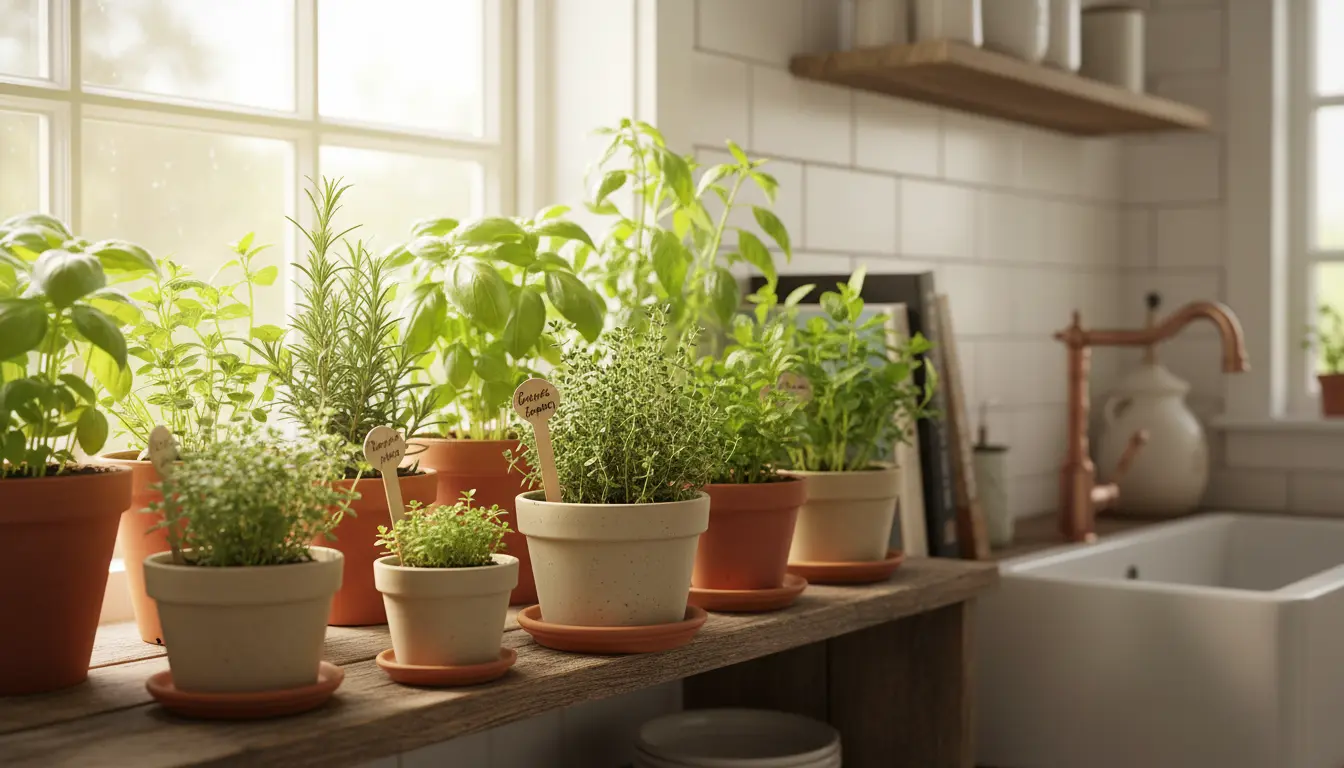
Why a kitchen herb garden works for beginners
Growing herbs indoors is a practical way to add fresh flavor to meals and improve air quality. Herbs are forgiving, take up little space, and return value quickly with repeated harvests.
Kitchen herb garden basics
This section explains the essentials: choice of herbs, containers, soil, light, and watering. Follow these steps in sequence to set up a productive herb garden on a windowsill, counter, or shelf.
Choose the right herbs for a kitchen herb garden
Start with easy, fast-growing herbs. Good choices include basil, parsley, chives, mint, and thyme. These herbs tolerate container life and respond well to regular harvesting.
- Basil – great for sunny spots and frequent use.
- Parsley – tolerates partial sun and regular cutting.
- Chives – compact and hardy with mild flavor.
- Mint – vigorous grower, keep in a separate pot to prevent spreading.
- Thyme – drought-tolerant and low-maintenance.
Pick containers and soil
Choose pots with drainage holes and consider saucers to protect surfaces. Use a light, well-draining potting mix made for containers rather than garden soil.
Recommendations:
- 6–8 inch pots for single herbs; larger pots for multiple plants.
- Use a mix with peat or coconut coir plus perlite for drainage.
- Clean recycled containers and add a layer of pebbles if desired for extra drainage.
Light and watering for a kitchen herb garden

Light and water are the most common success factors. Most culinary herbs need 4–6 hours of bright light daily. Observe your space and adjust placement accordingly.
Assess light and provide supplements
Place herbs on a south- or west-facing windowsill if possible. If natural light is limited, use a simple LED grow light for 6–8 hours a day to mimic daylight.
Watering schedule for kitchen herb garden care
Water when the top 1 inch of soil feels dry. Overwatering causes root rot; underwatering wilts plants but is usually recoverable.
- Check moisture with your finger once every 2–3 days.
- Water thoroughly until excess drains out the bottom.
- Empty saucers after 30 minutes to avoid standing water.
Feeding, pruning, and pest control
Herbs in containers need periodic feeding and maintenance. Light, regular care keeps plants productive and flavorful.
Fertilizing a kitchen herb garden
Use a balanced liquid fertilizer at half strength every 4–6 weeks during active growth. Avoid over-fertilizing, which can reduce flavor intensity.
Pruning and harvesting tips
Harvest regularly to encourage bushy growth. Pinch the top 1–2 inches of growth rather than cutting large branches, and never remove more than one third of the plant at once.
Common pests and simple fixes
Watch for aphids, spider mites, and fungus gnats. Use these practical responses:
- Rinse leaves under lukewarm water to remove aphids.
- Wipe leaves and increase airflow for spider mite prevention.
- Allow soil to dry slightly to cut fungus gnat breeding.
Propagation and seasonality for a kitchen herb garden
Propagate herbs from cuttings to expand your garden at low cost. Many herbs root easily in water or potting mix within 2–3 weeks.
- Basil and mint root quickly in water; transfer to potting mix once roots appear.
- Divide larger plants like chives in spring to refresh vigor.
Adjust care for winter: move plants to brighter spots and reduce fertilizer and watering during lower light months.
Troubleshooting common issues
Yellow leaves often signal overwatering, while leggy, weak growth usually means insufficient light. Inspect stems and roots to identify problems early.
Quick checklist:
- Check light levels and move plants closer to a window or add a grow light.
- Confirm drainage and adjust watering frequency.
- Trim leggy growth to encourage new shoots.
Small real-world example
Case study: A one-bedroom apartment windowsill herb garden. Sarah used three 6-inch pots with basil, chives, and parsley. She placed them on a south-facing sill and rotated pots weekly.
Within four weeks she had regular harvests for cooking. She used a timer-controlled LED light in winter and reduced watering frequency in cooler months. Simple practices kept plants healthy and saved money on fresh herbs.
Quick start checklist for your kitchen herb garden
- Choose 3 easy herbs: basil, chives, parsley.
- Use 6–8 inch pots with drainage and quality potting mix.
- Place in bright light or add an LED grow light.
- Water when top 1 inch of soil is dry; fertilize lightly every 4–6 weeks.
- Harvest regularly and watch for pests.
Final tips for a thriving kitchen herb garden
Start small and learn by doing. Keep records of watering and light adjustments for each herb to fine-tune care. With consistent attention, a kitchen herb garden can supply fresh flavors year-round.