
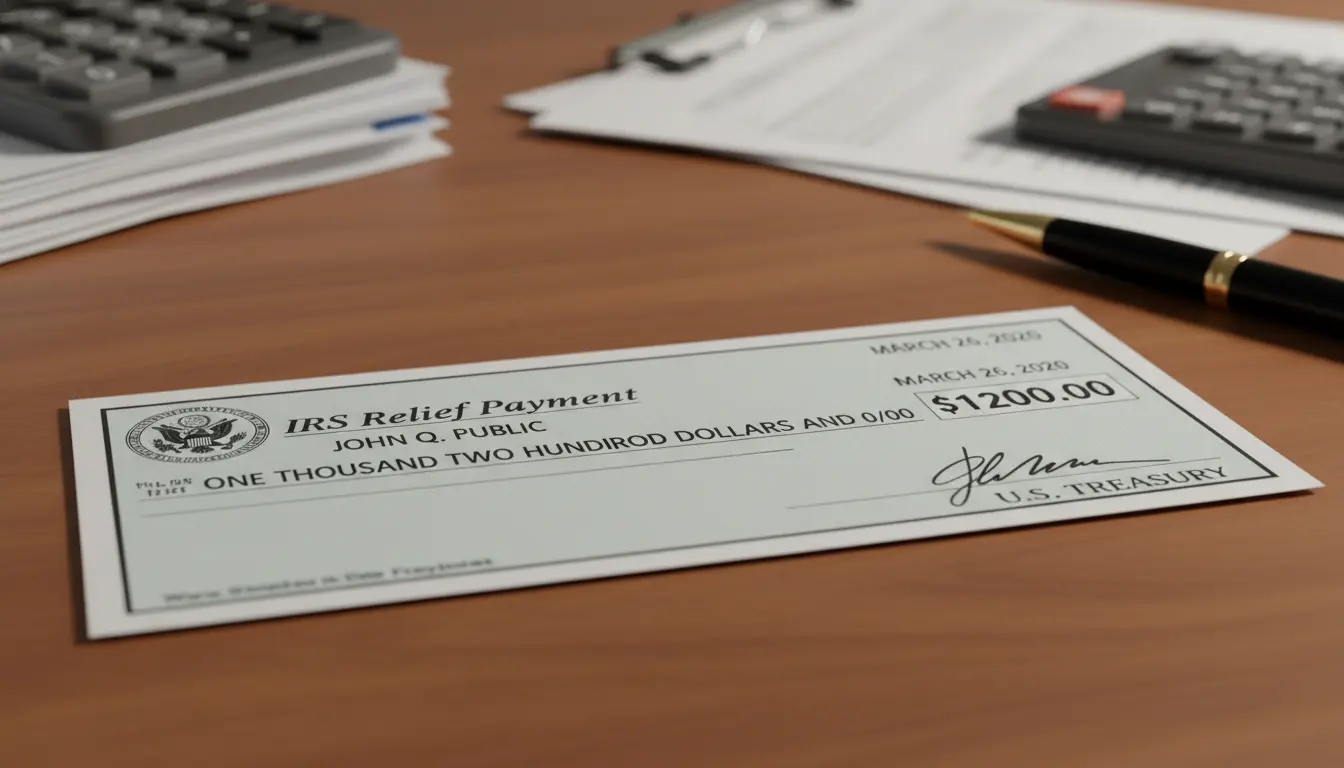
What is the IRS 2026 Relief Deposit?
The IRS 2026 relief deposit is a one-time payment issued by the Internal Revenue Service to eligible taxpayers to ease cost-of-living pressures. The payment amount commonly referenced is $1,390, and it is intended as short-term direct financial relief rather than a long-term tax change.
This guide explains how the deposit works, who qualifies, how the IRS delivers the funds, and practical steps to track or claim the payment. Read on for clear, actionable instructions.
Why the IRS 2026 Relief Deposit was issued

The IRS announced relief deposits as part of a targeted response to rising living expenses and specific economic conditions in 2026. The agency used existing tax records to identify recipients quickly.
Payments aim to reach people who historically qualify for tax credits, Social Security recipients, and other low- to moderate-income households. The priority was speed and accuracy in distribution.
How the $1,390 payment works
The $1,390 payment can be delivered by direct deposit, paper check, or prepaid card, depending on the IRS’s records for each taxpayer. The payment is treated as a relief deposit and is typically not taxable income, but individual situations may vary.

The IRS matched eligibility using the most recent tax returns, Social Security Administration (SSA) data, and other federal records. If you filed taxes recently, the IRS likely used your bank information for direct deposit.
Who qualifies for the $1,390 payment?
Eligibility rules vary, but common qualifying groups include low- and moderate-income taxpayers, Social Security beneficiaries, and people who received certain federal credits in the previous tax year. Nonfilers who receive SSA benefits or other federal payments may also qualify.
To determine eligibility, the IRS examined adjusted gross income, filing status, and current federal benefit lists. Eligibility notices were mailed or sent digitally when applicable.
Common eligibility scenarios
- Single filers with income below an IRS threshold set for 2026.
- Joint filers meeting combined income limits.
- Social Security beneficiaries who did not need to file taxes but are in federal records.
- Families who claimed refundable credits in the most recent tax year.

The IRS used recent tax and federal benefit records to issue the 2026 relief deposit quickly; you did not need to apply separately if you were already in IRS or SSA systems.
How to check the IRS 2026 Relief Deposit status
Use the IRS Get My Payment or equivalent status tool to see payment date and delivery method. The tool shows direct deposit date, check mailing date, or prepaid card issuance when available.
Keep your Social Security number, filing status, and address ready. If the tool does not show information, wait a few days and check again or contact the IRS helpline for confirmation.
What to do if you did not receive the $1,390 payment
First, verify your eligibility using the IRS guidance for 2026 relief deposits. If you were eligible but did not receive funds, check that your address and bank details were up to date with the IRS or SSA.
If details were outdated, you may be able to claim an equivalent credit on your next tax return or file a follow-up with the IRS. Keep records of communication and any IRS notices you receive.
Practical steps and checklist
Follow these steps to confirm or claim the payment. Keep documents handy and act promptly to resolve issues.
- Check the IRS online payment status tool regularly.
- Review mail for IRS or SSA notices about the relief deposit.
- Confirm bank routing and account numbers on your last tax return if you expected direct deposit.
- Contact the IRS helpline if the online tool does not explain the delay.
Documentation to keep
Save the following records in case you need to dispute or confirm a payment: tax returns, SSA benefit statements, IRS letters, and bank records showing a deposit. These documents simplify follow-up calls or inquiries.
If you receive a check or prepaid card, keep the envelope and any activation materials until the matter is fully resolved.
Small real-world example
Case study: Maria is a single filer who received Social Security and did not file a tax return in 2025. The IRS used SSA records and issued a $1,390 direct deposit to her bank on March 18, 2026. Maria confirmed the deposit by checking her bank statement and the IRS status tool.
When a neighbor, Luis, did not receive a payment, he checked the IRS tool and found his bank details were outdated. He updated his information with the IRS and the issue was resolved on his next correspondence.
Key takeaways about the IRS 2026 Relief Deposit
The IRS 2026 relief deposit of $1,390 was a targeted payment to provide short-term financial relief for eligible taxpayers. Many payments were automatic for those in federal records, while others required follow-up to claim or correct delivery details.
Use the IRS tools, keep documentation, and act promptly if you do not see a payment you expected. For complex cases, consult a tax professional to explore claiming a tax-year credit or resolving account issues.
Where to find more help
Visit the IRS website for official guidance and real-time status tools. For complicated eligibility or delivery problems, call the IRS support line or consult a trusted tax advisor.
Keep a note of any IRS reference numbers, dates of contact, and the names of representatives during calls to simplify any future follow-up.