
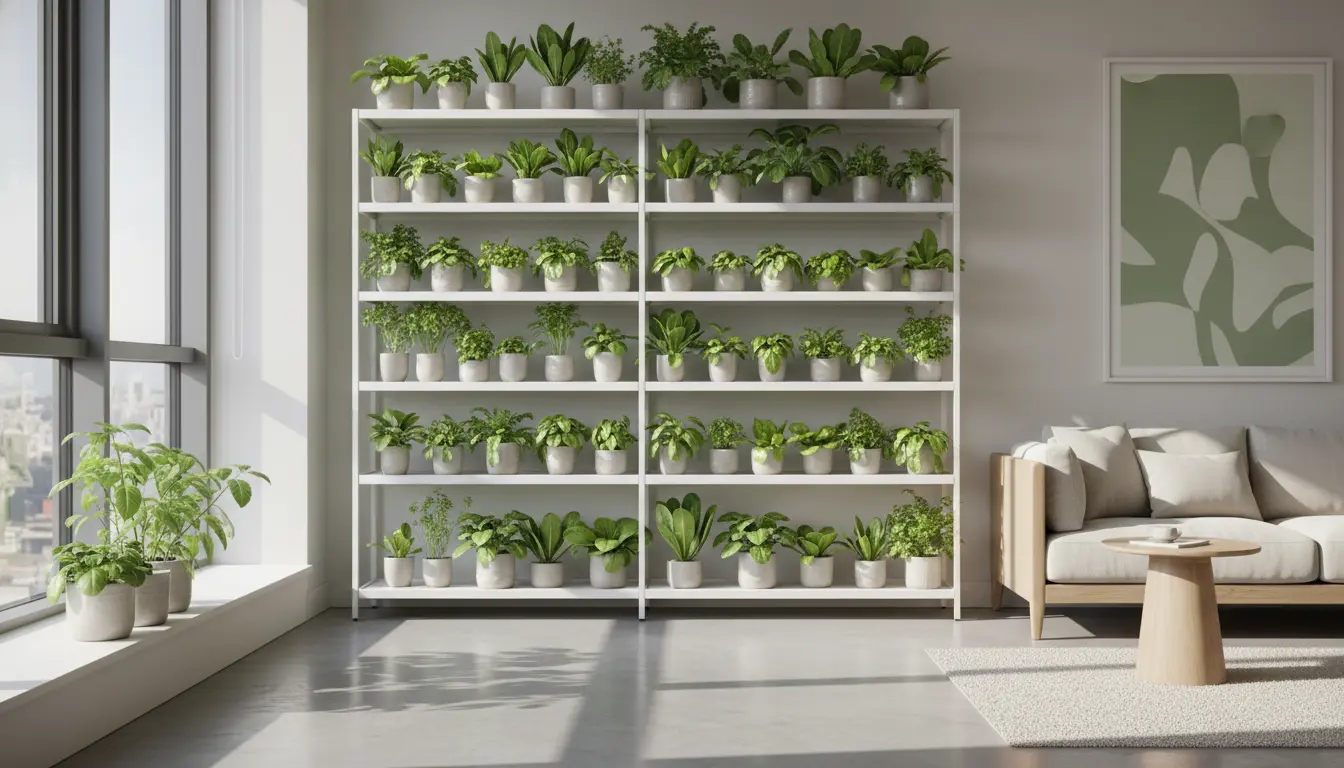
Indoor vegetable gardening lets you grow fresh produce year-round even when outdoor space is limited. This guide covers the practical steps to choose plants, set up containers and lights, manage water and nutrients, and troubleshoot common problems.
Choosing Vegetables for Indoor Vegetable Gardening
Start with plants that adapt well to containers and moderate light. Leafy greens and herbs are the easiest and fastest for beginners.
Best vegetables for indoor vegetable gardening
- Lettuce, arugula, and spinach — quick harvest and shallow roots.
- Herbs like basil, parsley, and chives — compact and tolerant.
- Radishes and baby carrots — need deeper pots but grow fast.
- Cherry tomatoes and peppers — need more light but reward with fruit.
Pick varieties labeled ‘compact’, ‘patio’, or ‘baby’ when possible. These are bred for small spaces and container growth.
Seedlings vs transplants
Starting from seed is cheaper and offers more variety. Transplants give faster harvests and reduce early mistakes. Choose what fits your schedule and confidence level.
Containers and Soil for Indoor Vegetable Gardening
Use containers with good drainage to prevent root rot. Size matters: shallow pots for greens, deeper containers for root vegetables and tomatoes.
Select a high-quality potting mix formulated for vegetables. Avoid garden soil which compacts indoors and can carry pests.
- Container materials: plastic, ceramic, or fabric grow bags — each has pros and cons.
- Drainage: ensure holes and use saucers to catch excess water.
- Soil mix: look for balanced nutrients and good drainage (peat-free mixes are available).
Lighting for Indoor Vegetable Gardening
Light is the most common limiting factor indoors. Most vegetables need 8–16 hours of bright light per day.
Types of grow lights
- LED grow lights — energy efficient and produce little heat.
- Fluorescent lights (T5) — good for leafy greens and seedlings.
- Full-spectrum lights — mimic sunlight and work for fruiting crops.
Place lights 6–12 inches above plants and adjust as they grow. Use a timer to provide consistent daily light periods.
Watering and Fertilizing for Indoor Vegetable Gardening

Indoor plants often need more frequent but smaller waterings than outdoor plants. Check soil moisture before watering.
- Water when the top inch of soil is dry for most vegetables.
- Water thoroughly until excess drains, then empty saucers to avoid sogginess.
Fertilize on a regular schedule because potting mixes lose nutrients with regular watering. Use a balanced liquid fertilizer or slow-release pellets as directed.
Fertilizer tips
- Leafy greens: lower nitrogen-frequency, use balanced NPK 10-10-10 every 3–4 weeks.
- Fruiting plants: higher potassium and phosphorus when flowering and setting fruit.
Pest Control and Pollination in Indoor Vegetable Gardening
Pests like aphids, whiteflies, and fungus gnats can appear indoors. Regular inspection prevents small problems from becoming large ones.
- Use sticky traps and inspect undersides of leaves weekly.
- Introduce beneficial insects or use insecticidal soap for small infestations.
- Avoid overwatering to reduce fungus gnats.
For pollination of flowering vegetables, hand-pollinate with a small brush or gently shake plants if no bees are present.
Some dwarf tomato varieties can produce ripe fruit in as little as 60 days under strong indoor lights. Choosing compact varieties speeds harvests in small setups.
Harvesting and Rotation for Indoor Vegetable Gardening
Harvest frequently to encourage new growth. Cut-and-come-again harvesting works well for lettuce and herbs, extending yield from the same plant.
Rotate crops or refresh soil every season to avoid nutrient depletion and disease buildup. Replace part of the potting mix or repot annually for best results.
Simple maintenance checklist
- Inspect plants twice weekly for pests or disease.
- Clean leaves and remove dead material promptly.
- Adjust light height and watering as plants grow.
Case Study: Small Shelf, Big Salad
Mary, an apartment renter, set up a three-tier metal shelf near a south-facing window. She used LED strips and five 6-inch pots for mixed lettuces and basil.
After eight weeks she harvested baby greens twice per week. The setup used 2 square feet of floor space and produced enough salad greens for two people most evenings.
Key takeaways: consistent light, regular harvesting, and shallow pots delivered steady yields in a tiny footprint.
Troubleshooting Common Problems in Indoor Vegetable Gardening
Yellow leaves often mean overwatering or nutrient imbalance. Slow growth can indicate insufficient light or root-bound plants.
- Wilted leaves: check soil moisture and root health.
- Leggy seedlings: increase light and reduce distance to lights.
- Low yields: evaluate pollination, light duration, and fertilizer schedule.
Document changes and adjust one variable at a time for clearer results. Small experiments help identify what works best in your space.
Indoor vegetable gardening is a practical solution for fresh food in limited spaces. With the right plant choices, containers, lighting, and routine care, you can enjoy reliable harvests year-round.