
Why Indoor Vegetable Gardening Works
Indoor vegetable gardening gives you fresh produce year-round without needing a yard. It reduces food miles and lets you control light, water, and soil for reliable results.
With the right choices, common vegetables and herbs grow well inside apartments and small spaces. This guide focuses on practical, repeatable steps to start and maintain an indoor vegetable garden.
Getting Started with Indoor Vegetable Gardening
Begin by assessing space, light, and time. A sunny windowsill is often enough for herbs and small vegetables, while larger setups may need grow lights.
Organize your plan into three parts: plant selection, containers and soil, and light and watering. Each part directly affects success and maintenance needs.
Choosing Plants for Indoor Vegetable Gardening
Pick vegetables suited to containers and limited light. Good beginner choices include herbs, leafy greens, dwarf tomatoes, peppers, and radishes.
- Herbs: basil, chives, parsley
- Leafy greens: lettuce, spinach, arugula
- Compact fruiting plants: cherry tomatoes, dwarf peppers
- Root vegetables: small radishes, baby carrots

Start with 2–4 types so you can manage watering and pests while learning.
Containers and Soil for Indoor Vegetable Gardening
Choose containers with drainage holes to prevent root rot. Use pots sized for the plant’s mature root system rather than a decorative shallow tray.
Use a high-quality potting mix formulated for containers. Avoid garden soil, which can compact and carry pests. Add perlite or vermiculite for better drainage and aeration.
Lighting and Placement for Indoor Vegetable Gardening

Light is the most important factor. Most vegetables need 10–14 hours of bright light each day. South- or west-facing windows provide the strongest natural light in the northern hemisphere.
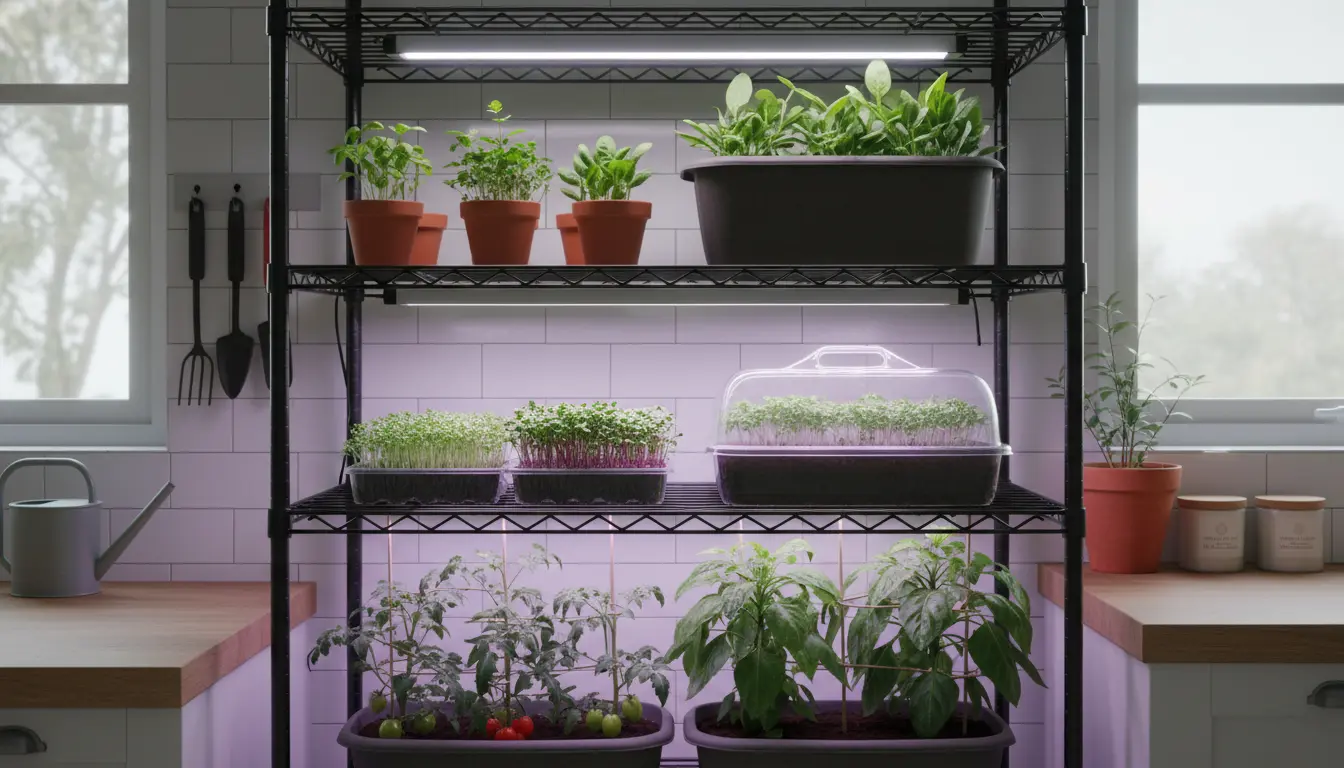
If natural light is insufficient, use full-spectrum LED grow lights. Hang lights 12–18 inches above the foliage and run them 12–14 hours daily to mimic natural cycles.
Watering and Feeding for Indoor Vegetable Gardening
Water consistently but avoid overwatering. Check soil moisture by feeling the top inch; water when it feels dry. Water thoroughly until excess drains from the pot bottom.
Feed plants with a balanced liquid fertilizer every 2–4 weeks during the growing season. Reduce feeding for herbs and leafy greens to avoid overly lush growth with weak flavor.
Pest Control and Common Problems in Indoor Vegetable Gardening
Indoor pests are usually manageable with inspection and quick action. Common issues include aphids, fungus gnats, and powdery mildew.
- Inspect leaves weekly and remove damaged foliage.
- Use sticky traps for fungus gnats and treat soil with a thin layer of sand to discourage larvae.
- Apply insecticidal soap or neem oil for small outbreaks, following label instructions.
Good ventilation and avoiding overwatering reduce many common problems.
Seasonal Care and Harvesting for Indoor Vegetable Gardening
Indoor gardens allow multiple harvests per year. Rotate crops and replant fast-growing greens to maintain continuous supply.
Harvest herbs by trimming outer stems and encourage regrowth. For fruiting plants, pick peppers and tomatoes when ripe to promote more flowers and fruits.
Many herbs and salad greens mature in 30 to 60 days, so you can grow several crops indoors in a year from the same space.
Simple Indoor Vegetable Gardening Schedule
Create a weekly routine to avoid missed tasks. A short schedule keeps plants healthy without taking much time.
- Daily: Quick visual check for pests and wilting.
- Every 3–4 days: Check soil moisture and water as needed.
- Every 2–4 weeks: Feed with liquid fertilizer during active growth.
- Monthly: Rotate pots to expose all sides to light and trim leggy growth.
Example: Small Space Setup
Place a 3-shelf rack near a bright window. Top shelf holds LED lights for fruits like cherry tomatoes. Middle shelf houses herbs in 6-inch pots. Bottom shelf is for seedlings and microgreens.
This layout separates light needs and makes watering and maintenance efficient.
Real-World Case Study: Small Apartment Success
Case study: Sarah, a city renter, converted a 4-foot windowsill into an indoor vegetable garden. She started with basil, leaf lettuce, and a dwarf cherry tomato in containers.
In three months, she harvested weekly salad greens and several pints of cherry tomatoes. By using a simple LED strip and a watering schedule, she reduced waste and spent under $120 on startup costs.
Final Tips for Sustainable Indoor Vegetable Gardening
Start small, learn plant needs, and expand as you gain confidence. Reuse pots and recycle soil by composting kitchen scraps to improve sustainability.
Keep records of what works and when you harvest. Small notes help you refine light, water, and plant choices for better yields next season.
With modest investment and consistent care, indoor vegetable gardening delivers fresh, homegrown produce in any living situation. Start with a few easy plants, and grow your skills on the way to a productive indoor garden.