
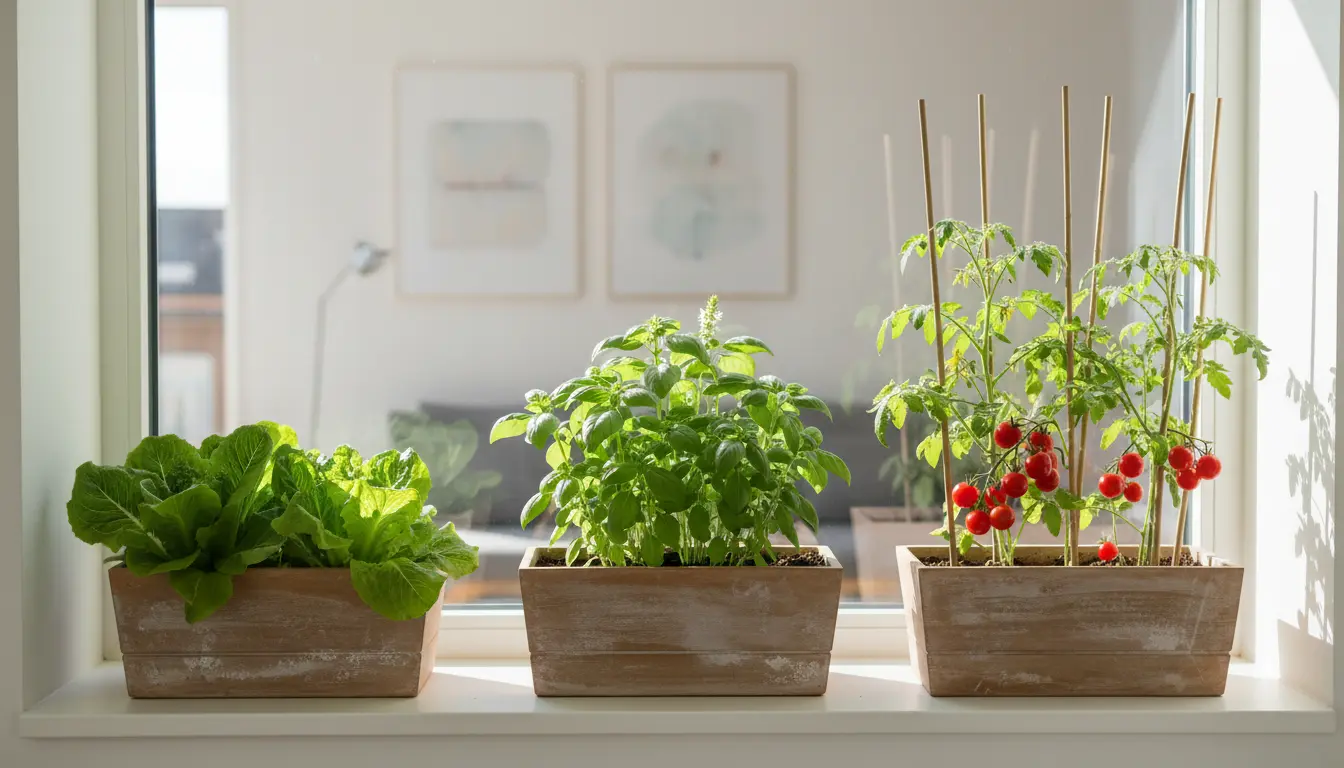
Indoor vegetable gardening brings fresh produce to small spaces and year-round growing. This guide covers practical steps, plant choices, setup, and care so beginners can succeed.
Why Choose Indoor Vegetable Gardening
Indoor gardening fits apartments, cold climates, and busy schedules. It reduces trips to the store and gives control over pests and seasonality.
Beginners benefit from faster feedback and smaller, manageable systems compared with outdoor plots.
Getting Started with Indoor Vegetable Gardening
Start with a simple plan: pick 2–4 easy crops, decide on containers, and choose a light source. Break the setup into small tasks you can finish in a weekend.
Choosing Containers for Indoor Vegetable Gardening
Select containers with drainage holes and stable shapes to avoid tipping. Common options include plastic pots, fabric grow bags, and repurposed containers with added drainage.
- Small herbs: 4–6 inch pots
- Lettuce and greens: 8–10 inch wide containers
- Tomatoes or peppers: 5+ gallon pots
Lighting for Indoor Vegetable Gardening
Light is the most important factor. South- or west-facing windows may work but often need supplemental grow lights. Use full-spectrum LED grow lights for energy efficiency.
General light guidelines:
- Leafy greens: 10–12 hours of light
- Fruit-bearing plants (tomato, pepper): 12–16 hours
Soil and Fertilizer for Indoor Vegetable Gardening
Use a lightweight, well-draining potting mix labeled for containers. Avoid garden soil which can compact and hold pests. Feed plants with a balanced liquid fertilizer every 2–4 weeks during active growth.
Best Vegetables for Indoor Vegetable Gardening
Choose crops that tolerate container life and limited light. These crops give consistent results for beginners:
- Lettuce and salad greens — fast and compact
- Herbs (basil, parsley, chives) — small and forgiving
- Cherry tomatoes — need deeper pots but give big rewards
- Peppers — compact varieties work well indoors
- Radishes and baby carrots — quick harvests
Care and Maintenance for Indoor Vegetable Gardening
Regular monitoring is key. Check soil moisture, leaf color, and new growth every few days. Small adjustments prevent larger problems.
Watering Tips
Water thoroughly until water drains from the bottom, then wait until the top inch of soil is dry before watering again. Overwatering is a common beginner mistake.
Airflow and Humidity
Good airflow prevents fungal issues. Use a small fan on low if the room is stagnant. Most vegetables prefer moderate humidity; avoid overly dry or humid conditions.
Troubleshooting Common Problems in Indoor Vegetable Gardening
Identify problems early and act quickly. Monitor pests, nutrient deficiencies, and light problems.
- Yellow leaves: often overwatering or nutrient deficiency
- Leggy growth: insufficient light
- Aphids or whiteflies: isolate plant, wipe leaves, or use insecticidal soap
Many common herbs and lettuces will regrow after being cut. Harvesting young leaves regularly encourages bushier growth and longer yields.
Small Real-World Example: Windowsill Lettuce and Cherry Tomatoes
Anna, a city renter, started with two 8-inch pots of mixed leaf lettuce on a sunny windowsill and a 5-gallon pot for a patio cherry tomato. She used a basic LED shop light for 10 hours daily.
Within three weeks the lettuce provided cut-and-come-again harvests, and the tomato flowered in six weeks. Anna rotated pots monthly and fed plants every three weeks. This simple setup gave steady salads and a handful of tomatoes each week.
Case Study: A Small Apartment’s Indoor Vegetable Garden
Case: A two-room apartment added a dedicated shelf with four adjustable LED lights, four fabric pots, and a small fan. The gardener planted basil, spinach, radishes, and one dwarf tomato.
Results after three months:
- Spinach: continuous harvest for six weeks
- Basil: multiple harvests after pruning
- Radishes: mature in 25 days
- Dwarf tomato: first fruits at eight weeks
The key to success was consistent lighting, correct pot size, and weekly checks for pests. The gardener spent about 15 minutes per day on care.
Practical Checklist to Start Indoor Vegetable Gardening
- Pick 2–4 beginner-friendly crops
- Choose containers with drainage and appropriate size
- Select full-spectrum LED grow light if natural light is insufficient
- Use quality potting mix and a balanced fertilizer
- Set a watering schedule and check plants regularly
Indoor vegetable gardening is accessible and rewarding with the right setup and simple routines. Start small, learn from each batch, and expand as you gain confidence.