
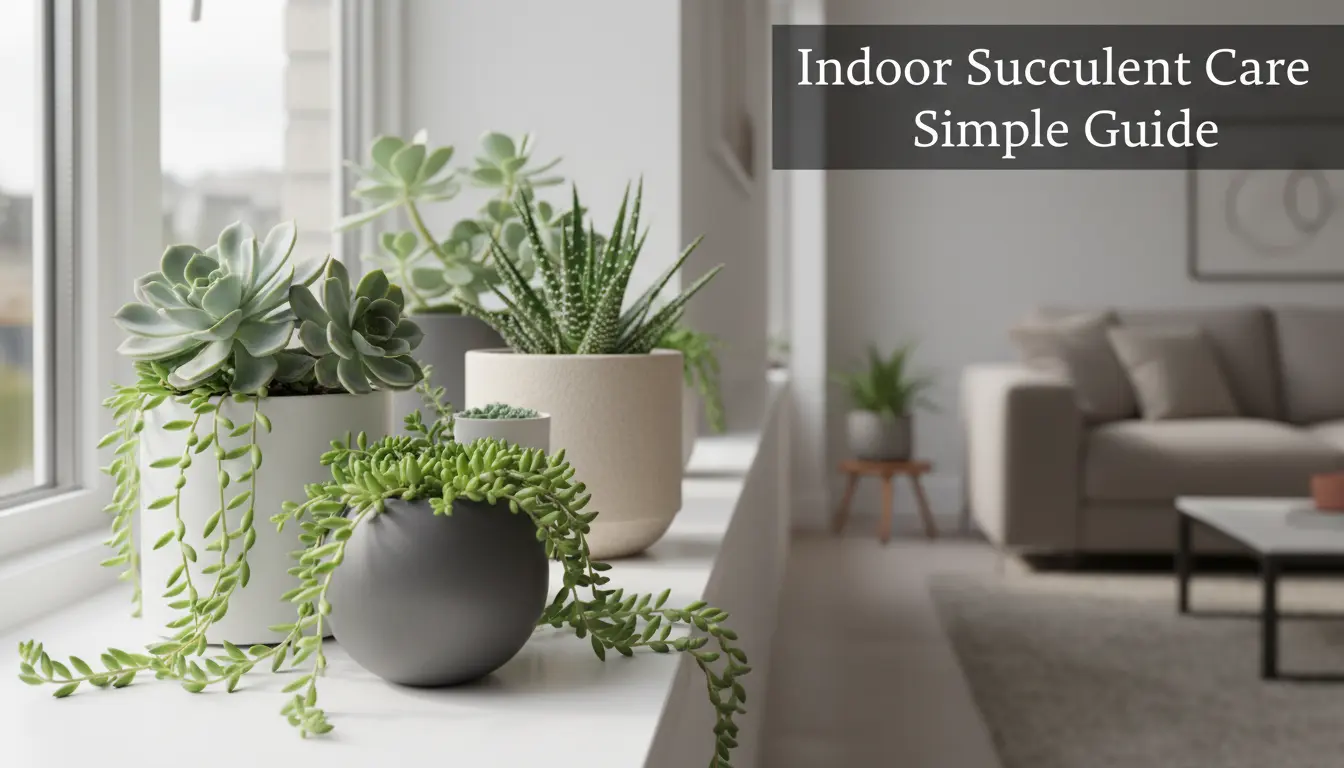
Why Indoor Succulent Care Matters
Succulents are popular houseplants because they store water and survive low-maintenance conditions. Good care helps them thrive, flower, and resist pests.
This guide covers the core practices you need for healthy indoor succulents: light, water, soil, pots, propagation, and troubleshooting. Follow practical steps and quick checks to prevent common problems.
Light and Placement for Indoor Succulent Care
Light is the most important factor for succulents grown indoors. Most succulents need bright, indirect light for 6 to 8 hours a day.
Place plants on east or south-facing windowsills if possible. If natural light is limited, use a full-spectrum grow light for 8–10 hours daily.
Signs of Light Problems
- Leggy growth or stretched stems: too little light.
- Bleached, sunburned patches: too much direct, hot sun.
- Slow growth or pale leaves: adjust placement or supplement with grow light.
Watering: How to Water Indoor Succulents
Succulents need deep but infrequent watering. The general rule is to water thoroughly, then let soil dry out completely before watering again.
Use the soak-and-dry method: water until it drains from the pot bottom, then wait until the top 1–2 inches of soil are dry. Frequency depends on season and humidity.
Watering Tips
- Summer: water every 7–14 days depending on heat and pot size.
- Winter: reduce watering to once a month for many species.
- Avoid overhead misting as a primary method; it does not wet the roots well.
Soil and Drainage in Indoor Succulent Care
Use a fast-draining soil mix made for cacti and succulents or mix potting soil with coarse sand and perlite. Good drainage prevents root rot.
Always choose a pot with drainage holes. If you use a decorative cachepot, place the plant in a drainage pot inside and remove water after watering.
Soil Mix Example
- 2 parts coarse potting soil
- 1 part perlite or pumice
- 1 part coarse sand or grit
Potting and Repotting Succulents
Repot succulents when roots fill the pot or soil breaks down, usually every 1–2 years. Choose a pot 10–20% larger than the root ball.
Handle roots gently and allow any damaged roots to dry for a day before planting. Water lightly after a week to let roots settle without causing rot.
Propagation and Multiplying Plants
Succulents are easy to propagate from leaves, stem cuttings, or offsets. Leaf propagation works well for echeveria and related rosettes.
Allow cuttings or leaves to callus for 1–3 days before placing on dry soil. Mist lightly until roots form, then water normally once established.
Simple Propagation Steps
- Remove a healthy leaf or stem cutting.
- Let the cut end dry and callus 1–3 days.
- Place on dry, well-draining soil and mist occasionally.
- Transplant when roots are visible and the plant begins growth.
Troubleshooting Common Problems
Root rot, pests, and etiolation (stretching) are the most common issues. Diagnose quickly and act to prevent permanent damage.
For root rot: remove the plant, trim rotten roots, let dry, repot in fresh soil, and reduce watering. For pests like mealybugs, use cotton swabs dipped in isopropyl alcohol and isolate the plant.
Quick Checklist
- Leggy growth: increase light.
- Squishy stems or black roots: reduce watering and repot if needed.
- White cottony insects: treat with alcohol or insecticidal soap.
Some succulents enter dormancy in winter and require much less water and no fertilizer during that period. Observing seasonal changes helps avoid overwatering.
Case Study: Reviving a Shrinking Jade Plant
Sarah, a beginner, brought a jade plant that had yellowing leaves and soft stems after being kept in a low-lit bathroom. She moved it to a south-facing window and repotted it into a gritty mix with drainage.
After trimming soft roots, letting them callus, and watering sparingly, the plant regained firmness and started producing new growth in six weeks. This quick change shows how light and drainage fix many problems.
Simple Maintenance Routine
Follow a weekly or monthly routine to keep succulents healthy. This prevents small issues from becoming major problems.
- Weekly: check light exposure and rotate pots for even growth.
- Monthly: inspect soil moisture and look for pests or damaged leaves.
- Seasonally: repot when necessary and reduce watering in winter.
Indoor succulent care is straightforward when you focus on light, drainage, and correct watering. Small adjustments produce visible improvements within weeks.
Start with one or two plants, learn how they respond, and expand your collection as you gain confidence. Healthy succulents reward consistent but minimal care.