
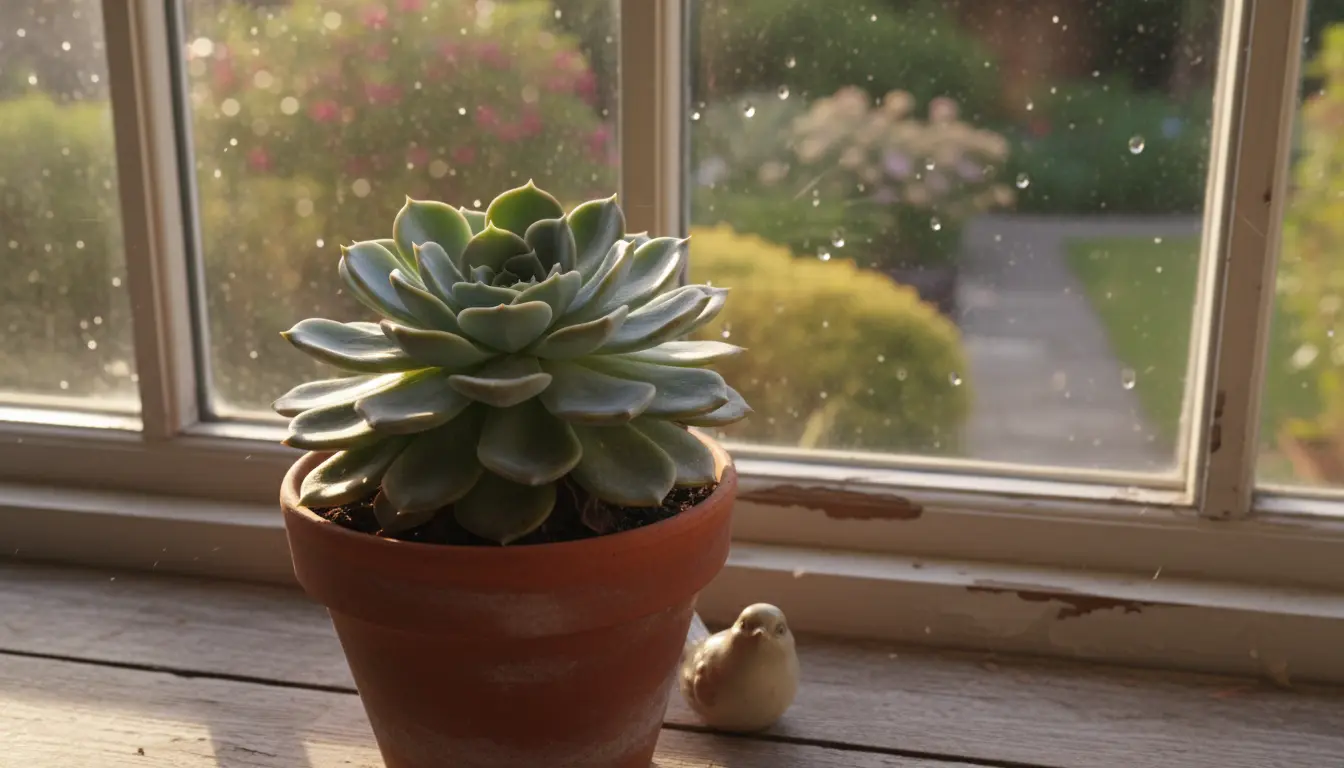
Why indoor succulent care matters
Succulents are low-maintenance but not no-maintenance. Many issues come from incorrect light, soil, or watering rather than the plant itself.
This guide gives clear, practical steps to keep succulents healthy indoors, with examples and a short case study you can apply right away.
Choose the right succulent for indoors

Start with species adapted to lower light and indoor temperatures. Good beginner choices include Haworthia, Jade (Crassula ovata), Echeveria, and Snake Plant (Sansevieria).
Match the plant to your location. If you have a bright south window, more sun-loving succulents will thrive. For north or east windows pick shade-tolerant varieties.
Light requirements for indoor succulent care
Light is the single most important factor. Most succulents need 4–6 hours of bright, indirect light.
If natural light is limited, use a full-spectrum LED grow light set on a timer for 8–10 hours daily.
Practical light tips
- Place succulents on south or west-facing windowsills where possible.
- Rotate plants weekly to keep growth even.
- Watch for etiolation (stretching toward light) as a sign of insufficient light.
Soil and drainage
Use a fast-draining succulent or cactus mix. Regular potting soil holds too much moisture and risks root rot.
Improve drainage by adding coarse sand, perlite, or pumice to the mix. Ensure the pot has a drainage hole.
Pot selection and repotting

Choose a pot one size larger than the root ball. Terra cotta pots help wick moisture and reduce overwatering risk.
Repot every 1–2 years to refresh soil and inspect roots. Spring is the best time to repot most succulents.
Watering schedule and method
Water deeply but infrequently. Let the soil dry almost completely between waterings.
A typical schedule is every 10–14 days in active growth and every 3–6 weeks in dormancy, but adjust for your home onditions.
How to water succulents correctly
- Water until it runs from the drainage hole.
- Allow soil to dry before the next watering.
- Reduce frequency in winter when growth slows.
Fertilizing and seasonal care
Fertilize lightly during the growing season (spring and summer) with a balanced, diluted fertilizer once a month.
Do not over-fertilize; excess nutrients encourage weak, leggy growth.
Common pests and problems
Watch for mealybugs, spider mites, and scale. Early detection makes treatment easier.
Treat pests with a cotton swab dipped in isopropyl alcohol, insecticidal soap, or neem oil. Isolate affected plants to prevent spread.
Root rot and how to diagnose it
Soft, blackened roots or discolored, mushy stems indicate root rot. Remove the plant, trim rotten roots, and repot in fresh, dry soil.
Propagation basics
Succulents are easy to propagate from leaves, offsets, or stem cuttings. Use a clean, sharp tool and let cuttings callus for a day before planting.
Place cuttings on top of dry soil and mist lightly until roots form, then resume normal watering.
Small case study: Maria
nd her Jade Plant
Maria kept a Crassula ovata in a north-facing room and noticed the plant was drooping and leggy. She moved it to an east window to get morning sun.
She repotted into a fast-draining mix, trimmed two longest stems, and adjusted watering to every two weeks. Within three months the jade plant produced new compact growth and regained color.
Quick checklist for daily indoor succulent care
- Check light exposure and rotate plants weekly.
- Inspect for pests and remove debris from soil surface.
- Water only when soil is dry to the touch 1 inch down.
- Fertilize lightly in spring and summer.
Final tips for consistent success with indoor succulent care
Observe your plants regularly and adjust care rather than following a strict schedule. Light, potting mix, and watering are the three levers that most affect succulent health.
With small changes and attention to those levers, most beginners can maintain thriving succulents indoors year-round.