
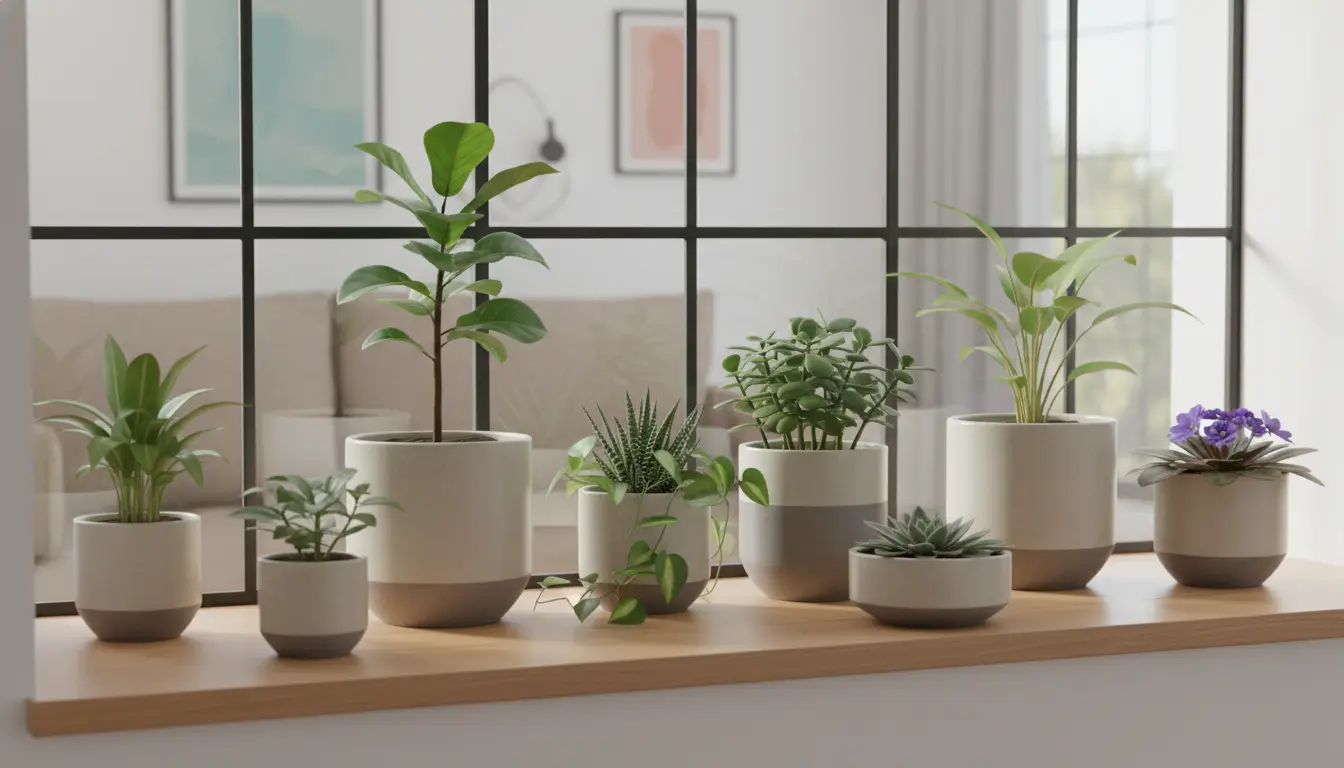
Indoor Plant Care for Beginners: Key Principles
Indoor plant care for beginners means learning a few core habits that keep plants alive and healthy. Focus on light, water, soil, and basic maintenance to prevent common problems.
This guide gives clear, practical steps and a simple routine you can follow each week.
Understand Your Plant’s Light Needs

Light is the top factor for healthy houseplants. Place plants where their specific light requirements are met rather than moving them randomly.
Common categories: low light, bright indirect light, and direct sun. Match species to the room conditions.
Watering Basics for Indoor Plant Care
Overwatering is the most frequent mistake. Let soil surface dry before watering most houseplants, and use pots with drainage holes.
Tips:
- Check soil with your finger to 1–2 inches deep.
- Water until it drains from the pot bottom, then discard excess from saucer.
- Reduce watering in winter when growth slows.
Choose the Right Soil and Pots
Use a well-draining potting mix suited to the plant type. Cacti and succulents need gritty mixes, while ferns prefer moisture-retentive blends.
Select pots with drainage holes and slightly larger size only when repotting. Too-large pots hold excess moisture and stress roots.
Humidity, Temperature, and Placement
Humidity and temperature affect plant health more than many beginners expect. Most tropical houseplants prefer 50% humidity and stable temperatures between 65–75°F (18–24°C).
Improve humidity with pebble trays, grouped plants, or a small humidifier near plants that need more moisture.
Feeding and Fertilizing
Feed actively growing plants with a balanced, water-soluble fertilizer every 4–6 weeks during spring and summer. Reduce or stop feeding in fall and winter.
Follow label directions on concentration; less is better than more to avoid fertilizer burn.
Pest Control and Common Problems
Check plants weekly for pests like spider mites, mealybugs, and scale. Early detection makes treatment simple.
Basic treatment steps:
- Isolate the plant to prevent spread.
- Wipe leaves with a mild soap solution or use neem oil if needed.
- Repeat weekly until pests are gone.
A Simple Weekly Indoor Plant Care Routine
Follow this short checklist to keep plants on track. Routine prevents most issues and keeps care manageable.
- Inspect leaves and soil for pests or mold.
- Check moisture with a finger test and water if needed.
- Turn plants for even light exposure.
- Wipe dusty leaves to improve photosynthesis.
Common Mistakes New Plant Owners Make
Knowing what to avoid saves time and plant losses. Watch out for these frequent errors.
- Overwatering and poor drainage.
- Placing shade plants in bright direct sun.
- Using garden soil instead of a potting mix.
- Ignoring pests until they spread.
Many popular houseplants like pothos and snake plant can survive weeks of low light and infrequent watering, making them ideal starter plants.
Real-World Example: Reviving a Struggling Pothos
Case study: Sarah inherited a leggy, yellowing pothos from a friend. She followed a simple plan and restored it to health in six weeks.
What she did:
- Moved the plant to bright indirect light near a north-facing window.
- Repotted into fresh all-purpose potting mix with drainage holes.
- Watered thoroughly only when the top 1 inch of soil was dry.
- Trimmed dead leaves and rotated the pot weekly for balanced growth.
Result: New healthy growth appeared within three weeks and the plant regained a fuller shape by week six.
Choosing Beginner-Friendly Plants
Start with resilient species that tolerate common indoor conditions. These plants are forgiving and help build confidence.
- Pothos (Epipremnum aureum)
- Snake plant (Sansevieria)
- ZZ plant (Zamioculcas zamiifolia)
- Spider plant (Chlorophytum comosum)
Final Tips for Sustainable Indoor Plant Care
Keep notes on watering frequency and placement for each plant. Small records help you learn patterns and avoid mistakes.
Observe your plants regularly, and make one change at a time so you can see the effect. With these simple practices, indoor plant care becomes a low-stress, rewarding habit.