
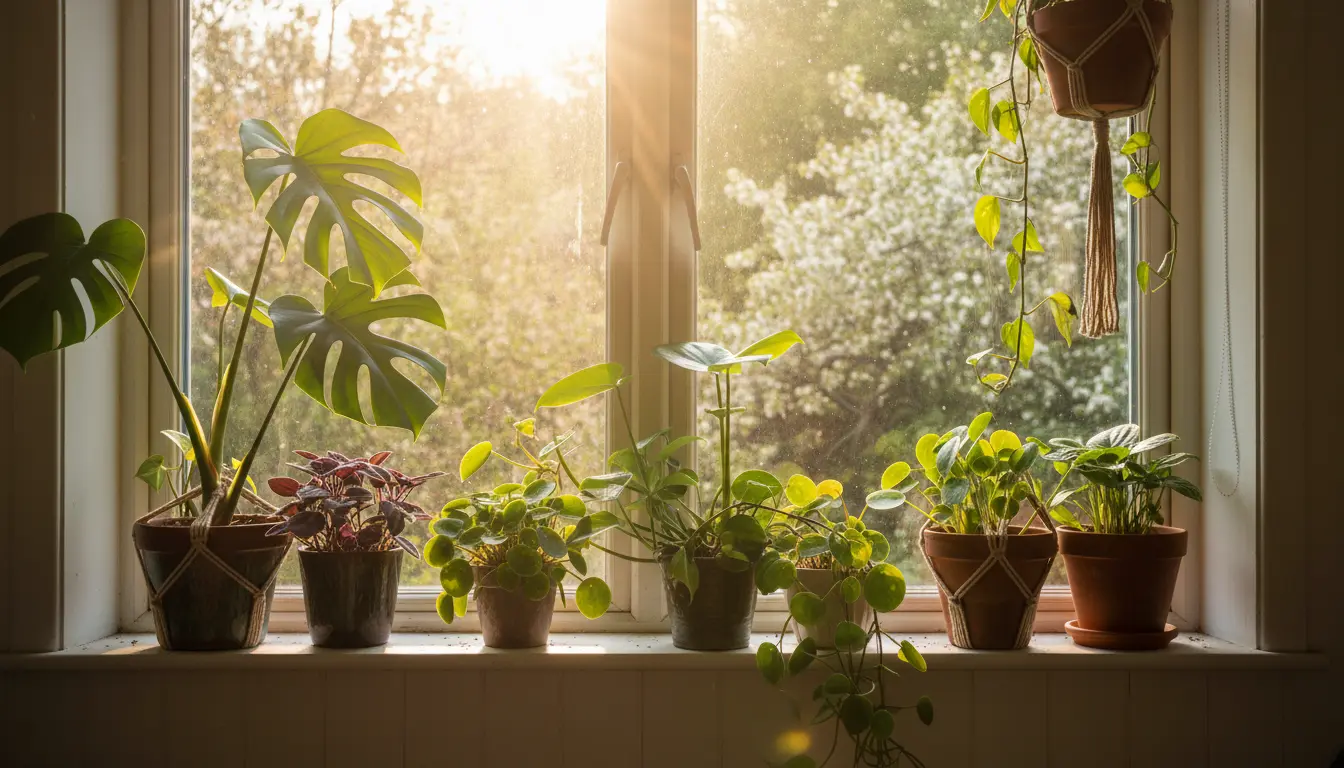
Why Indoor Plant Care Matters
Indoor plant care for beginners covers a few core habits that make the difference between plants that survive and plants that thrive. Good routines reduce stress for both the plant and the caregiver.
This guide breaks down essential, practical steps you can follow immediately, with examples and a short case study to demonstrate results.
Understand Light Needs for Indoor Plant Care

Light is the most important factor for indoor plant care. Identify bright, medium, and low light areas in your home before choosing plants.
Match plants to conditions: succulents and cacti need bright light, pothos and snake plants tolerate low light. Rotate pots weekly for even growth.
How to Measure Light
Use a simple rule: if you can comfortably read a book in the spot without a lamp, it’s bright indirect light. Direct sun through a south- or west-facing window is intense and suits sun-loving plants.

Consider a handheld light meter or free phone apps if you want precise lux or foot-candle readings.
Watering Basics in Indoor Plant Care
Overwatering is the most common cause of indoor plant problems. Watering frequency depends on plant type, pot size, soil mix, and light.
Check soil with your finger: if the top 1–2 inches are dry, most houseplants are ready for water. For succulents wait until soil is mostly dry.
Practical Watering Techniques
- Water thoroughly until excess drains from the pot’s bottom.
- Empty saucers to avoid root rot.
- Use room-temperature water to avoid shock.
Soil, Pots, and Drainage
Choose well-draining potting mix designed for houseplants. Avoid garden soil which compacts and holds too much water.
Pots should have drainage holes. If using a decorative cachepot, keep the plant in a nursery pot and remove it for watering.
Repotting Tips
- Repot when roots circle the pot or growth slows, typically every 12–24 months.
- Move one pot size up — too large a pot can keep soil too wet.
- Use fresh mix and gently tease root balls before planting.
Humidity and Temperature for Indoor Plant Care
Most common houseplants prefer moderate humidity (40–60%) and stable indoor temperatures between 60–75°F (15–24°C).
If your home is dry, increase humidity using a pebble tray, a humidifier, or grouping plants together to create a microclimate.
Basic Feeding and Fertilizing
Feed active growers during spring and summer with a balanced, water-soluble fertilizer at half the recommended strength. Reduce feeding in fall and winter.
Organic options like compost teas or slow-release granules are low-maintenance and reduce the risk of overfeeding.
Recognizing Pests and Diseases
Common pests include spider mites, mealybugs, and aphids. Early detection makes treatment easier and prevents spread.
Inspect new plants closely for pests. Clean leaves periodically and isolate infected plants until treated.
Simple Pest Controls
- Wipe leaves with diluted soap solution to remove pests.
- Use neem oil or insecticidal soap for persistent infestations.
- Prune heavily infested areas and dispose of debris away from other plants.
Troubleshooting Common Problems
Yellow leaves often point to overwatering or poor light. Brown leaf tips can indicate low humidity or salt buildup from fertilizer.
Slow growth in bright conditions usually means the plant needs repotting or feeding. Always check roots and soil moisture first.
Easy Indoor Plants for Beginners
- Pothos — forgiving, tolerates low light and irregular watering.
- Snake Plant — very drought tolerant and great for low light.
- ZZ Plant — survives neglect and low light.
- Spider Plant — adapts to many conditions and produces pups.
Houseplants can improve indoor air quality and reduce stress. Studies show that simple plant care tasks also boost mood and attention.
Case Study: Reviving a Neglected Pothos
Scenario: A small apartment pothos had yellowing leaves, sparse growth, and sat in low light for months. The owner watered weekly regardless of soil moisture.
Action taken: The plant was moved to a brighter indirect spot, repotted into fresh mix with drainage, and watering was reduced to when the top inch of soil dried. A diluted liquid fertilizer was applied monthly during spring.
Outcome: Within six weeks the pothos produced new shoots and the existing leaves regained a healthier color. Simple changes restored vigor without expensive treatments.
Quick Indoor Plant Care Checklist
- Assess the light in your home and choose plants that match those conditions.
- Water based on soil moisture, not a fixed schedule.
- Use well-draining soil and pots with holes.
- Provide moderate humidity and stable temperatures.
- Inspect regularly for pests and feed lightly during the growing season.
Final Tips for Indoor Plant Care for Beginners
Start with 1–3 easy plants and develop simple routines: a weekly walk-around to check light, soil, and leaves. Keep notes on watering and growth to learn what each plant prefers.
Over time you’ll build confidence and can expand to more demanding species. Consistency and observation are the most effective skills in indoor plant care.