
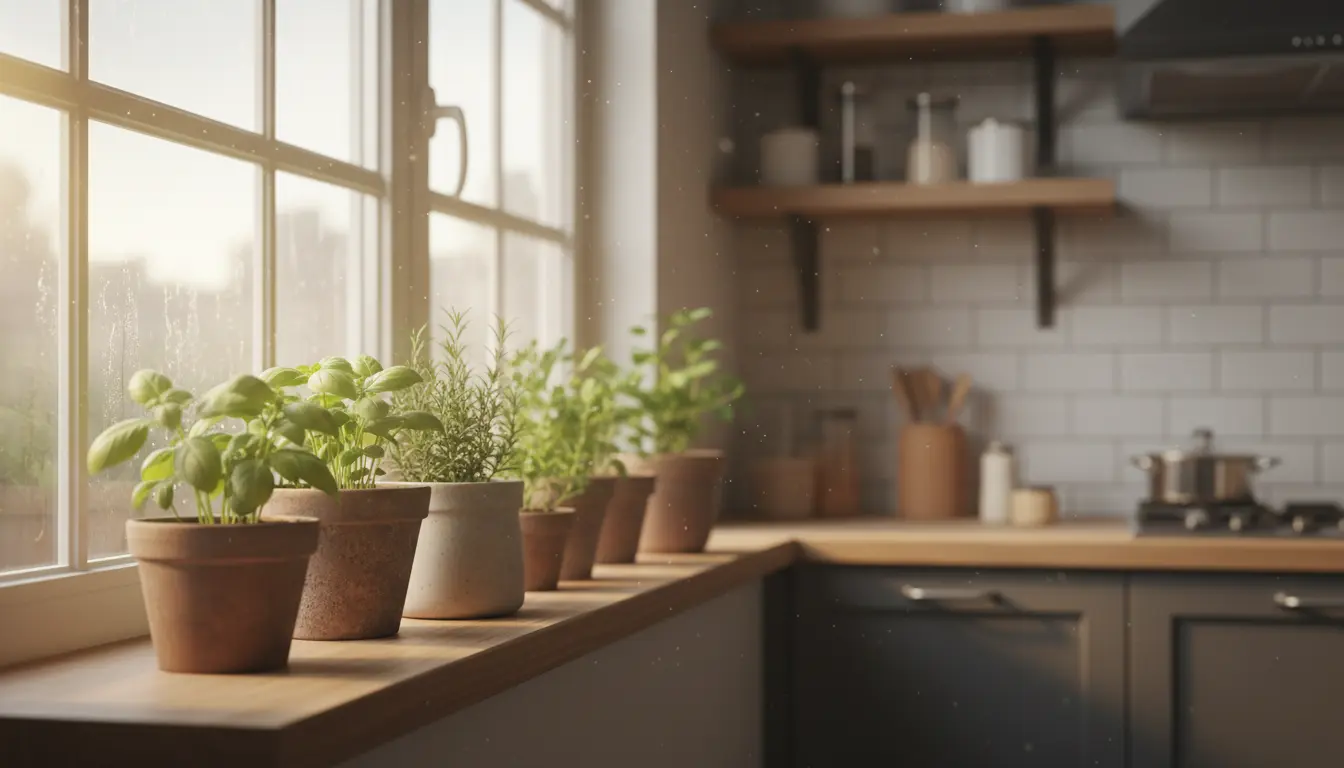
Why indoor herb gardening for small apartments works
Indoor herb gardening for small apartments is a practical way to grow fresh flavors without needing a yard. Herbs take little space, offer fast returns, and improve cooking and indoor air quality.
With the right choices for light, containers, and soil, even a narrow windowsill can support several productive plants. This guide explains step-by-step how to set up and maintain a reliable small-space herb garden.
Choosing herbs for small apartments
Start with herbs that thrive in containers and limited light. Good beginner options include basil, parsley, chives, mint, cilantro, and thyme.
Consider these factors when choosing herbs:
- Light needs: Basil and thyme like bright light; parsley and mint tolerate moderate light.
- Growth habit: Mint spreads quickly—use its own pot to avoid takeover.
- Use frequency: Pick herbs you cook with regularly to keep pruning and encourage growth.
Light and location for indoor herb gardening
Light is the most important resource for indoor herb gardening for small apartments. Place herbs in the brightest available window; south- or west-facing windows work best in most climates.
If natural light is limited, use a small LED grow light for 10–14 hours per day. Position the light 6–12 inches above the plants and use a timer for consistent schedules.
Assessing window light
Track how many hours direct sunlight a window receives across a week. Herbs that need full sun require at least 6 hours; low-light herbs like mint can manage with 3–4 hours.
Rotate pots weekly so all sides get even light and avoid leggy, weak growth.
Containers, soil, and drainage

Select containers with drainage holes to prevent root rot. Lightweight plastic or glazed ceramic pots are fine; consider narrow rectangular planters for limited sill space.
Use a high-quality potting mix formulated for container plants. Avoid garden soil, which compacts and prevents proper drainage.
- Container size: 4–6 inch pots for single herbs, 8–12 inch for grouped herbs.
- Soil mix: Potting mix with perlite or vermiculite for aeration.
- Drainage: Add a layer of pebbles under the soil only if the pot has no hole; preferably choose pots with holes and saucers.
Watering and feeding indoor herbs
Overwatering is the most common mistake in indoor herb gardening for small apartments. Water when the top 1 inch of soil feels dry; push your finger into the soil to check moisture.
Feed container herbs with a balanced, water-soluble fertilizer every 4–6 weeks during the growing season. Use half the recommended strength to avoid burning delicate roots.
Watering tips
Water thoroughly until water drains from the pot bottom, then let the soil dry slightly before the next watering. Use room-temperature water to avoid shocking roots.
Pest control and maintenance
Keep maintenance simple: prune regularly, remove dead leaves, and inspect plants weekly for pests. Common indoor pests include aphids, spider mites, and whiteflies.
For minor infestations, rinse leaves under a gentle stream of water or use an insecticidal soap labeled for edible plants. Avoid harsh chemicals on herbs you plan to eat.
Harvesting and pruning for productivity
Harvest herbs frequently to encourage new growth. Pinch off the top sets of leaves rather than removing large branches to promote bushier plants.
For basil, pinch flower buds to keep the plant producing leaves. For parsley and cilantro, harvest outer stems first and allow the center to keep growing.
Small case study: Windowsill basil and parsley
Maria lives in a 400-square-foot apartment and maintains three 6-inch pots on her east-facing windowsill. She grows basil, parsley, and chives to supply weekly cooking.
By using a 12-hour LED light, watering every 5–7 days, and pruning after each harvest, Maria averages fresh herbs for two meals per week from late spring through fall. Her setup cost under $60 and fits neatly on a shelf above the radiator.
Herbs harvested regularly can produce more leaves than those left to flower. Regular pruning can double harvestable foliage in a single season.
Advanced tips for small-space growers
Use vertical space with hanging planters or tiered shelves to expand capacity without reducing floor area. Group herbs with similar light and water needs together to simplify care.
Consider companion planting: basil near tomatoes (if you grow them indoors) can improve flavor and reduce pests. Keep vigorous growers, like mint, in separate pots to avoid crowding.
Quick checklist for starting indoor herb gardening for small apartments
- Choose 3–5 beginner herbs you use often.
- Place them in the brightest window or add an LED grow light.
- Use potting mix and containers with drainage.
- Water when top inch of soil is dry and fertilize lightly every 4–6 weeks.
- Prune and harvest regularly to encourage growth.
Indoor herb gardening for small apartments is low-cost and high-reward when you match plant choices to your environment and keep care simple. Start with a couple of pots, learn their needs, and scale up as your confidence grows.