
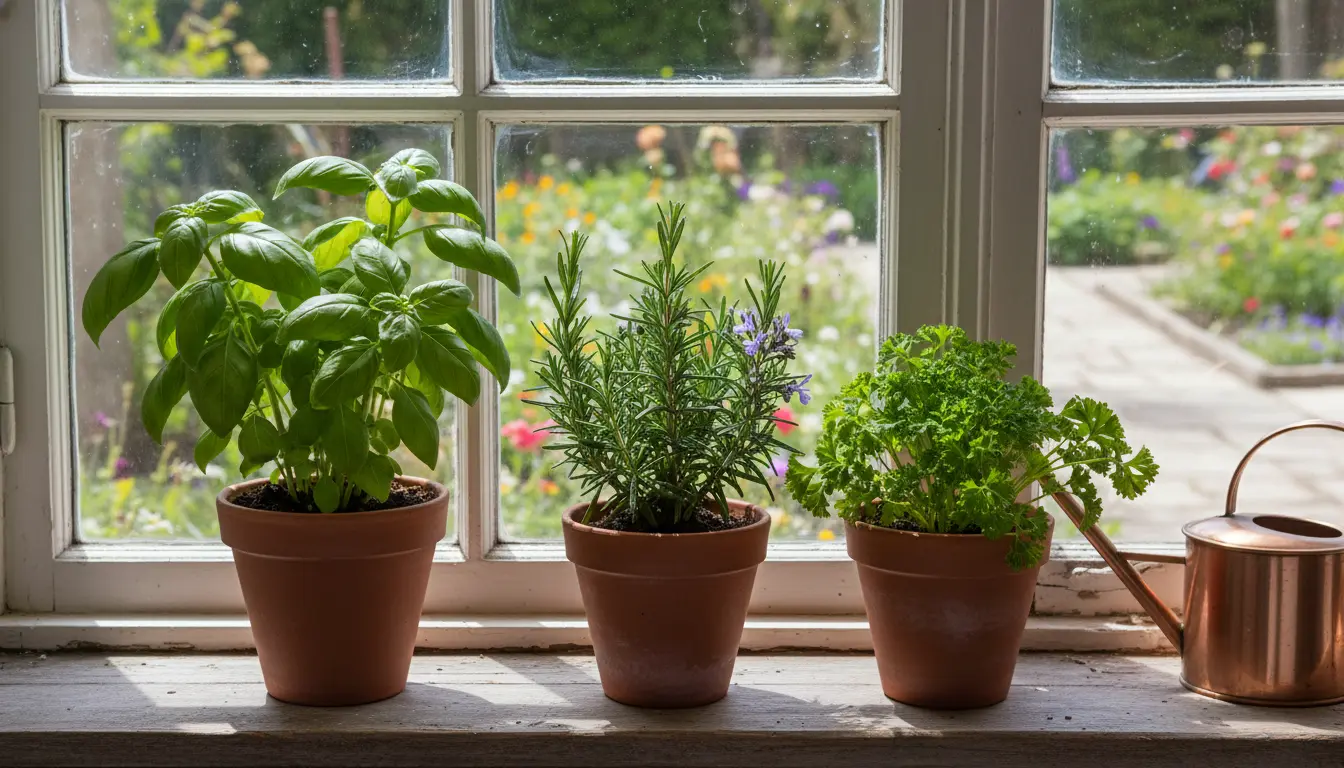
Why indoor herb gardening works
Indoor herb gardening is a low-cost, high-reward way to have fresh flavors year-round. Small containers and simple care let you grow mint, basil, parsley, and more right on a windowsill.
This guide covers practical steps for light, soil, watering, pot choice, and common problems. Use these instructions to start or improve your kitchen herb garden quickly.
Choosing herbs for indoor herb gardening
Start with herbs that adapt well to containers and indoor light. These are forgiving for beginners and produce reliable harvests.
- Basil — great for warm, bright spots.
- Mint — tolerant of lower light but can spread quickly.
- Parsley — prefers moderate light and steady moisture.
- Chives — compact and easy to harvest.
- Thyme and rosemary — need bright light and drier soil.
Light requirements for indoor herb gardening
Light is the most important factor. Most culinary herbs need 6–8 hours of bright light. South- or west-facing windows work best.
If natural light is limited, use LED grow lights. Position lights 6–12 inches above plants and keep them on for 12–14 hours daily.
Signs of inadequate light

Leggy stems, pale leaves, and slow growth mean your herbs need more light. Move pots closer to the window or add supplemental lighting.
Soil and pot selection
Use a well-draining potting mix formulated for containers. Avoid garden soil, which can compact and retain too much moisture.
Select pots with drainage holes to prevent root rot. For small herbs, choose 4–6 inch pots; larger basil plants benefit from 8–10 inch containers.
Potting mix tips
- Mix equal parts potting mix and perlite for better drainage.
- Add a small amount of compost for nutrients if you prefer organic soil.
- Use sterile mix for fresh starts to reduce disease risk.
Watering and feeding in indoor herb gardening
Overwatering is a frequent mistake. Check soil moisture by sticking your finger 1–2 inches deep; water only when the topsoil is dry.
Herbs generally prefer a consistent schedule: water thoroughly until excess drains, then let soil dry slightly between waterings.
Fertilizing schedule
Feed herbs with a balanced liquid fertilizer every 4–6 weeks during active growth. Use half-strength recommendations on the label to avoid salt buildup.
Pruning, harvesting, and encouraging growth
Regular pruning encourages bushier plants and more flavor. Pinch back tips before flowering to maintain leaf production.
- Harvest no more than one-third of foliage at a time.
- Remove flowers from herbs like basil to keep leaves tender.
- Rotate pots weekly for even growth and leaf color.
Troubleshooting common problems
Indoor herbs face a few regular issues. Identifying the cause quickly helps correct growth problems.
- Yellow leaves: often from overwatering or poor drainage.
- Leggy stems: not enough light.
- Pests like aphids or spider mites: isolate affected plants and wash leaves or use insecticidal soap.
Practical setup checklist for indoor herb gardening
Use this quick checklist before planting to ensure success.
- Choose a bright location or install an LED grow light.
- Pick appropriate pots with drainage holes.
- Buy good-quality potting mix and perlite.
- Start with hardy herbs like basil, chives, mint, and parsley.
- Plan a watering schedule and a light feeding routine.
Small real-world example
Case Study: A homeowner with a north-facing kitchen window grew basil and chives using a small LED panel. They placed herbs on a shelf with the light on 12 hours daily. Within six weeks, basil produced enough leaves for weekly pesto, and chives offered frequent garnish cuts. The key changes were switching to LED lighting and using a well-draining mix.
Many herbs release stronger flavors when harvested in the morning. Picking leaves before the sun hits them preserves oils that give herbs their aroma and taste.
Advanced tips for ongoing success
Rotate herbs between rooms seasonally to match light needs. Group plants with similar water needs together to simplify care.
Propagate new plants from cuttings to expand your herb selection without buying seeds. Basil and mint root easily in water.
Long-term maintenance
- Repot annually into fresh mix to renew nutrients.
- Inspect for pests weekly and act fast on infestations.
- Keep a simple journal of watering and fertilizing to track what works for your home environment.
Final checklist before you start
Indoor herb gardening is practical and rewarding with minimal equipment. Ensure you have adequate light, good soil, correct pots, and a basic care routine.
With consistent attention, you can enjoy fresh, homegrown herbs year-round and improve the flavor of home cooking with minimal space and effort.