
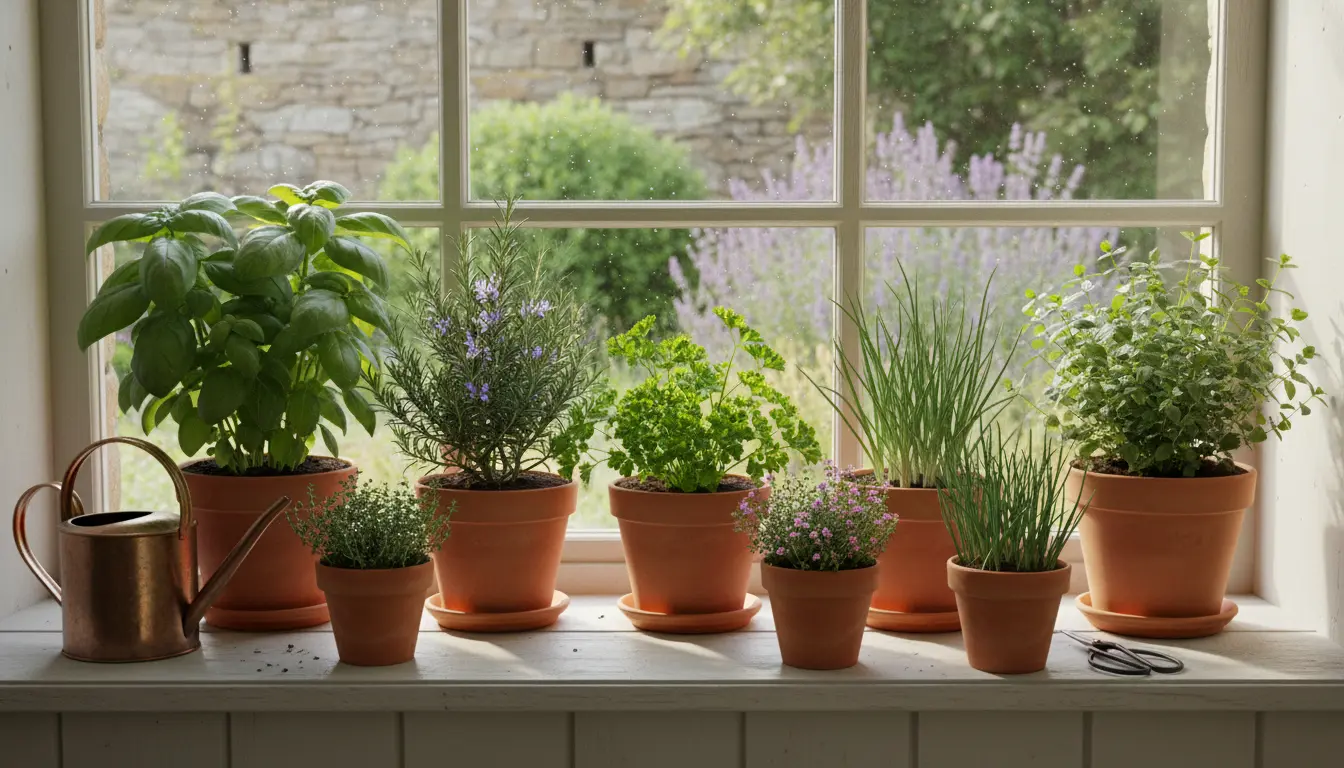
Indoor herb gardening is an easy way to add fresh flavor to meals, improve indoor air, and enjoy gardening year-round. This guide covers the essentials so you can start a productive kitchen herb garden with minimal tools.
Indoor Herb Gardening Basics
Indoor herb gardening requires three main elements: light, water, and suitable containers. If you provide these consistently, most common herbs will thrive on a windowsill or under a grow light.
Decide where you will keep your herbs before you plant. A south- or west-facing window is ideal but a grow light works well for low-light spots.
Choosing the Right Herbs for Indoor Herb Gardening
Start with herbs that tolerate container life and limited light. These are forgiving for beginners and useful in the kitchen.
- Basil — loves bright light and warmth.
- Parsley — tolerates moderate light and grows slowly.
- Chives — compact, hardy, and great in salads.
- Mint — vigorous grower; keep in its own pot to avoid spread.
- Thyme and Oregano — drought-tolerant and compact.
Soil, Containers, and Drainage
Use a high-quality potting mix labeled for herbs or vegetables. Avoid garden soil, which is too dense for containers and can compact.

Containers should have drainage holes. If you have attractive pots without holes, plant in a smaller plastic nursery pot with holes and place it inside the decorative pot.
Soil Mix and Fertilizer
A light, well-draining potting mix with perlite or vermiculite works best. Herbs prefer soil that drains quickly rather than stays soggy.
Fertilize lightly. Use a balanced liquid fertilizer diluted to half strength every 4–6 weeks during active growth. Over-fertilizing causes weak, leggy plants.
Light Requirements for Indoor Herb Gardening
Most culinary herbs need 6–8 hours of bright light daily. Place plants near a sunny window or use supplemental lighting if natural light is insufficient.
When to Use Grow Lights
Use LED grow lights if your windowsill gets less than 4–6 hours of direct sunlight. Position the light 6–12 inches above the plants and run it 12–14 hours a day for best results.
Watering and Maintenance
Watering is the most common mistake. Water when the top 1 inch of soil feels dry. Overwatering leads to root rot; underwatering causes wilting and poor growth.
- Check soil moisture by finger test weekly.
- Use pots with drainage and empty saucers after watering.
- Trim regularly to encourage bushier growth and prevent flowering on basil for better flavor.
Pest Management
Indoor pests are uncommon but possible. Inspect leaves weekly for aphids, spider mites, or whiteflies. Wipe leaves with a damp cloth and use insecticidal soap for small infestations.
Herbs like mint, basil, and cilantro release aromatic oils when you touch their leaves, which can improve indoor air perception and add fragrant freshness to your kitchen.
Harvesting Tips for Indoor Herb Gardening
Harvest frequently to encourage new growth. Always cut above a leaf node to allow branches to refill and become bushier.
For basil, pinch the top sets of leaves rather than removing many leaves at once. For slow growers like thyme, harvest small amounts regularly.
Preserving Your Harvest
Use fresh herbs within a week for best flavor. To store longer, freeze chopped herbs in ice cube trays with a little water or olive oil, or dry herbs on a rack for long-term storage.
Common Problems and Quick Fixes
- Leggy plants: Increase light and pinch back stems to promote bushiness.
- Yellow leaves: Check for overwatering or poor drainage.
- Slow growth: Ensure adequate light and feed with a light fertilizer.
Small Real-World Example
Case Study: Anna’s Kitchen Basil
Anna started with three 4-inch pots of basil on a south-facing windowsill. She used a store-bought potting mix and watered when the top inch of soil dried. Within three weeks she began harvesting small amounts for salads and pesto.
After six weeks of regular pinching and one light feeding, her basil was bushy enough to transplant into a larger container and provided enough leaves for family meals twice a week.
Key takeaways from Anna’s case: consistent light, listening to soil moisture, and regular harvesting produce steady yields.
Beginner Checklist for Indoor Herb Gardening
- Choose 2–4 beginner herbs (basil, chives, mint, parsley).
- Select containers with drainage and a quality potting mix.
- Place near bright light or install an LED grow light.
- Water when the top inch of soil is dry; avoid waterlogging.
- Harvest often and prune to promote healthy growth.
Indoor herb gardening is low-cost, low-stress, and highly rewarding. With the right light, soil, and routine care, you can enjoy fresh herbs year-round and improve your cooking and indoor environment. Start with a few pots, learn from simple mistakes, and expand as your confidence grows.