
Why Choose Indoor Herb Gardening
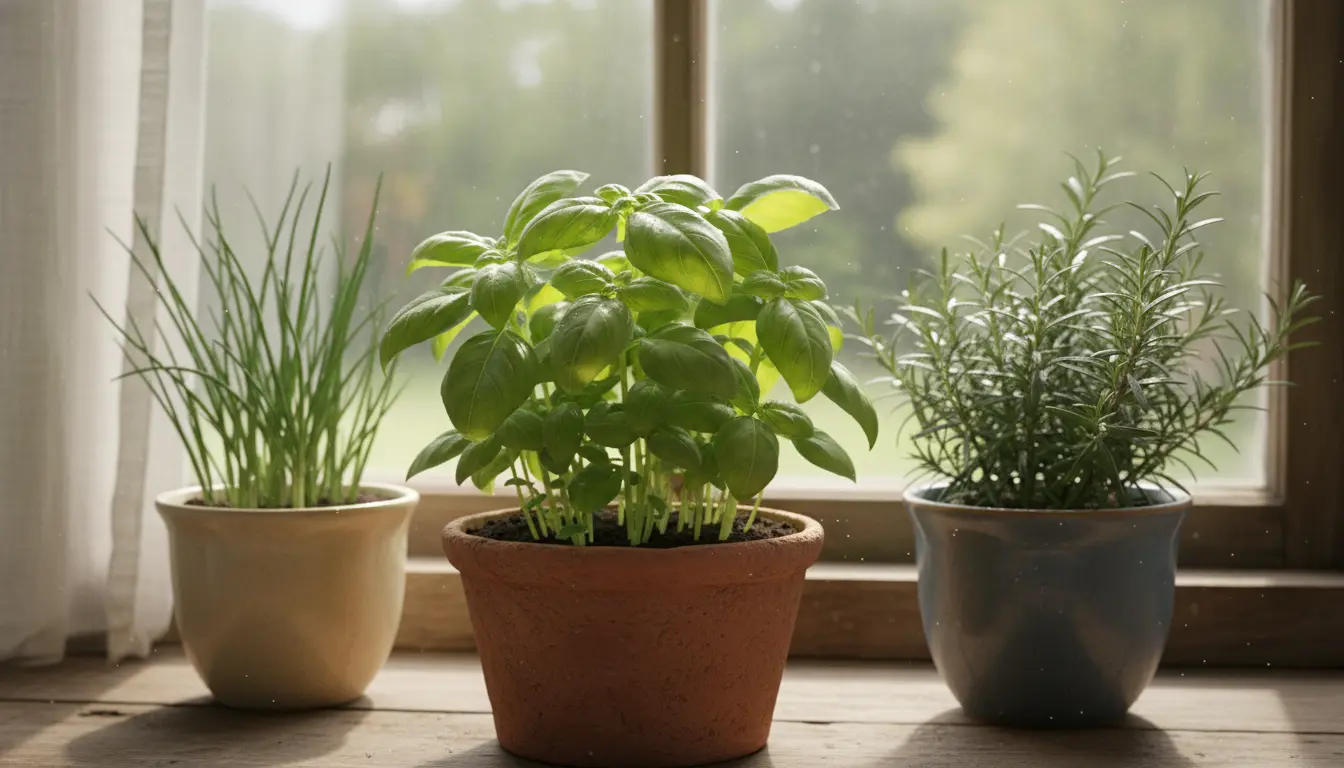
Indoor herb gardening brings fresh flavor to your kitchen and saves money on store-bought herbs. It also fits small spaces and can improve air quality and mood.
This guide explains the basics of indoor herb gardening so you can start a productive, low-maintenance herb patch on a windowsill or shelf.
Getting Ready: What You Need for Indoor Herb Gardening
Start with a few basic items so your herbs have the right environment. You don’t need a lot of space or fancy equipment.
- Pots with drainage holes (4–8 inch pots are good for most herbs)
- Quality potting mix formulated for containers
- A sunny spot with at least 4–6 hours of light or a simple LED grow light
- Small watering can and a pair of pruning shears
Choosing Pots and Soil for Indoor Herb Gardening
Use pots with drainage to prevent waterlogging, which causes root rot. Terracotta pots dry faster and help prevent overwatering, while plastic retains moisture longer.
Choose a light, well-draining potting mix. Avoid garden soil; it’s too dense for containers and can carry pests.
Light Requirements for Indoor Herb Gardening
Most culinary herbs need bright light. A south- or west-facing windowsill is ideal. If natural light is limited, use a full-spectrum LED grow light for 10–14 hours daily.
Watch for signs of low light like leggy stems, pale leaves, or slow growth, and move the pot or add supplemental lighting if needed.
Best Herbs for Indoor Herb Gardening
Begin with reliable, fast-growing herbs that tolerate container life. These are forgiving and deliver frequent harvests.
- Basil — thrives in warmth and bright light, great for pesto and salads.
- Parsley — a slow starter but long-lived; cut outer leaves often.
- Mint — vigorous and invasive in garden beds, but controlled in a pot.
- Chives — easy, hardy, and good for garnishes.
- Thyme and Rosemary — prefer drier soil and lots of light.
Planting and Care Tips for Indoor Herb Gardening
Plant seedlings or start from seed depending on your patience and space. Seedlings establish faster and reduce early care mistakes.
Watering and Feeding
Water when the top inch of soil feels dry. Water thoroughly until it drains from the bottom, then empty the tray after 30 minutes to avoid soggy roots.
Fertilize lightly every 4–6 weeks with a balanced liquid fertilizer at half strength or use a slow-release formula for containers.
Pruning and Harvesting
Regular harvesting encourages bushier growth. Pinch or cut above a pair of leaves to stimulate new shoots. Remove flower buds on basil and other herbs if you want leaf production rather than seeds.
Do not remove more than one-third of the plant at a time to keep it healthy.
Common Problems and Solutions in Indoor Herb Gardening
Indoor herbs face a few common issues. Early recognition helps you treat problems before they harm the plant.
- Yellow leaves — often from overwatering or poor light. Check soil moisture and move to brighter light.
- Leggy stems — sign of low light. Increase light duration or intensity.
- Pests — aphids or spider mites can appear. Wipe leaves with soapy water or use insecticidal soap for persistent infestations.
Practical Routine: Weekly Checklist for Indoor Herb Gardening
Keep a simple routine to maintain healthy herbs without extra effort. A weekly check avoids emergency care.
- Inspect leaves and stems for pests or disease.
- Check soil moisture and water if the top inch is dry.
- Harvest a few leaves to encourage growth and supply your kitchen.
- Rotate pots to ensure even light exposure.
Small Case Study: A Windowsill Herb Success
Case study: Sarah, an apartment renter, started with three 4-inch pots of basil, chives, and mint on a south-facing sill. She used a general-purpose potting mix and watered weekly.
Within six weeks, she had enough basil for weekly pesto, chives for salads, and fresh mint for tea. Rotating the pots and trimming flowers kept the plants productive through the season.
Her key wins were choosing the right location, using pots with drainage, and harvesting regularly to promote growth.
Quick Start Plan for Your First Week
Follow these steps to get going in one weekend. This plan helps you avoid common beginner mistakes.
- Choose 2–4 herbs suited to your light. Start with basil and chives if you have good light.
- Buy 4–6 inch pots with drainage and a quality potting mix.
- Plant seedlings, water thoroughly, and place in bright light.
- Set a daily light schedule if using grow lights and a weekly watering check.
Conclusion: Make Indoor Herb Gardening Simple
Indoor herb gardening is accessible, affordable, and rewarding. With the right light, soil, and routine, you can enjoy fresh herbs year-round.
Start small, observe your plants, and adjust care as they grow. The most successful indoor herb gardens begin with consistent, simple care.