
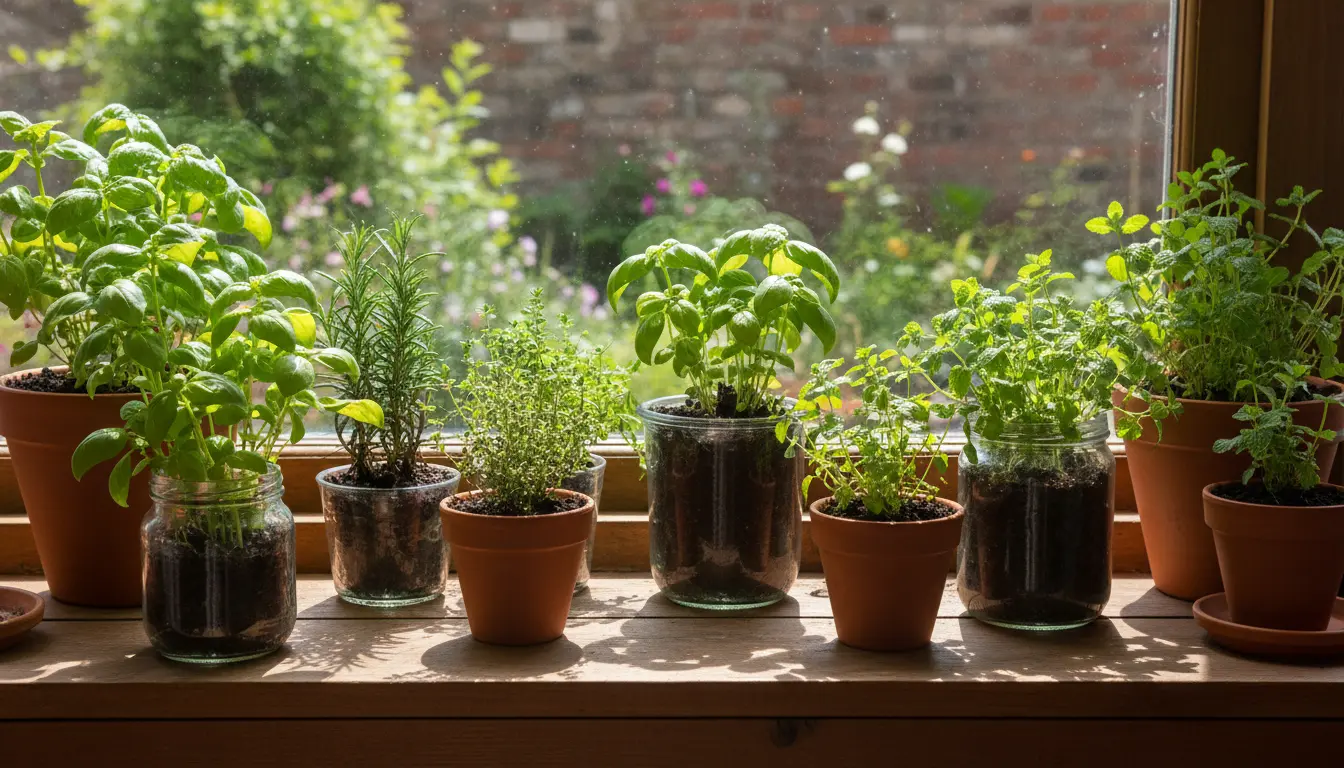
Growing herbs indoors is a practical way to have fresh flavors year-round without a backyard. This guide covers the basics of indoor herb gardening for beginners, focusing on simple steps you can apply in any small space.
Getting Started with Indoor Herb Gardening for Beginners
Start by assessing your light, space, and time commitment. Most herbs need at least 4–6 hours of bright light. If you lack a sunny window, plan for a basic grow light.

Choose a few easy-to-grow herbs to begin with. Limiting your selection helps you learn water and light needs before expanding your indoor garden.
Choosing the Right Herbs
- Basil — fast-growing, prefers bright light and regular water.
- Peppermint — forgiving and tolerant of lower light, but spreads via runners.
- Parsley — steady grower; needs moderate light and consistent moisture.
- Thyme and rosemary — prefer drier soil and very bright light.
- Chives — compact, tolerant, and good for windowsills.
Buy small starter plants from a nursery or start seeds. Seed-starting takes longer but offers more variety.
Light and Placement for Indoor Herb Gardening for Beginners
Place herbs on a south- or west-facing windowsill when possible. Rotate pots weekly so plants grow evenly.
If natural light is insufficient, use a full-spectrum LED grow light. Position the light 12–18 inches above herbs and run it 10–14 hours per day depending on species.
Containers, Soil, and Drainage
Good containers and soil are essential for healthy indoor herbs. Choose pots with drainage holes to prevent root rot.
Use a light potting mix labeled for herbs or vegetables. Avoid heavy garden soil, which compacts in containers.
- Container size: start with 4–6 inch pots for single herbs, larger (8–10 inch) for mixed pots.
- Drainage: use saucers and lift pots slightly to avoid sitting in water.
- Soil mix: a blend with perlite or vermiculite improves aeration.
Watering and Feeding for Indoor Herb Gardening for Beginners
Watering is the most common challenge for beginners. Overwatering causes yellow leaves and root rot; underwatering causes wilting and slow growth.
Use the finger test: stick your finger 1 inch into the soil. If it feels dry, water thoroughly until water runs from the drainage hole. If still moist, wait a day and test again.
- Frequency: most herbs need water every 4–7 days, depending on pot size and light.
- Fertilizer: feed with a balanced liquid fertilizer at half strength once a month during the growing season.
- Signs of nutrient need: pale leaves, slow growth, and weak stems.
Common Problems and Troubleshooting
Recognizing issues early keeps small problems from becoming plant failures. Monitor plants weekly for pests and stress.
Pests, Diseases, and Growth Issues
- Aphids and spider mites: wipe leaves with soapy water or use insecticidal soap.
- Leggy growth (plants stretching): move to brighter light or prune to encourage bushiness.
- Yellow leaves: check for overwatering or poor drainage.
Remove dead leaves and avoid crowding pots to improve air circulation and reduce disease risk.
Pruning and Harvesting
Regular pruning keeps herbs productive. Pinch or cut stems above a leaf node to encourage branching.
Harvest frequently but never remove more than one-third of the plant at a time. This approach supports continuous growth.
Many culinary herbs, like basil and mint, are also natural pest deterrents in the home. Growing them near kitchen windows can help reduce some indoor pests.
Small Real-World Example
Case Study: A renter named Sara started three 4-inch pots of basil, chives, and parsley on a sunny kitchen sill. She used a light potting mix and watered when the top inch felt dry.
Within four weeks she had enough basil to make pesto and noticed the chives rebounding after a light trim. Moving the parsley closer to the window improved its leaf color.
Sara’s simple routine—bright light, correct watering, and monthly feeding—kept her indoor herb garden productive with minimal time investment.
Quick Start Checklist for Indoor Herb Gardening for Beginners
- Pick 2–4 easy herbs (basil, chives, mint, parsley).
- Place near a south- or west-facing window or set up a grow light.
- Use pots with drainage and a light potting mix.
- Water when the top inch of soil is dry; avoid standing water.
- Fertilize lightly during the growing season.
- Prune regularly and harvest often to promote growth.
Indoor herb gardening for beginners is rewarding and inexpensive. With a small commitment to light, water, and simple maintenance, you can enjoy fresh herbs year-round in even the smallest living spaces.