
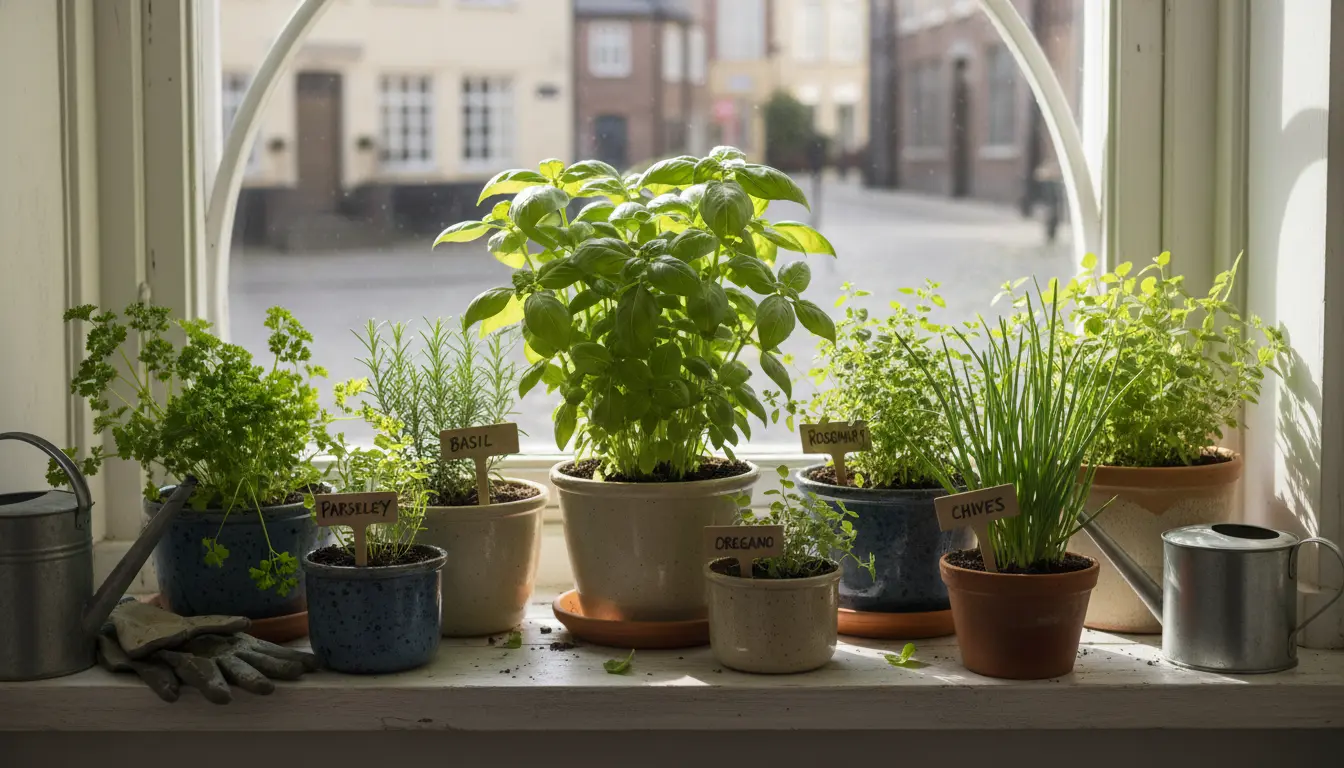
Growing an indoor herb garden is a simple way to add fresh flavor to meals and improve indoor air quality. This guide gives clear, practical steps to start and maintain an indoor herb garden at home.
How to Start an Indoor Herb Garden
Begin with a small plan: choose a bright spot, suitable containers, and a few easy herbs. Starting small helps you learn how each herb responds to your home conditions.

Follow these basic steps to get started:
- Pick a location with at least 4–6 hours of light per day.
- Choose containers with drainage holes to prevent root rot.
- Select potting mix labeled for indoor plants or herbs.
- Start from seedlings or seeds depending on your patience and experience.
Choosing a Spot for Your Indoor Herb Garden
Light is the most important factor for an indoor herb garden. A south- or west-facing windowsill usually provides enough sun.
If natural light is limited, use a full-spectrum LED grow light placed 6–12 inches above the plants for 10–14 hours per day. This prevents legginess and supports steady growth.
Best Herbs for an Indoor Herb Garden
Start with herbs that are forgiving and productive indoors. These herbs thrive with ordinary home light and care.
- Basil — Fast-growing and great for kitchens, needs bright light.
- Parsley — Slow to start but steady once established.
- Mint — Very hardy; keep it in a separate pot to avoid spreading.
- Chives — Compact and tolerant of slightly lower light.
- Thyme and Oregano — Prefer bright light and drier soil.
Choosing Herbs for Your Space
Select herbs based on how you cook and the light you have. If you use a lot of Italian food, basil and oregano make sense. For teas and desserts, try mint and lemon balm.
Soil, Containers, and Potting Tips
Use a lightweight potting mix designed for containers. Avoid garden soil, which compacts and drains poorly indoors.
Good container choices include terracotta for drier herbs and plastic for herbs that need consistently moist soil. Ensure every container has drainage holes.
- Fill pots to within an inch of the rim to allow space when watering.
- Use a saucer to catch excess water but empty it after 30 minutes.
- Repot every year or when roots circle the bottom of the pot.
Watering and Feeding an Indoor Herb Garden
Watering depends on herb type, pot size, and light. Most herbs prefer slightly dry to evenly moist soil rather than constantly wet conditions.
As a rule, water when the top 1 inch of soil feels dry. Water thoroughly until it drains out the bottom, then let the pot drain completely.
- Use a balanced liquid fertilizer every 4–6 weeks during the growing season.
- Reduce feeding in winter when growth slows.
- For mint and parsley, a slightly higher nitrogen feed supports leafy growth.
Common Watering Mistakes
Overwatering is the most common problem. It causes yellowing leaves and root rot. Underwatering leads to wilting and poor flavor.
Pest Control and Disease Management
Indoor herb gardens are less prone to pests than outdoor beds but still face issues like aphids, spider mites, and fungal diseases.
Use these practical controls:
- Inspect plants weekly for early signs of pests.
- Wipe leaves with a damp cloth to remove dust and small insects.
- Use insecticidal soap for infestations and improve air circulation to reduce fungal problems.
Harvesting and Pruning Your Indoor Herb Garden
Regular harvesting encourages bushier growth and better flavor. Snip leaves from the top to avoid removing more than one-third of the plant at a time.
For basil, pinch the top pair of leaves to promote side shoots. For perennial herbs like thyme and oregano, trim after flowering to keep plants compact.
Storage and Use
Use fresh leaves within a few days for best flavor. For longer storage, dry herbs in a low oven or use a dehydrator, or freeze leaves in olive oil in an ice cube tray.
Many herbs, like basil and mint, release stronger aroma and flavor when harvested in the morning after the dew dries. Morning harvests often give the best taste.
Small Case Study: A Windowsill Basil Success
Emma, a busy teacher, placed three basil seedlings on her south-facing windowsill. She used 6-inch terracotta pots and a light potting mix with good drainage.
Emma watered when the top inch of soil dried, rotated the pots weekly, and harvested leaves twice a week. Within six weeks she had regular harvests for cooking and shared cuttings with a neighbor.
Result: Minimal time investment, steady supply of fresh basil, and greater confidence to add parsley and chives the next season.
Quick Troubleshooting Guide for Indoor Herb Garden Problems
- Yellow leaves: Check watering and drainage; reduce watering if soil is soggy.
- Leggy growth: Increase light or add a grow light and pinch back stems.
- Slow growth: Try a balanced fertilizer and check for root-binding in small pots.
- Brown leaf tips: Often a sign of low humidity or salt buildup from fertilizer; flush the soil occasionally.
Starting an indoor herb garden is practical and rewarding. With the right spot, containers, and routine care, most people can enjoy fresh herbs year-round. Begin with two or three herbs and expand as you learn what works in your home.