
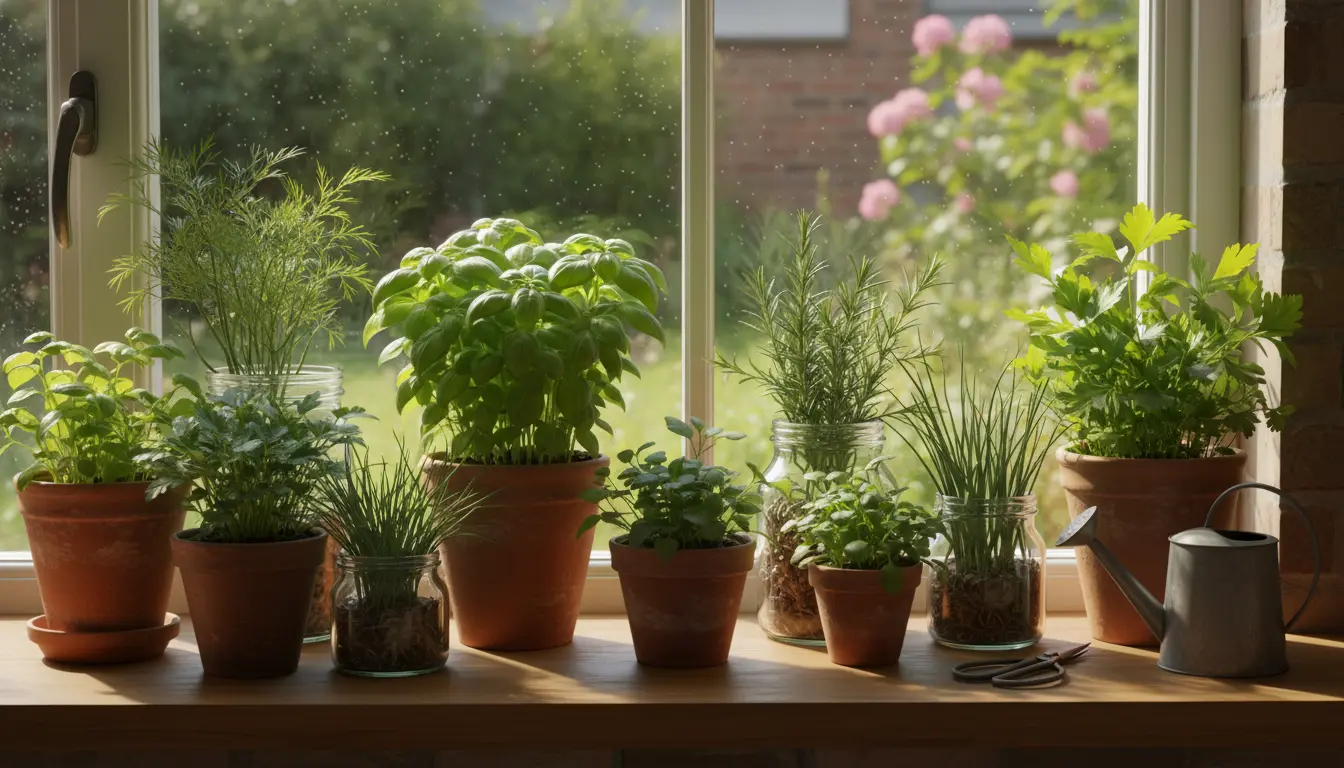
Growing herbs indoors is a practical way to keep fresh flavors at hand and learn basic gardening without a yard. This guide explains clear steps to set up and maintain an indoor herb garden that thrives year-round.
How to Start an Indoor Herb Garden
Starting an indoor herb garden is simple when you focus on light, containers, soil, and water. Follow a basic plan and adjust as you see how your plants respond.
Pick a Location with Enough Light for Your Indoor Herb Garden
Most culinary herbs need 6–8 hours of bright light daily. A south- or west-facing windowsill is ideal. If natural light is limited, add a grow light placed 6–12 inches above the plants.
Choose Containers and Soil
Use pots with drainage holes to prevent root rot. A 4–6 inch pot suits single herbs like basil or chives, while multiple herbs can share a wider container with 8–12 inches depth.
Use a light, well-draining potting mix rather than garden soil. Consider adding perlite or coarse sand to improve drainage.
Choosing Herbs for Your Indoor Herb Garden
Not all herbs perform equally indoors. Start with easy, reliable varieties suited to container life and moderate light.
- Basil — fast-growing and great for windowsills with ample light.
- Chives — tolerant of lower light and useful year-round.
- Parsley — prefers bright indirect light and regular watering.
- Mint — aggressive grower, best in its own pot to avoid spreading.
- Thyme and Oregano — drought-tolerant and compact, suited for indoor pots.
How to Buy or Start Seeds for an Indoor Herb Garden
Seed packets are inexpensive and give you many plants from one pack. For faster results, buy small starter plants from a local nursery. When transplanting seedlings, be gentle to avoid root disturbance.
Watering and Feeding Your Indoor Herb Garden
Overwatering is the most common mistake. Water when the top 1 inch of soil feels dry. Lift the pot — a light pot is often drier than it looks.
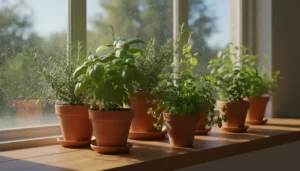
Feed herbs lightly with a balanced liquid fertilizer every 4–6 weeks during active growth. Too much fertilizer can reduce flavor intensity in some herbs like basil.
Temperature and Humidity Tips for Indoor Herb Garden Success
Most herbs prefer 65–75°F (18–24°C) and average indoor humidity. If the air is very dry in winter, place a small tray of water near the plants or use a humidifier briefly.
Pruning, Harvesting, and Common Problems
Regular pruning encourages bushier growth. Pinch back the tips of basil and thyme to prevent legginess. Harvest in the morning for the best flavor.
Watch for common issues: yellowing leaves often mean overwatering, while leggy stems indicate insufficient light. Treat pests like aphids or spider mites with a mild soap spray and by isolating affected plants.
Routine Care Checklist for Your Indoor Herb Garden
- Check light daily; rotate pots weekly to keep growth even.
- Water when top inch of soil is dry; avoid standing water.
- Feed lightly every 4–6 weeks during spring and summer.
- Pinch tips regularly to encourage branching and more leaves.
Some herbs like mint and oregano become more flavorful after light stress from slightly drier soil. However, avoid letting plants wilt severely, as that reduces overall health.
Real-World Example: A Small Kitchen Windowsill Indoor Herb Garden
Case study: Maria, a busy home cook, started an indoor herb garden on a 4-foot kitchen windowsill. She planted basil, chives, and parsley in three 4-inch pots and added a small LED grow light for winter months.
Within six weeks, Maria had regular harvests of basil for pesto and chives for salads. She avoided overwatering by using a simple routine: water twice weekly and lift pots to check weight. The result was fresher meals and less food waste.
Troubleshooting and Advanced Tips for an Indoor Herb Garden
If leaves become sparse or stems stretch, improve light and increase pruning. For continuous harvest, replant seeds or keep a rotation of seedlings ready to replace older plants.
Try companion planting in larger containers: pair basil with parsley, and keep mint isolated. Consider using a light-timer to automate grow lights during darker months.
Summary: Keep It Simple and Start Small
An indoor herb garden is low-cost and fast to start. Focus on light, good drainage, and regular, light pruning. Start with two or three hardy herbs and expand as you gain confidence.
With minimal tools and a small windowsill, you can grow flavorful herbs that improve meals and give you practical gardening experience year-round.