
Why Indoor Air Quality Matters
Indoor air quality affects comfort, sleep, and long-term health. Many homes trap pollutants that come from cooking, cleaning, building materials, and outdoor sources.
Improving indoor air quality reduces allergy symptoms, lowers respiratory risk, and can make indoor spaces more pleasant to live in.
Common Sources of Poor Indoor Air Quality
Identifying pollutant sources is the first practical step. Some common contributors are easy to control.
- Combustion: gas stoves, fireplaces, and tobacco smoke emit particulates and nitrogen dioxide.
- Biological: mold, dust mites, and pet dander increase allergens and irritants.
- Volatile organic compounds (VOCs): new paint, furniture, and cleaning products release VOCs.
- Outdoor infiltration: pollen, smoke, and vehicle exhaust can enter through gaps and vents.
Simple Steps to Improve Indoor Air Quality
Start with practical, low-cost measures that make a noticeable difference fast.
Ventilation and Airflow
Fresh air reduces buildup of indoor pollutants. Use exhaust fans when cooking and consider mechanical ventilation if your home is tightly sealed.

Open windows when outdoor air quality is good and use fans to move air through living spaces.
Filtration and Air Purifiers
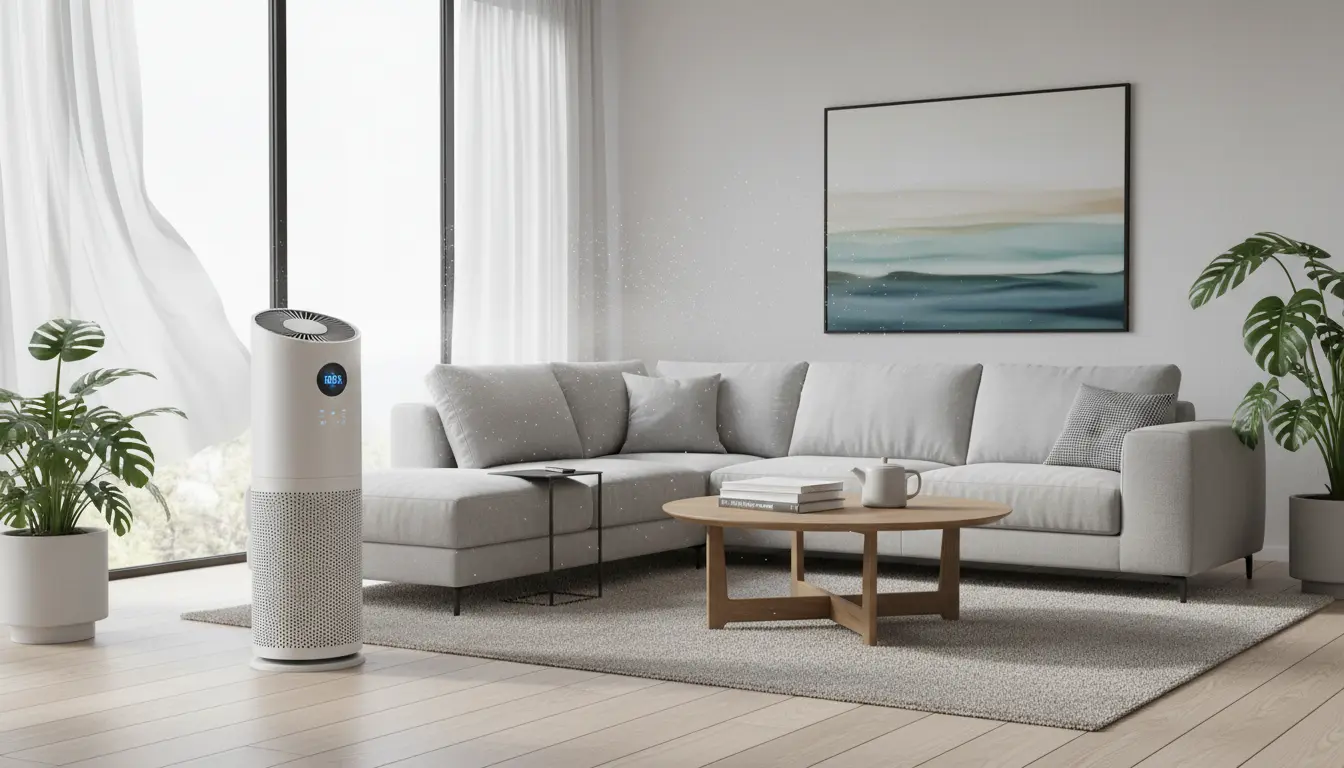
HEPA filters capture fine particles and allergens. Choose an air purifier sized for the room and replace filters on schedule.
- Look for true HEPA (not HEPA-style) for particles 0.3 microns and larger.
- For whole-home coverage, upgrade HVAC filters to MERV 8–13 depending on your system capability.
Control Humidity
Keep relative humidity between 30% and 50%. This range limits mold growth and reduces dust mite populations.
Use dehumidifiers in basements and humidifiers in dry climates, and monitor with a hygrometer.
Source Control
Eliminate or reduce pollutant sources where possible. Swap high-VOC products for low-VOC alternatives and avoid indoor smoking.
Store chemicals and paints in ventilated areas or outdoors and allow new furniture to off-gas before bringing it into living spaces.
Tools to Measure Indoor Air Quality
Testing provides clarity on which pollutants matter in your home. Basic monitors are affordable and easy to use.
- CO2 monitors help indicate ventilation effectiveness; aim for CO2 under 1000 ppm in occupied spaces.
- Particulate (PM2.5) sensors show fine particle levels, useful during wildfires or heavy cooking.
- VOC sensors give a rough idea of chemical levels but can be less specific.
Maintenance Checklist for Better Indoor Air Quality
- Change HVAC and portable purifier filters every 3–12 months as recommended.
- Run bathroom and kitchen exhaust fans during and after use for 20 minutes.
- Inspect for leaks and mold in basements, attics, and around windows each season.
- Vacuum with a HEPA-equipped vacuum and dust regularly to remove settled particles.
- Wash bedding weekly at high temperatures to reduce dust mites.
Indoor air can be two to five times more polluted than outdoor air due to trapped emissions from everyday products.
When to Call a Professional for Indoor Air Quality
Professional testing or remediation is appropriate when you detect persistent odors, visible mold, or severe health symptoms linked to the home.
Consider an indoor air quality assessment if you have multiple occupants with unexplained respiratory issues or after water damage.
Practical Example: Case Study
Case: A family in a suburban home reported chronic coughing and frequent headaches. They used a few targeted steps and measured results.
- Problem identified: high PM2.5 during cooking and elevated humidity in the basement.
- Actions taken: installed a range hood vented outdoors, added a HEPA portable purifier in the living room, and put a dehumidifier in the basement set to 45% RH.
- Outcome: Within six weeks the family reported reduced coughing, and PM2.5 readings dropped by 60% during cooking events.
This example shows that targeted, low-cost changes often yield measurable improvements in indoor air quality.
Practical Tips Summary for Better Indoor Air Quality
- Ventilate: use exhaust fans and open windows when outdoor air is clean.
- Filter: choose HEPA purifiers and upgrade HVAC filters where possible.
- Control humidity: aim for 30%–50% relative humidity.
- Source control: reduce VOCs and keep combustion appliances well maintained.
- Monitor: use CO2 and PM2.5 sensors to guide ventilation and purification needs.
Improving indoor air quality is a combination of prevention, measurement, and maintenance. Small steps can make your home healthier without major expense.