
Why focus on working from home productivity
Many people now work from home either full time or part time. Without structure and the right setup, it’s easy for focus and output to slip.
This guide shows practical, repeatable steps you can use to improve productivity when working from home. Use the sections that match your situation.
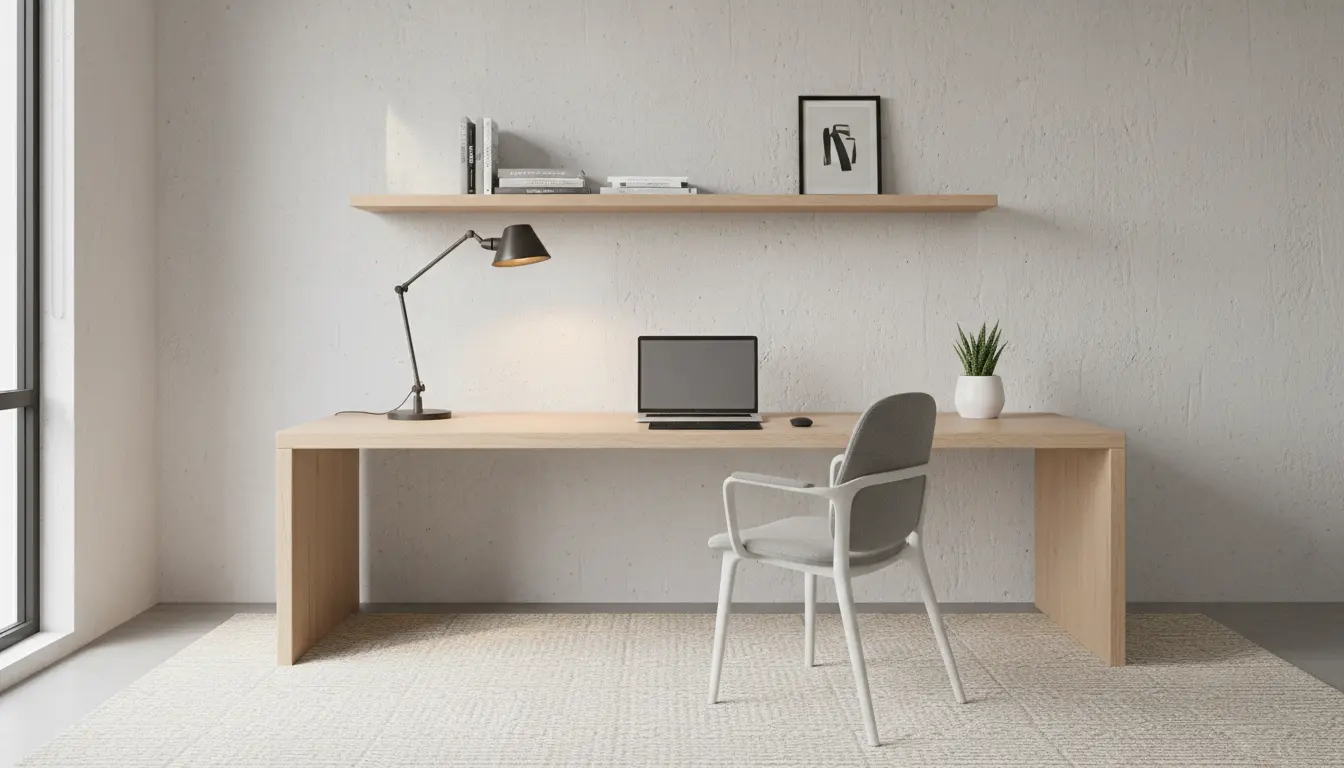
Set a dedicated workspace for working from home

A defined workspace signals your brain it’s time to work. It reduces distractions and improves posture and comfort.
Key points when choosing a workspace:
- Pick a quiet corner or room with good natural light.
- Invest in a comfortable chair and a desk at proper height.
- Keep frequently used tools within reach to avoid unnecessary breaks.
Examples of workspace layouts
Small-spot layout: a laptop on a small table near a window works for compact homes.

Dedicated office: larger desk, dual monitors, and storage work better when you have space and regular heavy tasks.
Create a daily schedule and stick to it
Routines anchor your day and make time management easier. A consistent start and end to work helps preserve work-life balance.
Try this simple schedule format for working from home:
- Morning routine (30–60 minutes): wake, hygiene, light exercise, breakfast.
- Core focus blocks (2–3 blocks of 60–90 minutes): uninterrupted deep work.
- Short breaks (5–15 minutes): step away from the desk between blocks.
- Administrative time (30–60 minutes): email, calls, planning.
- Wrap-up (15–20 minutes): summarize completed tasks and plan next day.
Use time blocking for better results

Time blocking assigns specific activities to fixed blocks on your calendar. It prevents task-switching and helps estimate realistic daily capacity.
Example: Block 9:00–11:00 for project A, 11:15–12:00 for calls and email, 13:00–15:00 for project B.
Reduce distractions while working from home
Distractions are the main productivity killers at home. A plan to limit them preserves focus for your most important tasks.
Strategies to reduce distractions:
- Put your phone on Do Not Disturb or in another room during focus blocks.
- Use browser extensions to block social media during work hours.
- Communicate boundaries with household members about quiet times.
Tools to help focus
Popular tools include Pomodoro timers, website blockers, and noise-cancelling headphones. Choose what fits your work style.
Manage tasks and priorities for remote work
Working from home often increases the number of small interruptions and micro-tasks. A clear system keeps you on track.
Use this three-step approach:
- Capture: Write down everything on your mind in a single place.
- Clarify: Decide the next action for each item and set deadlines.
- Organize: Group tasks by project or priority and review daily.
Task tools and examples
Simple to-do lists, Kanban boards, or task apps such as Trello, Todoist, or a notebook can work. The tool matters less than consistent use.
Short, structured breaks (5–15 minutes) after 60–90 minutes of focused work improve concentration and decision-making.
Use communication best practices when working from home
Clear communication avoids unnecessary questions and back-and-forth. Set expectations for response times and preferred channels.
Tips for better remote communication:
- Schedule regular check-ins with your manager or team.
- Use brief, descriptive subject lines and summaries in messages.
- Choose synchronous calls only when necessary; use async updates otherwise.
Take care of wellbeing to sustain productivity
Physical and mental wellbeing directly affect performance. Prioritize sleep, movement, and healthy meals.
Simple habits that help working from home productivity:
- Stand or stretch every hour.
- Keep hydrated and avoid excessive caffeine late in the day.
- Set a clear end time to prevent overtime and burnout.
Case study: Small marketing team improves output
A three-person marketing team switched to a time-block schedule and a shared task board. They reduced meeting time by 30% and increased on-time content delivery by 40% over three months.
Changes they made included fixed focus blocks, a shared daily standup, and defined response windows for messages. The team reported less stress and clearer priorities.
Conclusion: Practical steps to apply today
Start with one change: set a dedicated workspace or adopt a single focus block each morning. Small, consistent improvements compound into meaningful productivity gains.
Review your routine weekly and adjust based on what helps you produce your best work while working from home.